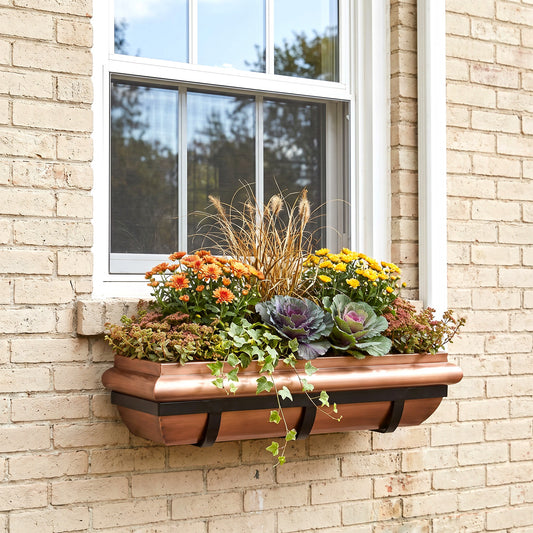
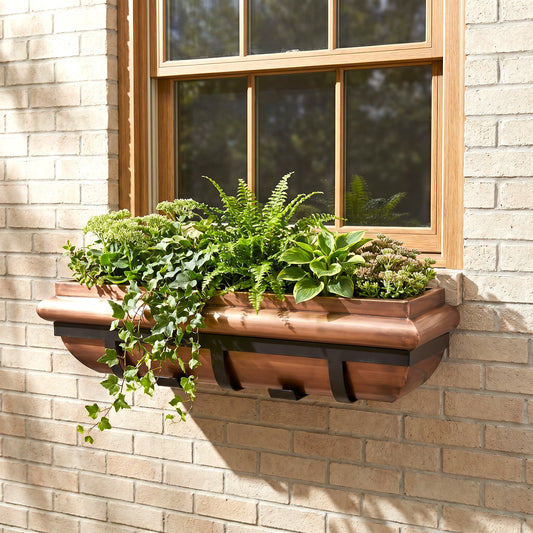
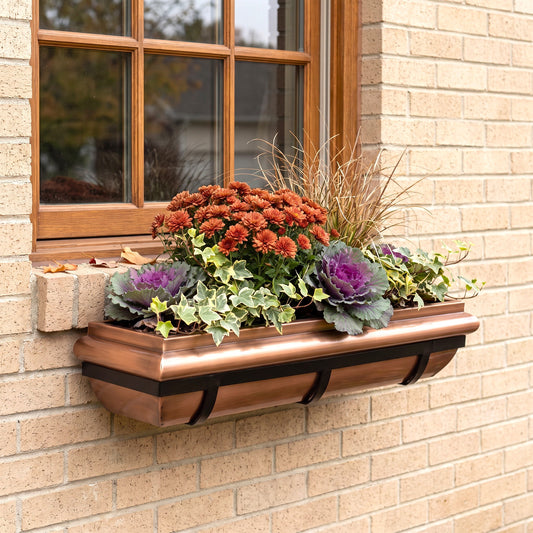
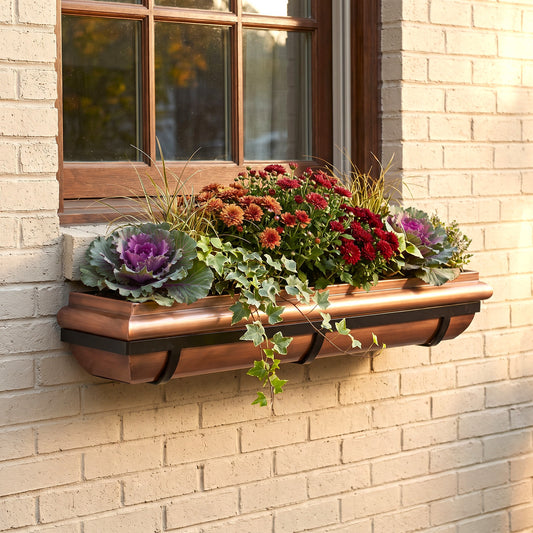
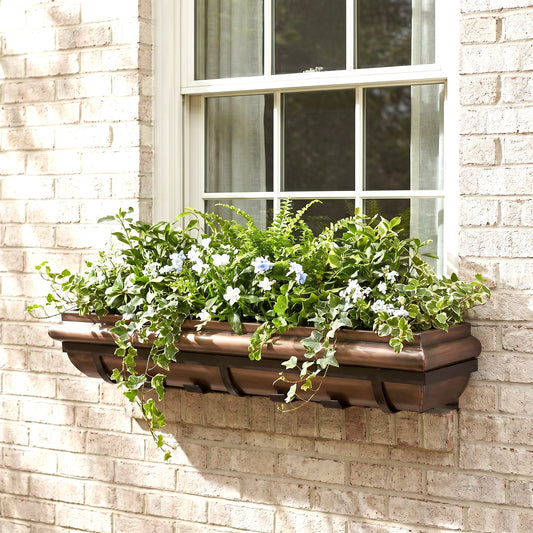
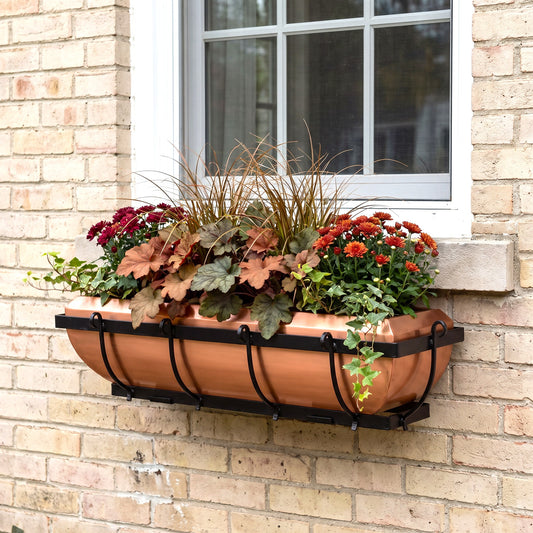
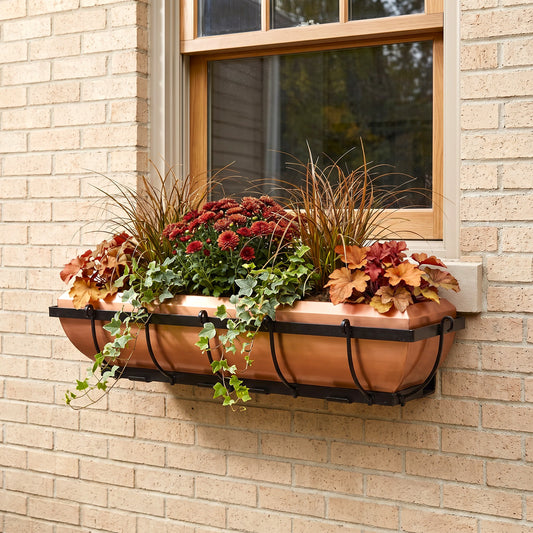
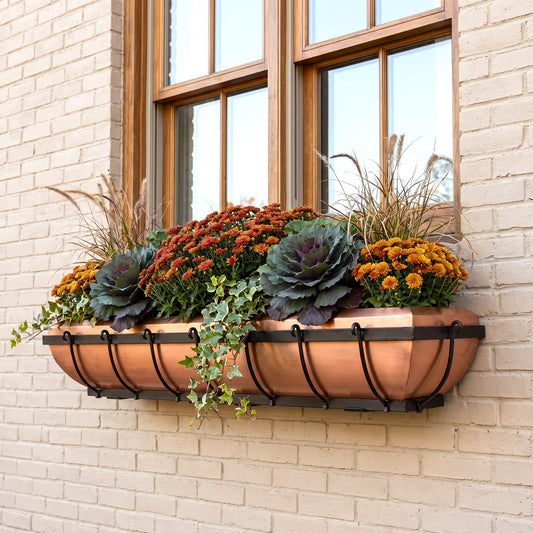
A thoughtfully designed window box can completely transform the exterior of a home. With the right materials, proportions, and plant combinations, window boxes create a distinctive look that evolves beautifully through the seasons.
Start With Your Home’s Style
Before selecting plants, consider the architectural style and color palette of your home. Window boxes should complement the structure rather than compete with it.
-
Modern homes: clean lines and streamlined metal finishes
-
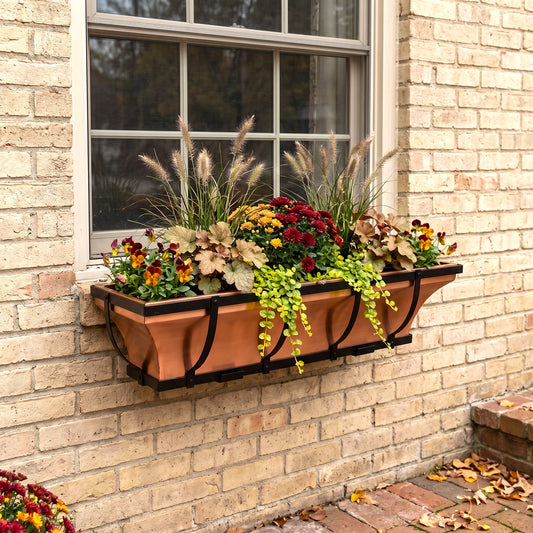
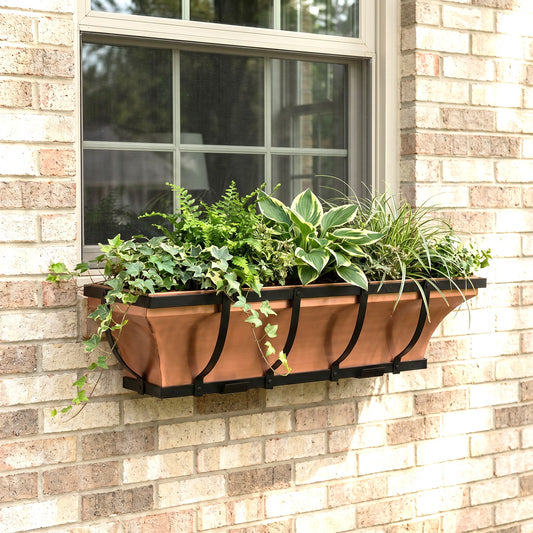
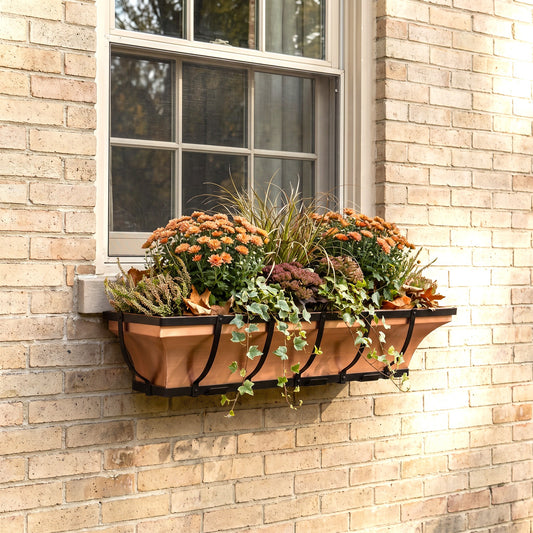
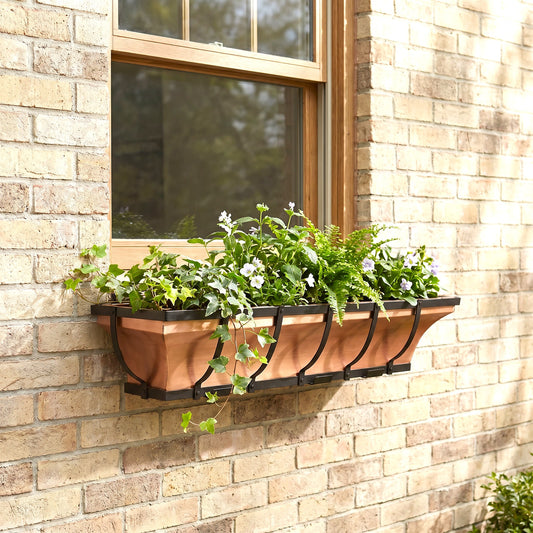
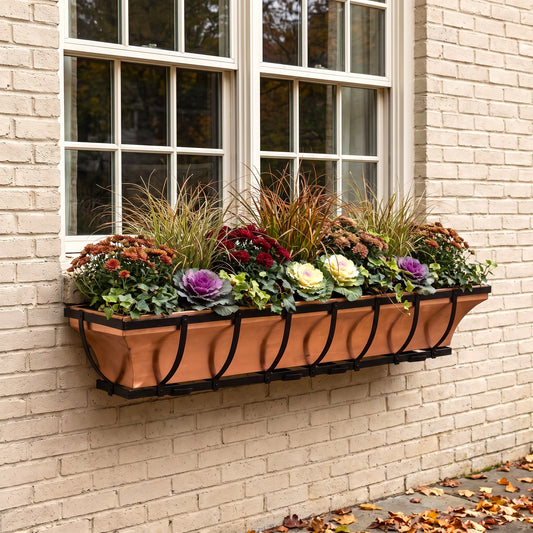
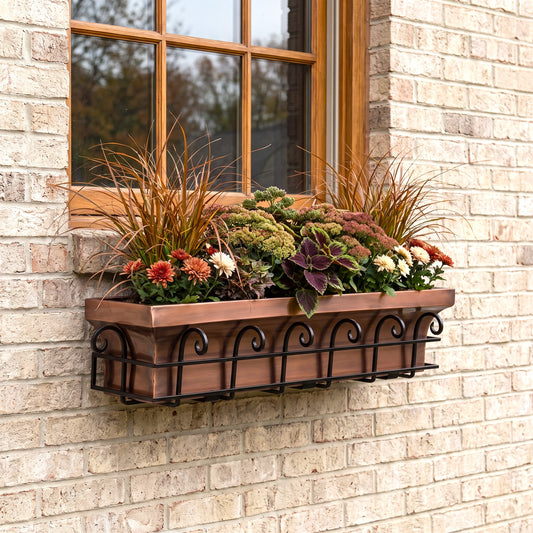
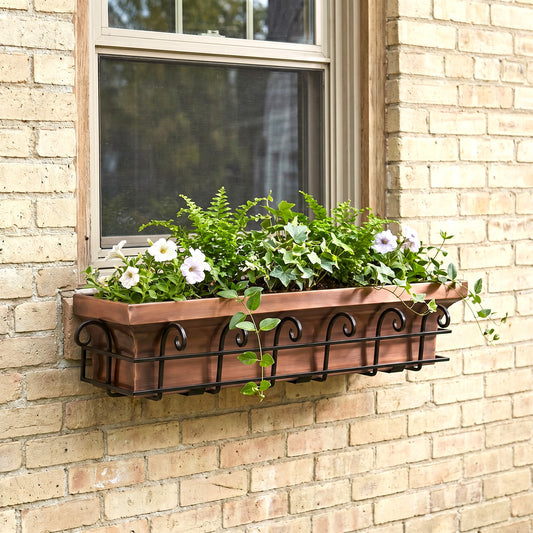
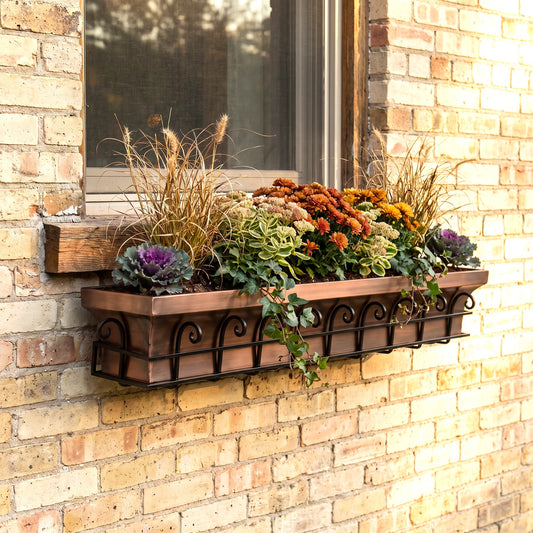
Traditional homes: warm copper tones and classic silhouettes
-
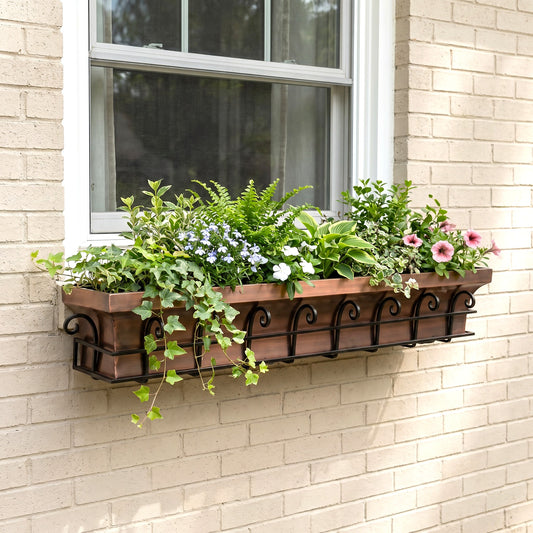
Cottage gardens: layered flowers with trailing spillers
-
Urban settings: herbs and structured greenery for a tailored look
Design tip: Choose a window box that is close to the window width (or slightly wider), and deep enough to support healthy root growth. Proper scale creates visual balance from the street.
Browse our handcrafted window box planters in copper and stainless steel.
Choosing Materials: Copper vs Stainless
Copper Window Boxes
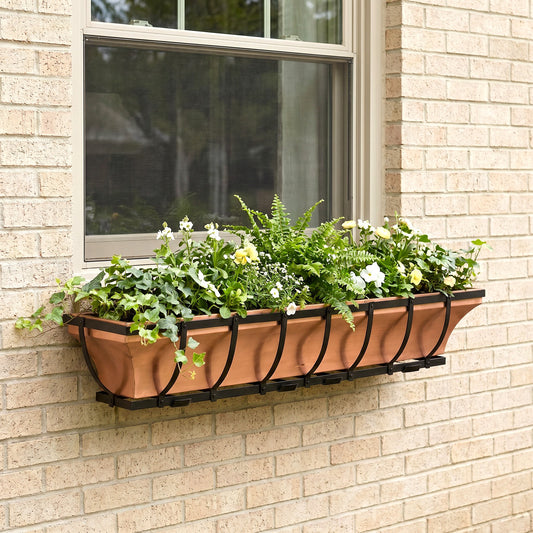
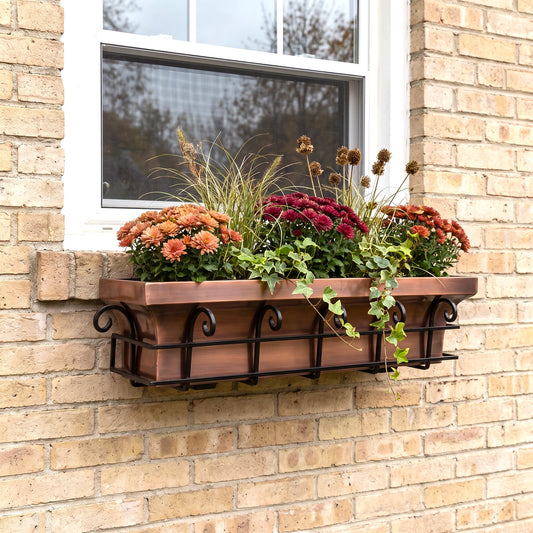
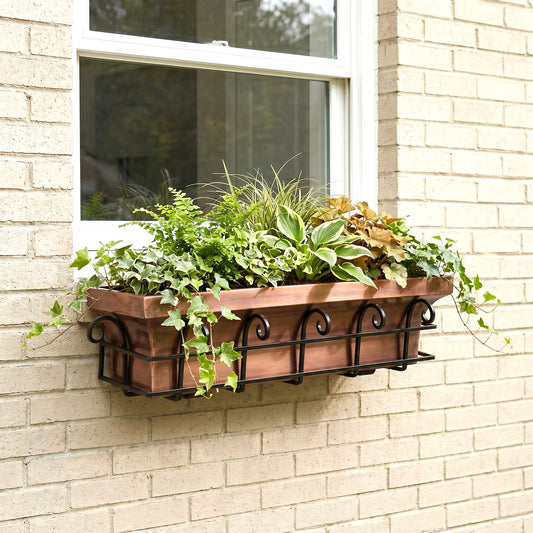
Real copper creates a warm, lived-in look that pairs beautifully with brick, stone, and traditional homes. Over time, copper develops character and patina that feels architectural—not trendy.
Stainless Steel Window Boxes
Stainless steel offers a clean, architectural appearance and exceptional durability. It’s ideal for modern homes—or coastal environments where corrosion resistance matters.
Need help deciding? Use this guide:
how to choose the best window box planter.
Designing a Unique Look With Plants
Window boxes let you create layered plantings that reflect your personal style. One of the easiest ways to build a full, intentional look is the classic planting structure:
| Plant Type |
Purpose |
| Thriller |
Height and focal point |
| Filler |
Color and fullness |
| Spiller |
Movement over edges |
For plant suggestions by sun exposure, start here:
best flowers for window boxes.
Plant Ideas for Distinctive Style
Ornamental Foliage
- Ivy
- Coleus
- Ornamental grasses
Colorful Flowers
- Petunias
- Geraniums
- Begonias
- Impatiens
Edible Window Boxes
- Basil
- Chives
- Parsley
- Lavender
More inspiration:
spring window box planting ideas.
Why Window Boxes Transform a Home
- Increase curb appeal with color and texture at eye level
- Add seasonal interest without changing hardscaping
- Expand growing space for smaller homes and townhomes
- Create a distinctive exterior design that feels “finished”
Want styling ideas by season? See:
decorating ideas for window planters.
A Thoughtful Gift for Garden Lovers
A handcrafted window box planter also makes a meaningful gift for homeowners, gardeners, and design enthusiasts.
Durable materials allow it to be replanted season after season—making it a lasting alternative to temporary décor.
Gift idea: Pair a window box with a simple seasonal planting plan (spring blooms → summer herbs → fall texture → winter greens) for a memorable, “ready-to-enjoy” gift.
Why This Guide Is Trustworthy
This article is part of H Potter’s window box series, created to help homeowners build window box displays that look refined and perform well outdoors.
-
Written by an H Potter co-founder: Jerry Peed (avid gardener) shares practical guidance informed by years of product design and real-world use.
-
Built around fundamentals: proportion, material choice (copper vs stainless), and planting structure that helps boxes stay full and balanced.
-
Designed for lasting curb appeal: seasonal refresh guidance and easy styling ideas you can repeat across multiple windows.
For the full framework (sizing, sun exposure, design formulas, and care), see the
Complete Window Box Guide.
Frequently Asked Questions
How do I make window boxes look “custom” on my home?
Focus on proportion first: choose a box close to the window width (or slightly wider). Then repeat a consistent style across multiple windows and use a simple planting structure (thriller, filler, spiller) to keep the look balanced.
Is copper or stainless steel better for my home style?
Copper complements traditional architecture with warm character and patina over time. Stainless steel looks crisp and architectural, and it’s especially practical for modern homes or humid/coastal conditions.
What’s the easiest “unique” planting style if I’m not a gardener?
Go foliage-forward: one structured plant for height (a grass or upright accent), two simple fillers (coleus or leafy texture), and one trailing spiller (ivy or sweet potato vine). It looks curated without being fussy.
How do I keep window boxes from looking messy mid-season?
Choose plants with similar sun and watering needs, avoid overcrowding, and trim/refresh lightly every couple of weeks. If blooms fade, swap one element (like spillers) to instantly “reset” the look.
Where should I start if I need sizing and planting basics?