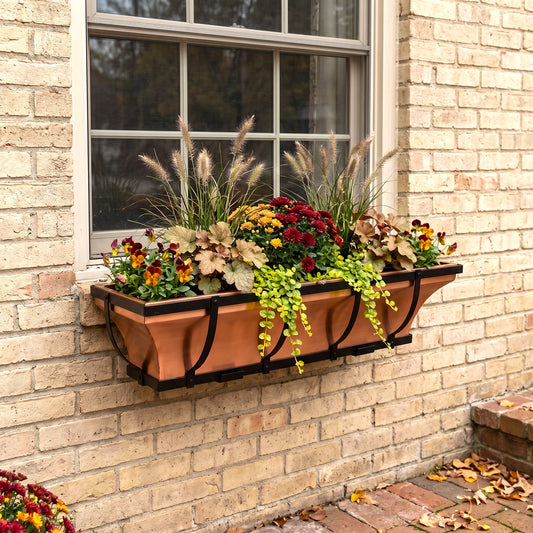
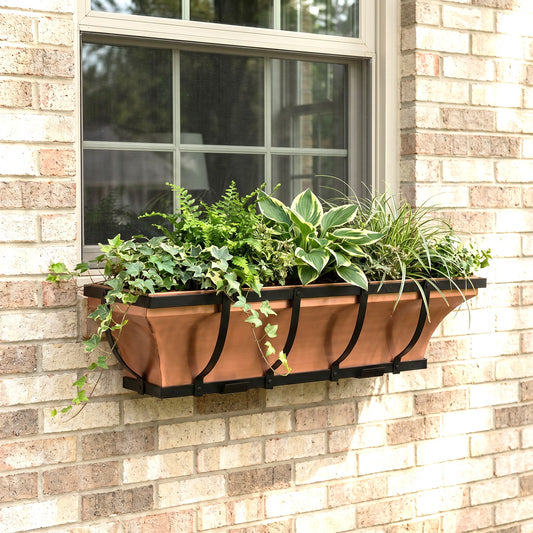
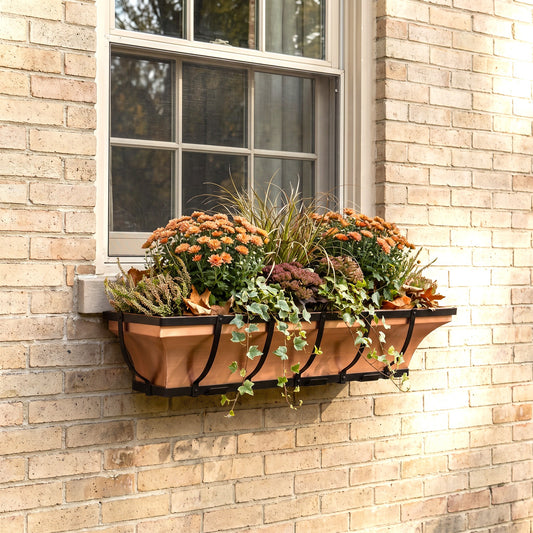
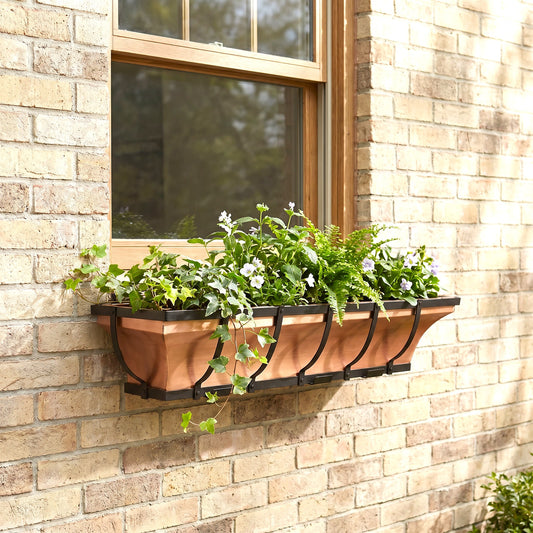
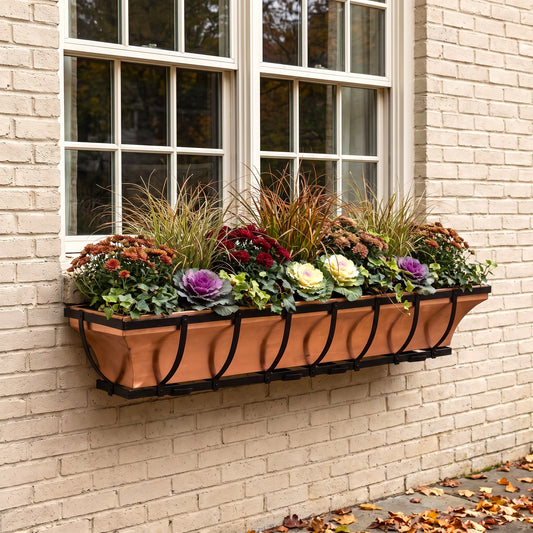
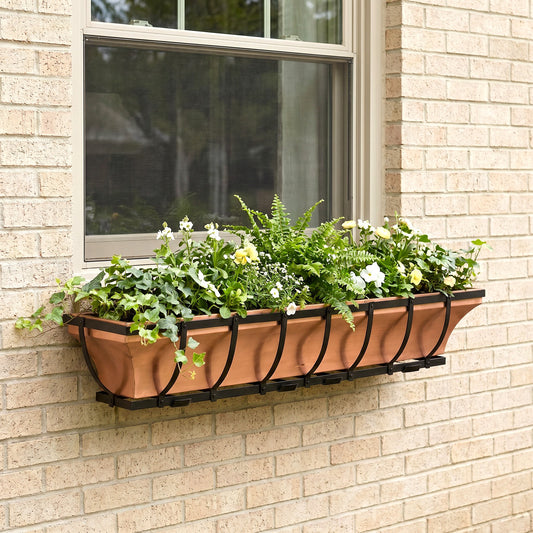
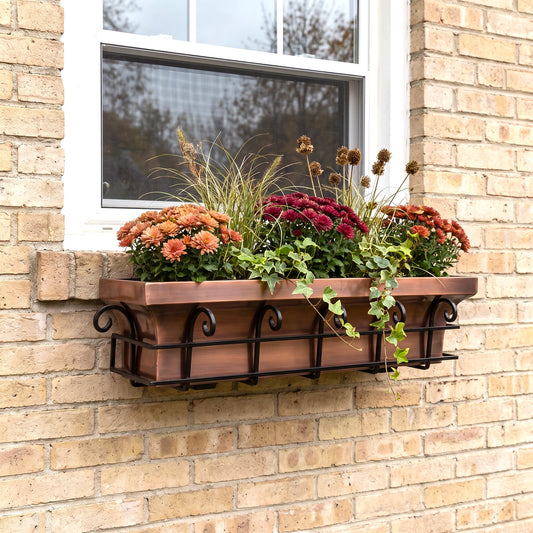
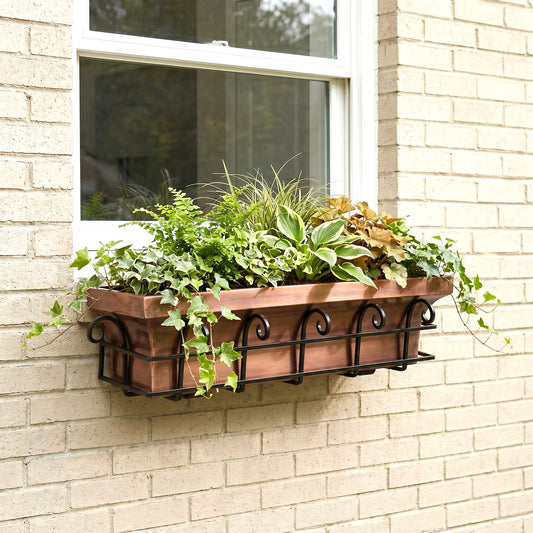
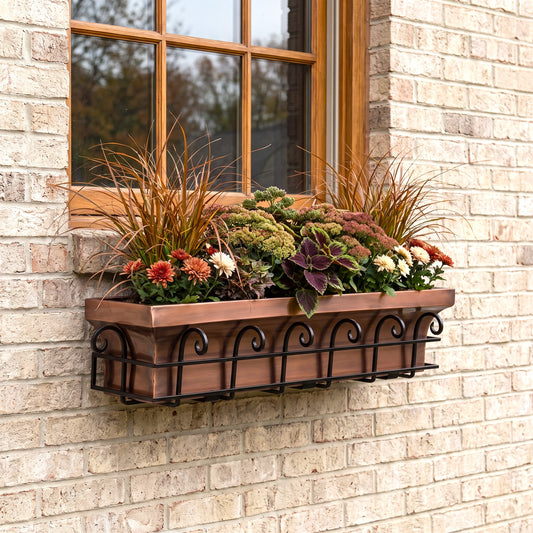
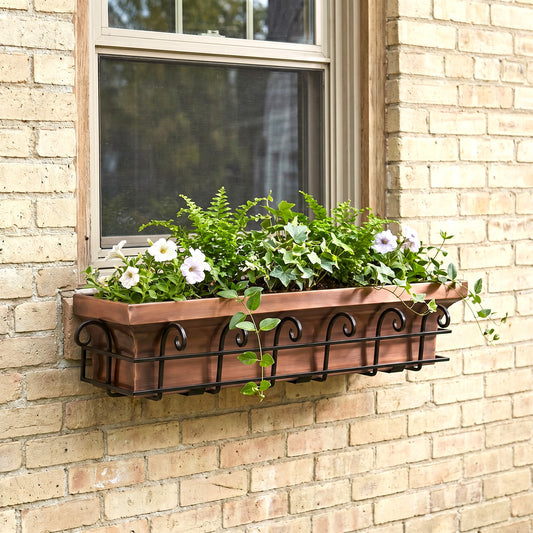
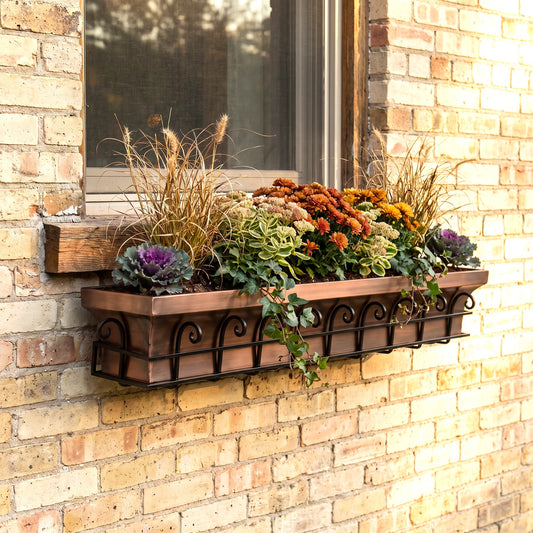
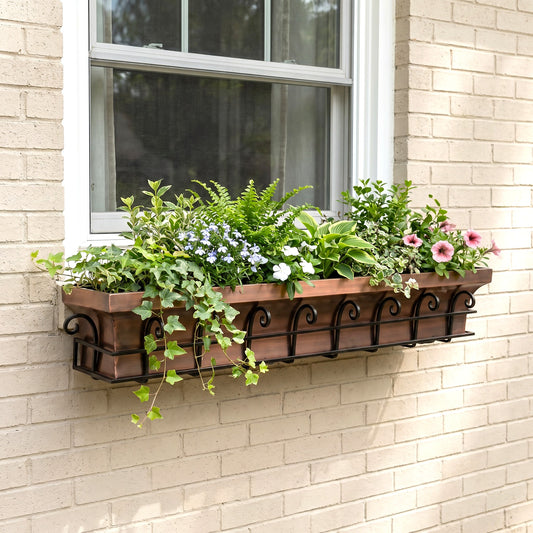
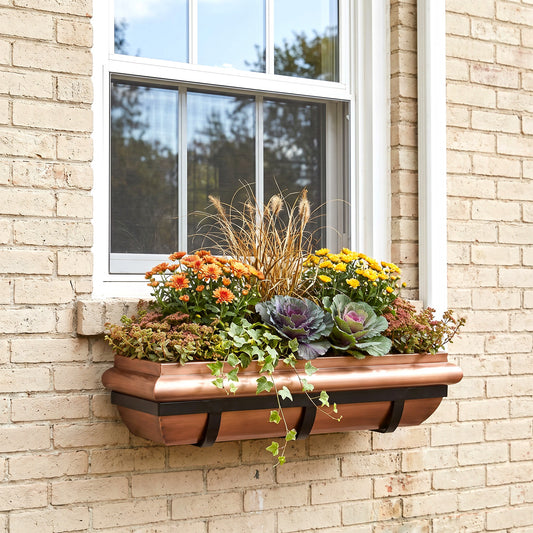
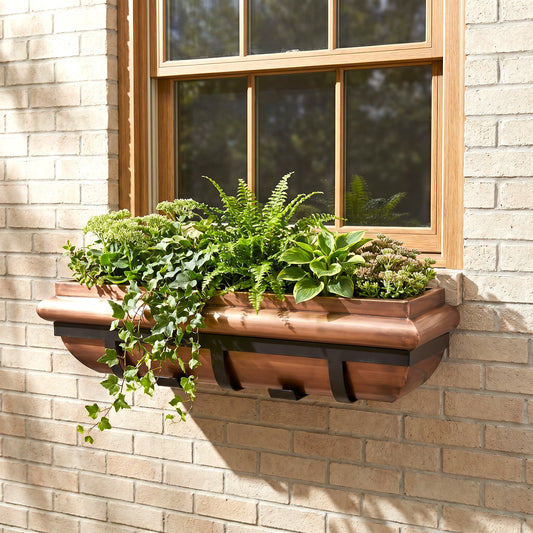
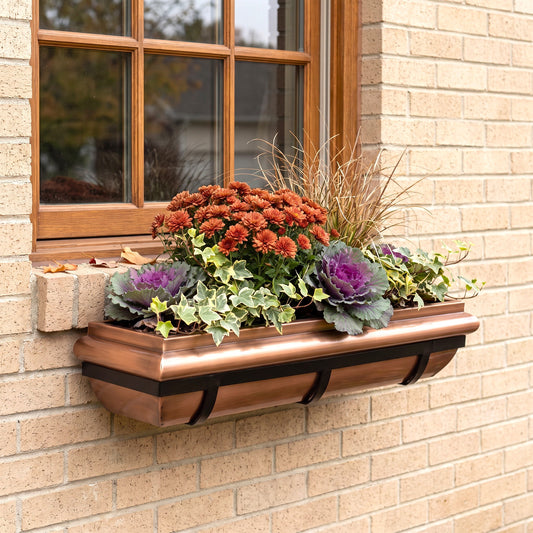
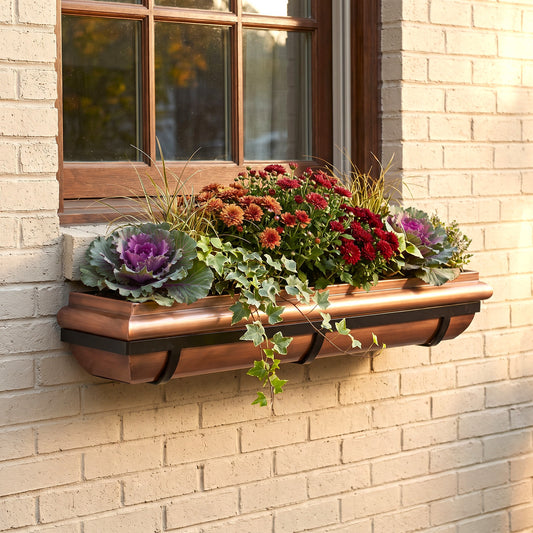
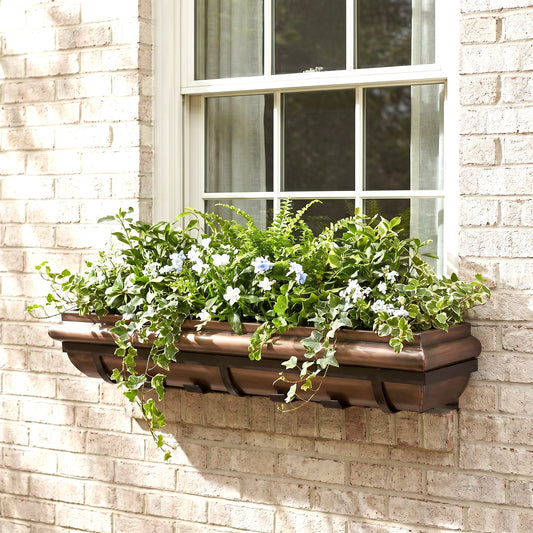
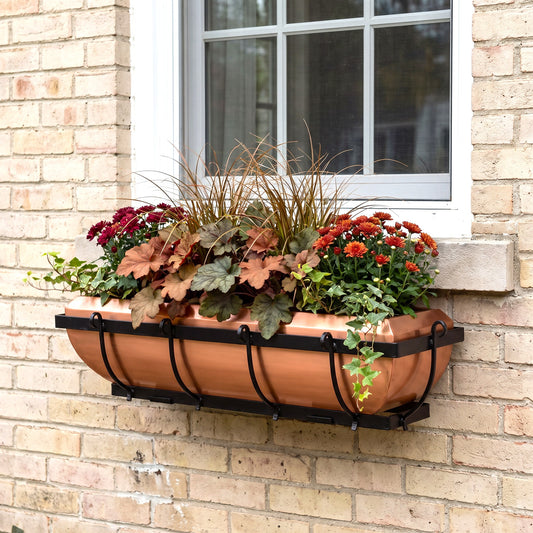
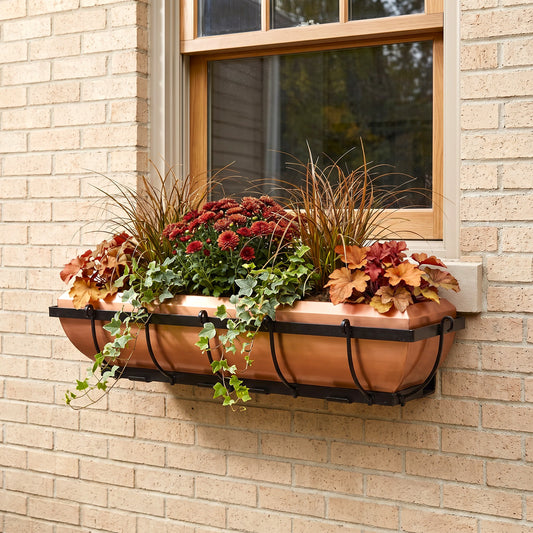
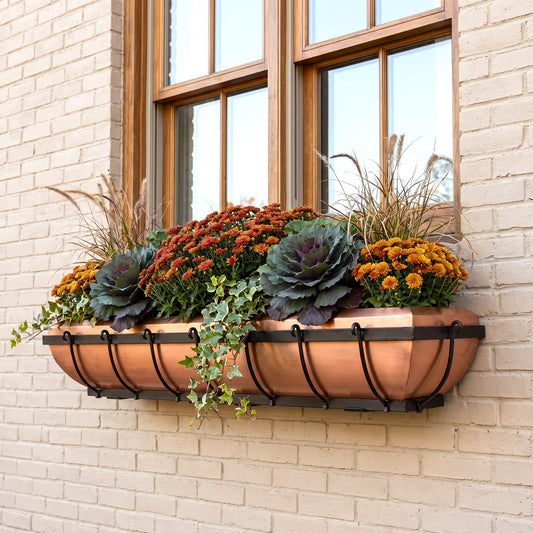
Spring is the perfect time to enhance the beauty of your home with window boxes — adding fresh color, texture, and greenery right at eye level.
While many people plant flowers, window boxes can also be ideal for ornamental foliage, herbs, and compact edibles.
Why Use a Window Box in Spring?
Spring planting gives roots time to establish before summer heat arrives. It’s also the easiest season to refresh curb appeal:
a well-proportioned window box adds depth beneath windows and creates a “finished” look from the street.
Quick win: Repeat the same planting recipe across multiple windows for a cohesive, professionally styled look.
Choosing your planter first? Browse
H Potter window boxes
in copper and stainless steel.
Maximize Your Space
Window boxes are a simple way to garden even if you don’t have a yard. Mounted outside your windows, they expand your growing space
without changing your landscape footprint — perfect for townhomes, apartments, patios, and small-space gardens.
If you’re still planning size and proportions, start here:
how to choose the right window box planter.
Versatile Plant Choices for Any Environment
One of the biggest benefits of window boxes is their versatility. Whether your windows get full sun, partial sun, or shade,
you can build a beautiful mix with foliage, flowers, and functional edibles.
| Window Exposure |
Good Spring Options |
Look & Effect |
| Full sun |
Petunias, geraniums, herbs, dusty miller |
Bright color + strong growth |
| Part sun |
Pansies, ivy, coleus, parsley |
Balanced color + texture |
| Shade |
Ivy, coleus (shade varieties), mint, chives |
Foliage-forward + soft movement |
Design formula: Use the classic
thriller–filler–spiller method — a taller focal plant, mid-height fillers, and trailing spillers for movement.
Need the full walkthrough? See
tips for planting your window box.
Ornamental Plants for Year-Round Beauty
Coleus
Coleus offers bold foliage in burgundy, lime, purple, and pink tones. Many varieties tolerate sun or shade, making it one of the most flexible window box plants.
Ivy
Ivy creates a classic trailing cascade and tolerates cooler, lower-light conditions. Trim occasionally so it stays tidy and doesn’t creep where you don’t want it.
Ipomoea (Sweet Potato Vine)
Ipomoea delivers dramatic trailing color (lime green or deep purple) and looks especially “designer” when paired with simple filler plants.
Dusty Miller
Dusty miller adds silvery contrast and pairs beautifully with both bright blooms and foliage-first designs. It’s also forgiving in changing spring temperatures.
Ornamental Grasses
Grasses add height, movement, and an architectural feel. They’re typically low-maintenance and can be used as the “thriller” in the thriller–filler–spiller layout.
Want more planting combinations? See
plants that thrive in window boxes.
Herbs for Function and Flavor
Basil
Basil loves warm temperatures and full sun. Keep it evenly moist (not soggy), and prune regularly to encourage bushier growth.
Mint
Mint is hardy and adaptable — and it’s best grown in containers like window boxes to keep it contained. It also makes a great companion plant for mixed planters.
Chives
Chives are easy, cold-tolerant, and produce soft, pretty blooms. They work beautifully in herb window boxes or mixed spring displays.
Edible design tip: Herbs look best when planted like ornamentals — repeat the same herb across windows, and use ivy or ipomoea as the “spiller.”
For more edible-friendly options, see
fillers & herbs for window boxes.
Start Strong: Spring Care Basics
-
Use quality potting mix (lightweight, drains well).
-
Check moisture often — window boxes dry faster than in-ground beds.
-
Feed lightly after plants establish (especially for heavy bloomers).
-
Deadhead and trim to keep arrangements looking “full” and intentional.
For the full routine (watering, feeding, cleanup, and seasonal longevity), see
window box care and maintenance.
Why H Potter Window Boxes Are Built for Spring (and Beyond)
Spring planting is only as enjoyable as the foundation you plant into. A well-built window box stays stable outdoors, drains consistently,
and supports seasonal refreshes — so your home looks cared for year after year.
-
Outdoor-ready materials: copper and stainless steel options designed for weather and watering.
-
Architectural proportions: a window box should look integrated with your home — not like an afterthought.
-
Designed to be replanted: treat window boxes like seasonal décor for spring, summer, fall, and winter greens.
For sizing, exposure, and planting formulas in one place, start here:
Complete Window Box Guide.
Frequently Asked Questions
What are the best plants to start with in spring window boxes?
Start with hardy spring performers and easy foliage: pansies, ivy, dusty miller, coleus, and herbs like chives or parsley. Then add trailing movement with ivy or sweet potato vine.
How do I make a spring window box look “full” and intentional?
Use the thriller–filler–spiller layout: one taller focal plant, several mid-height fillers, and a couple of trailing spillers. Repeat one color or texture across windows for cohesion.
How often should I water spring window boxes?
Check moisture regularly. Spring weather can swing quickly, and window boxes dry faster than garden beds. Water when the top inch of soil feels dry, and avoid standing water.
Can I grow herbs in the same window box as flowers?
Yes — mixed planters are a great approach. Just group plants with similar sun and watering needs, and use trailing herbs or ivy as the “spiller” for a finished look.
How do I choose the right window box size for my windows?
A good rule is to choose a box close to the width of the window (or slightly wider) for the most balanced look. More soil volume also helps stabilize moisture for healthier plants.