Why Heavy Climbing Plants Need Strong Obelisks for Lasting Support
Heavy Plants: Why Obelisks Are the Support That Won’t Fail
Heavy climbing plants can overwhelm weak structures as they mature. This guide explains why supports fail, why obelisks work for vigorous growth, and how to choose and install an obelisk so it stays upright through seasons of climbing.
Key Takeaways
- “Heavy” happens over time: thickening stems, dense foliage, and wind load turn gentle vines into real weight.
- Obelisks distribute load: a 3-D structure supports growth from multiple sides and improves training.
- Stability is engineered: rigid uprights, dependable joints, and a base that anchors firmly matter most.
- Installation is part of performance: level ground + proper staking prevents lean and wobble.
The Focal Point: Vertical Structure That Solves Real Garden Problems
Many climbing plants begin as delicate vines and quickly mature into heavy, woody growth. Climbing roses, wisteria, honeysuckle, and trumpet vine can produce dense foliage, thick stems, and significant seasonal weight. Without strong vertical support, these plants often sprawl outward, collapse weaker trellises, or create visual clutter in otherwise well-designed garden beds.
A well-structured garden should feel intentional, not overgrown. When heavy climbers lack support, they can pull down lightweight trellises, tangle surrounding plants, and require constant pruning just to maintain order. Over time, this becomes less of a gardening project and more of a maintenance burden.
Proper trellising and support can be just as important to the overall beauty of your garden as good soil preparation. When plants are guided vertically, they receive better airflow, improved light exposure, and reduced breakage during storms or rapid growth periods.
Why heavy plants overwhelm basic trellises
- Weight increases dramatically as plants mature
- Wind resistance multiplies with dense foliage
- Thin supports flex and loosen over time
- Unstable structures lead to plant damage
- Garden beds lose definition and visual order
Many gardeners discover too late that decorative trellises aren’t built for long-term structural support. As plants fill in, the support must handle not just weight but leverage and wind load as well.
Vertical garden structures as focal points
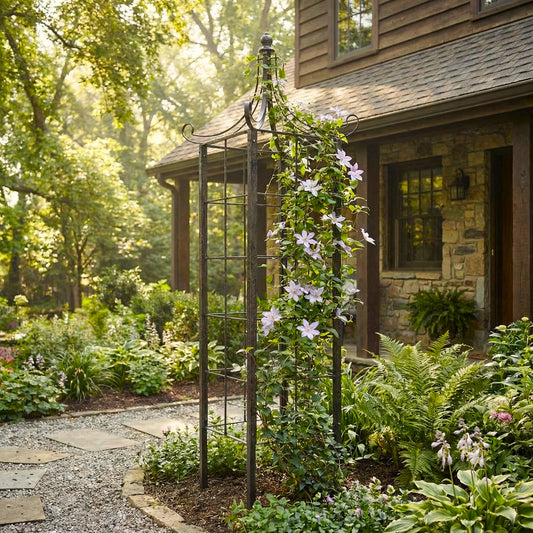
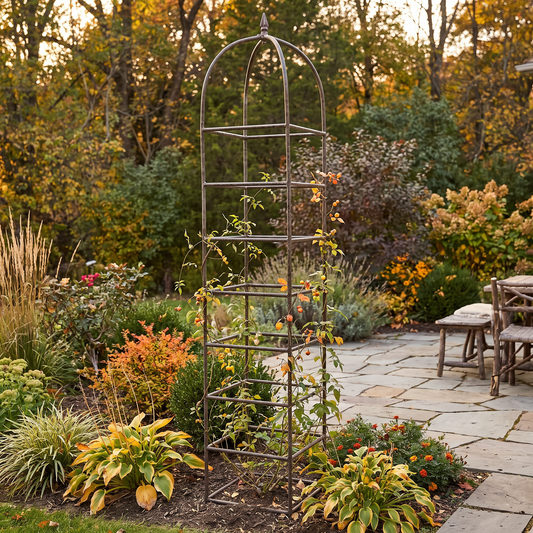
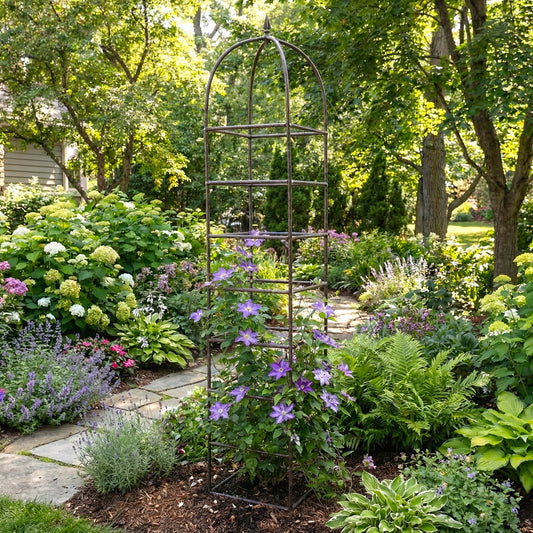
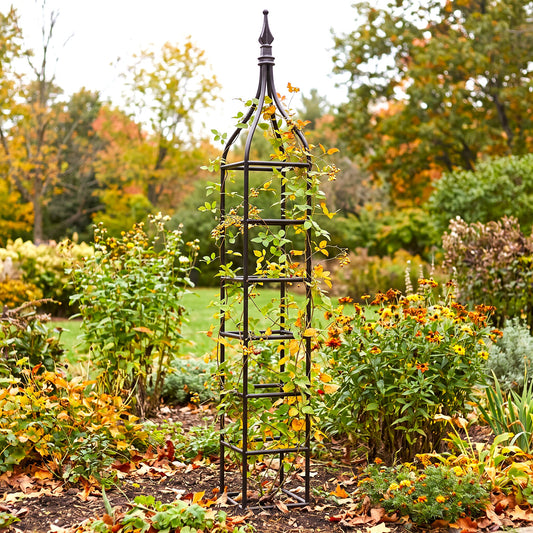
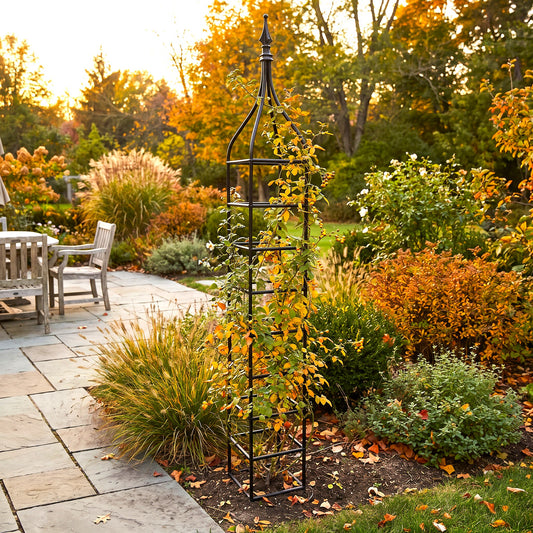
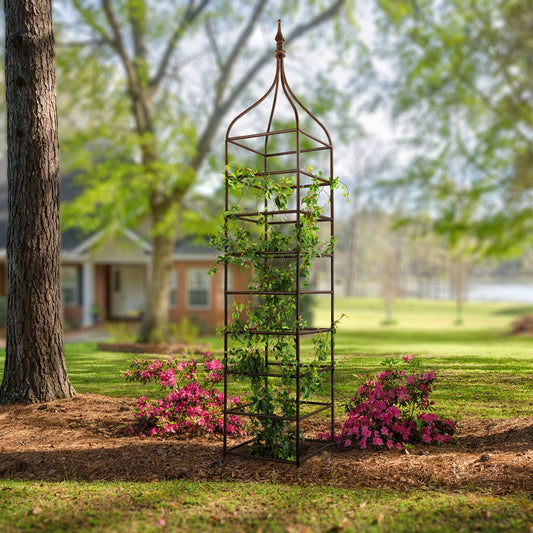
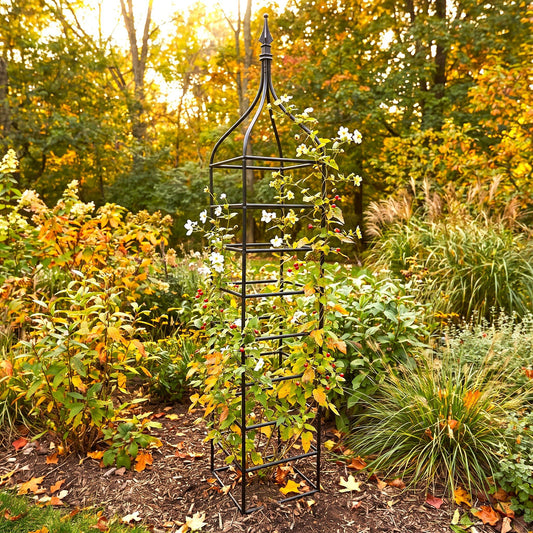
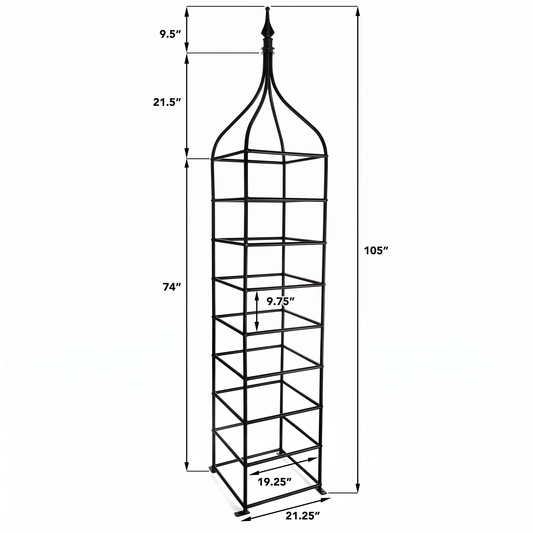
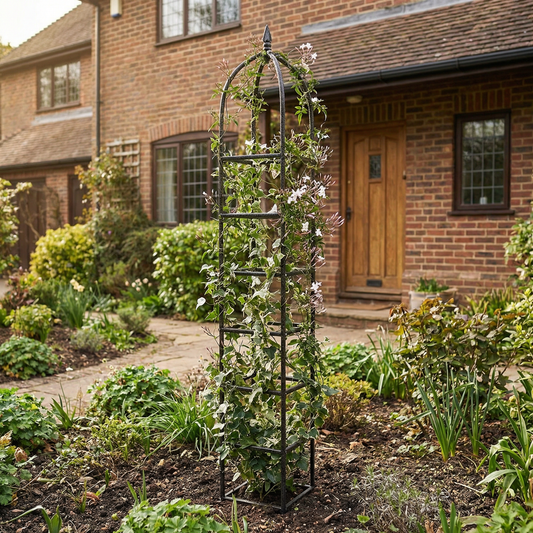
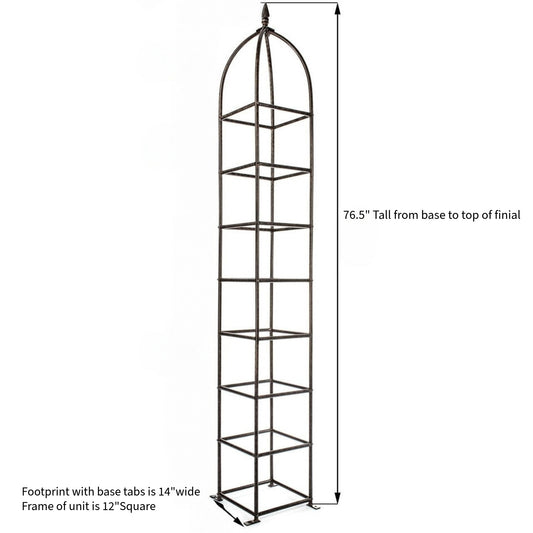
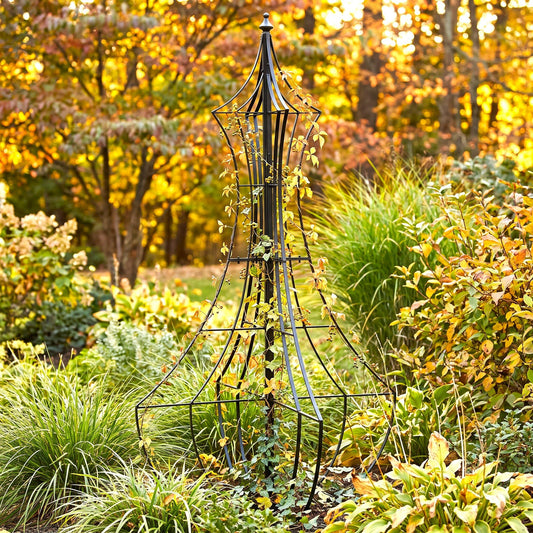
Strong obelisks provide both function and form. They guide climbing plants upward while acting as architectural anchors within the garden. A properly placed obelisk draws the eye upward, adds height variation, and keeps plant growth contained and manageable.
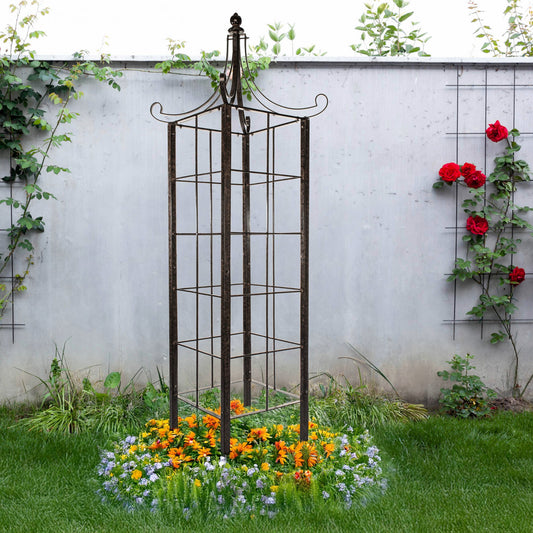
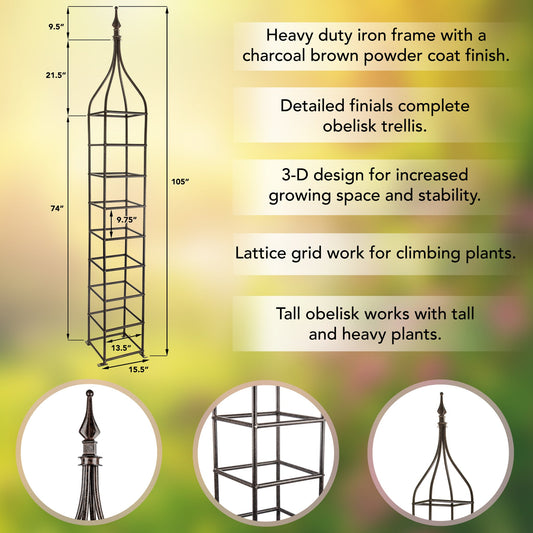
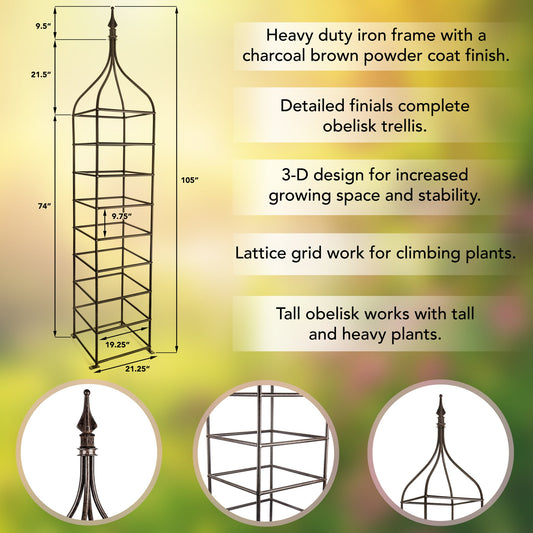
A well-built heavy duty obelisk offers stability for mature plants while maintaining the visual balance of the landscape. Unlike flat panels or lightweight frames, a freestanding obelisk distributes plant weight across multiple sides, allowing growth to wrap naturally around the structure.
For gardeners seeking long-term durability, metal garden obelisks provide reliable support through seasonal weather and plant maturity. Over time, these structures become permanent visual elements in the garden, even when plants are dormant.
Creating order without constant maintenance
New gardeners often assume heavy climbing plants require constant pruning and correction. In reality, most of the work comes from inadequate support systems. When plants are given strong vertical structure from the start, they grow in a controlled pattern that reduces maintenance and keeps beds visually organized.
Choosing a durable structure allows gardeners to enjoy the beauty of climbing plants without the frustration. Well-designed Iron Obelisks act as both plant support and garden architecture, helping create a cohesive, intentional landscape.
Need sizing, placement, and style ideas?
This post focuses on heavy-plant support and stability. For a visual buying guide by height, width, where to place, and how to use obelisks in beds and containers, visit these obelisk pages.
Obelisk Buying & Usage Guide Shop Garden ObelisksWhy supports fail as plants mature
Most climbers don’t “break” supports in a single day—they slowly stress them over time. As canes thicken and growth becomes dense, the structure experiences more leverage and movement. The real trouble often begins after the plant looks established: peak summer growth, storms, and weight from blooms or fruit.
Common failure signs
- Flexing or sway: the structure moves as the plant grows
- Leaning: the base shifts after watering, rain, or wind
- Joint fatigue: connections loosen or deform under load
- Plant damage: canes split when the support shifts
Why obelisks work
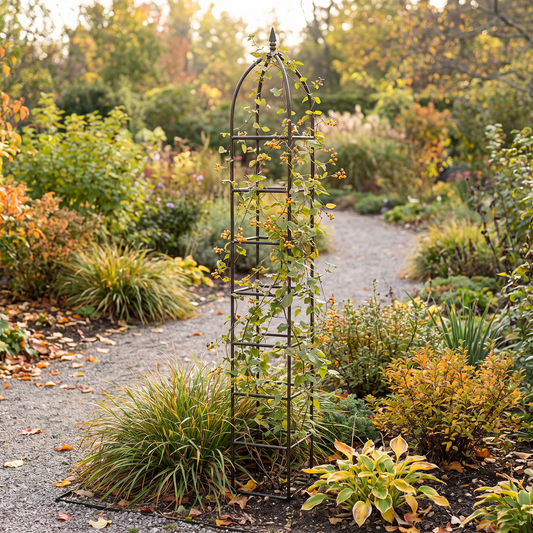
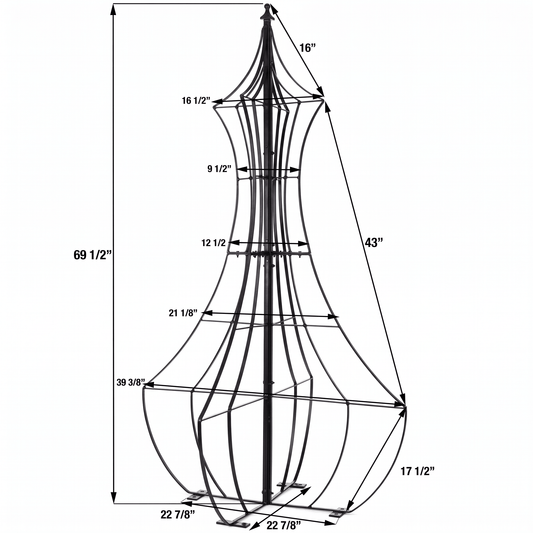
A garden obelisk is a freestanding, tower-shaped structure that guides plants upward. The 3-D shape matters for vigorous plants because it spreads the load and provides multiple tie points for training. That makes it easier to keep growth contained and looking intentional.
What you gain with a strong obelisk
- Better weight distribution as plants wrap and climb around the frame
- Cleaner garden lines that keep beds organized
- Improved airflow through dense growth
- Year-round structure that reads as garden architecture
How to choose an obelisk for heavy climbing plants
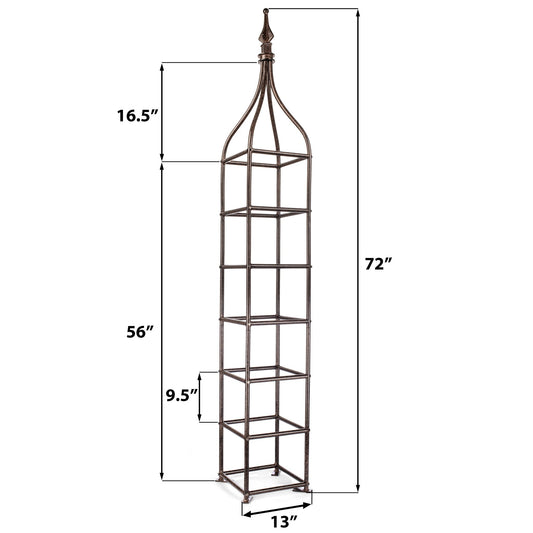
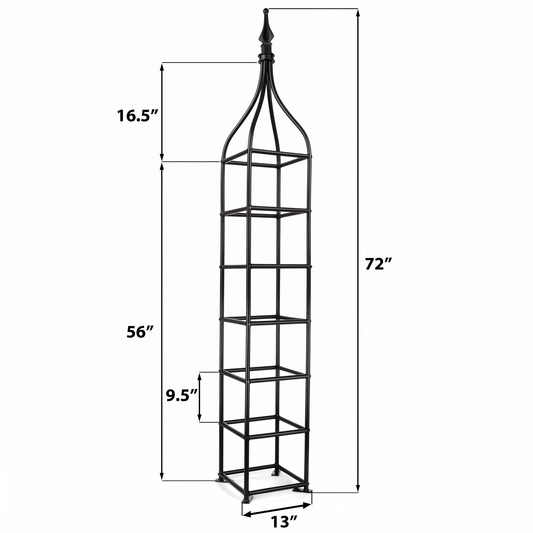
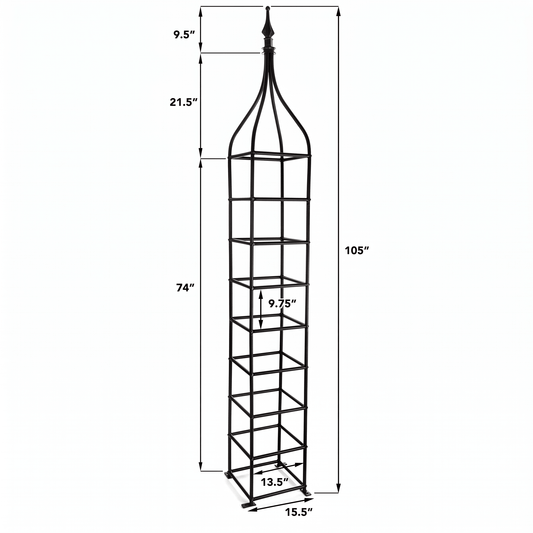
Use the charts below to match your plant and location to the support structure. The goal is simple: no wobble, no lean, and enough height/width for mature growth.
Plant-to-structure match chart
| Plant type | Why it gets “heavy” | What to prioritize | Training note |
|---|---|---|---|
| Rambling / climbing roses | Thick canes + bloom weight + wind load | Rigid frame, stable base, strong tie points | Weave canes around; tie gently as growth thickens |
| Wisteria | Woody, aggressive growth that thickens significantly | Maximum rigidity + secure anchoring | Prune and guide early; don’t let it “strangle” the frame |
| Honeysuckle / trumpet vine | Fast growth + dense foliage | Height + anchoring (wind resistance) | Train weekly in peak season to avoid tangling |
| Vegetable vines (beans, cucumbers) | Fruit weight + seasonal growth surge | Wider base, easy access around structure | Guide stems early; keep harvest access in mind |
Engineering checklist (what keeps an obelisk upright)
| Feature | What to look for | Why it matters for heavy plants |
|---|---|---|
| Rigidity | Uprights that don’t flex easily | Reduces sway and stress as plants mature |
| Connections | Dependable joints / quality construction | Loose joints become wobble points under load |
| Base balance | A footprint that feels planted and centered | Prevents lean over time, especially after storms |
| Anchoring | Stakes/spikes that insert deeply into soil | Stops shifting when wind catches foliage |
| Outdoor finish | Weather-resistant protection | Durability matters when the support is “permanent” in the garden |
Installation that prevents lean and wobble
A great obelisk can still disappoint if installed in soft, uneven ground. Here’s a simple, reliable method to keep it stable.
Step-by-step anchoring
- Choose firm, level ground in the bed (avoid loose pockets if possible).
- Position intentionally so it looks balanced from the main viewpoints (path, patio, window).
- Insert stakes/spikes and drive them in firmly (a rubber mallet helps).
- Check level from two sides before final tightening.
- Blend the base with soil or mulch so the install looks finished.
Quick seasonal maintenance
- At the start of the season, tighten connections and confirm level.
- After major storms, check for shifting—small corrections prevent long-term lean.
- Train growth weekly in peak season to avoid sudden “load spikes.”
FAQs: Heavy plants and garden obelisks
Why do heavy climbers need stronger supports?
As climbers mature, they gain weight and catch wind. Weak supports flex, lean, or loosen at the joints, which can lead to plant damage and a collapsed structure.
What’s the single most important stability feature?
Anchoring plus rigidity. A stable base and firm staking prevent shifting, while rigid uprights reduce sway that can loosen connections over time.
Can I use an obelisk in a large planter?
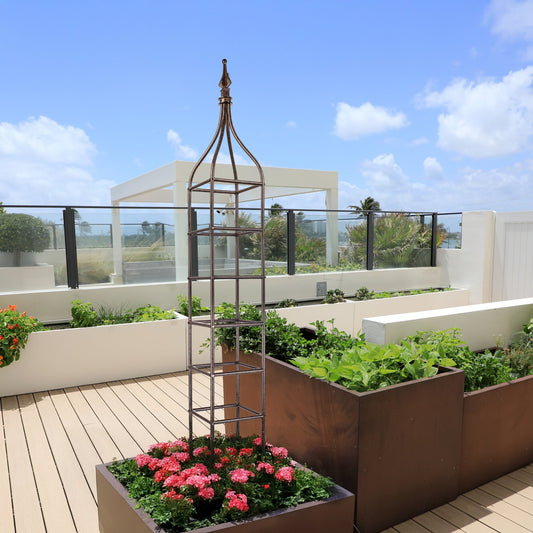
Yes—use a heavy, wide planter and make sure the obelisk is well supported at the base. For vigorous climbers, choose a planter large enough that the structure feels planted rather than top-heavy.
What plants work best on an obelisk?
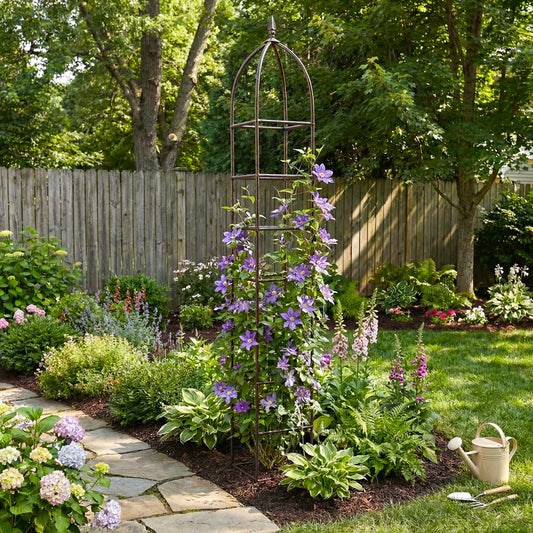
Roses and clematis are classic, wisteria and honeysuckle can be vigorous with proper pruning, and edibles like beans and cucumbers also perform beautifully on sturdy obelisks.
Where should I go next for sizing, placement ideas, and product options?
Visit the H Potter Obelisk Buying & Usage Guide, then browse the Garden Obelisk Collection.
Build a garden support that lasts for seasons
Heavy climbers are stunning when they’re trained well—and frustrating when supports fail. Choose a structure with real stability, install it level, and guide growth as it matures for the cleanest, most beautiful result.
See the Buying & Usage Guide Shop Garden Obelisks