Window Boxes for Summer and Fall: What to Plant and How to Keep It Going
A window box does something most other plant containers can’t! It puts colorful flowers at eye level, right where you and anyone else walking by your house will actually see it. A window box adds immediate curb appeal to your house whether you fill it with your favorite flowers or your favorite fragrant herbs. With a little bit of smart planting and a stylishly designed planter, a plain wall becomes a part of the garden and does it all with only a few square feet of soil.
The downside to window boxes is just how much work these smaller planters do. Your window box will oftentimes sit in the sun against a warm wall for most of the day, while the smaller amount of soil in the planter dries a little faster and requires more watering. However, get your window box decor right and the projecting you’ve been planning gets planted right and will carry you through the Spring into the Autumn months with little fuss. For over 25 years we’ve found the most successful window boxes don’t start with plants, they start with a plan.
Start with the box, not the flowers
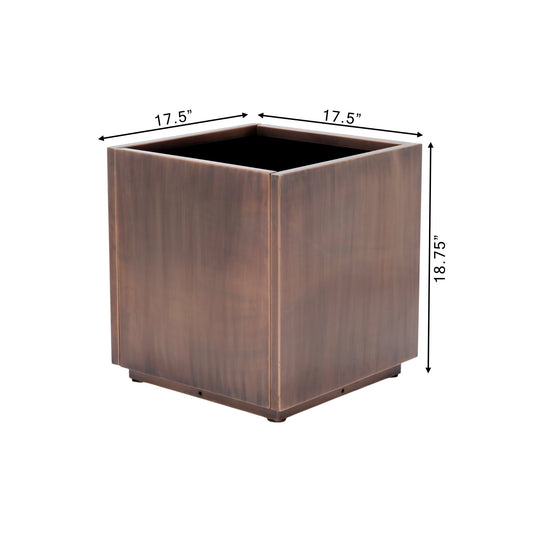
Material is without a doubt the most important part of your window box decision. Wood matches most American exteriors, a classic finish that unfortunately doesn’t last for long. Plastic or thin wire are likely to warp, bend or fade quickly (within a year of weather exposure), but they do provide a cheaper alternative. Metal window boxes hold their shape and last significantly longer than their wooden or plastic counterparts, but can heat up quickly in full sun locations.
When choosing your material, note the location of your windows, partial sun or shaded? We think metal is the best option for longevity where it won’t get overheated as easily. Full Sun? You’ll have to choose your plants intentionally, and even though we only provide metal window boxes, we think wood or plastic are best (just be ready to replace them in a few years). Finally, note the architecture or design of your house. What would look best with your siding, with your landscaping, or with the flowers you want to plant? Whatever style you choose, make sure it fits.
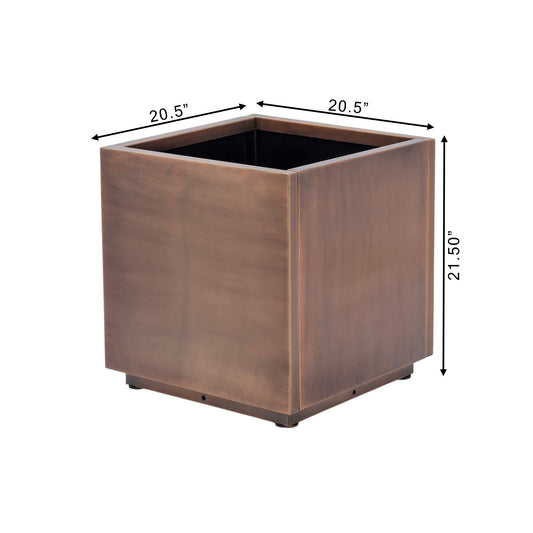
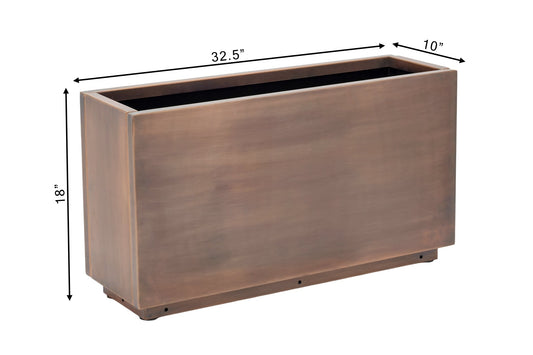
Next check your depth and length. For deeper rooted plants, make sure your window box is deeper rather than shallow. The root system needs enough space to properly grow, as well as store moisture during warmer days, anything too shallow and your plants won’t make it through July. Your length is the simplest measurement, make sure the window box fits your window. Most window box providers (ourselves included) offer various different sizes of the same style. So don’t put a 30 inch window box under a 60 inch window, or a 48 inch window box under a 32 inch window if you can help it.
Drainage is the last piece. Water needs somewhere to go, and it should never pool at the root line. Make sure your insert or liner has drain holes, and skip the old advice about a layer of gravel in the bottom. It does not improve drainage, it just raises the waterlogged zone closer to the roots. Good potting mix, top to bottom, is the better answer.
Summer plantings that hold up through the heat
Before adding your plants, here’s our classic styling advice for planters, thrillers, fillers, and spillers, works great here! If you’re unfamiliar with the method it looks something like this: A few upright plants for height (thrillers), several mounding plants to fill the middle (fillers), and something that trails over the front edge (spillers). In a window box don’t be afraid to really lean into the spiller if you’re covering a blah section of a wall or just looking to add some more detail to your siding.
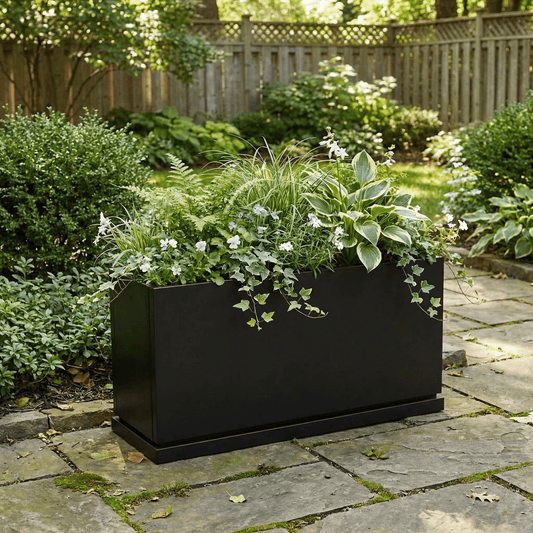
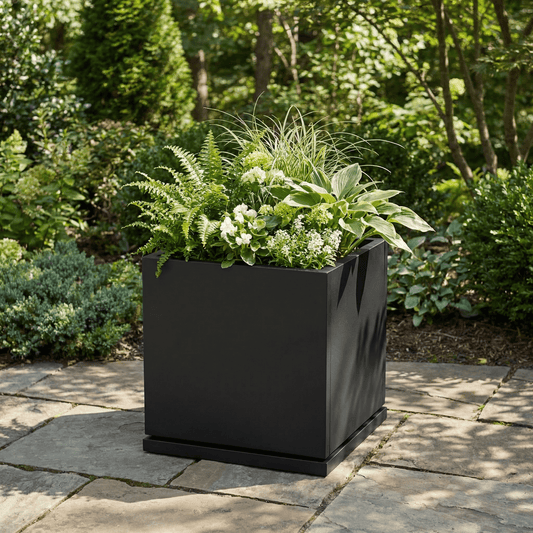
For a box in full sun, geraniums, lantana, angelonia, and verbena will bloom straight through August without complaint. Calibrachoa and trailing petunias give you the front-edge spill, and sweet potato vine or creeping jenny adds foliage that keeps working even in a week when nothing is blooming. For a shady window, coleus and caladium carry the box on leaf color alone, with begonias, torenia, and fuchsia providing the flowers.
Watering and feeding (The gardener’s Achilles Heel)
This is where most gardeners struggle, over or underwatering is one of the easiest ways to hurt your plants unintentionally. Water in the morning, and make sure the first inch or two of soil is moist, but not waterlogged, check by pressing your finger into the soil to measure moisture. A quick splash wets the top inch and leaves the roots dry. In the hottest stretch of summer, a sunny window box may genuinely need water every day, and that is normal rather than a sign you have done something wrong.
Mix a slow-release fertilizer into the soil at planting, then add a liquid feed every two weeks once the plants are established. Container plants have no soil reserve to draw on, so what you give them is all they get. Deadhead the geraniums and petunias when you walk past, and pinch back anything that starts getting leggy in mid-July. Ten seconds of attention keeps a box tidy for another month.
Making the switch to fall
Late August into September is the turn. You’ll notice when nights drop into the 50s, and so will your plants, the petunias start looking stringy, and the whole box looks worn out from a long summer. Don’t wait for a frost to force the issue, because the best fall window boxes go in while the weather is still mild enough for roots to settle. Window boxes are great since the shallower soil and ease of access usually makes replanting a simple process to make your home gardening that much simpler.
Fall plantings with real staying power
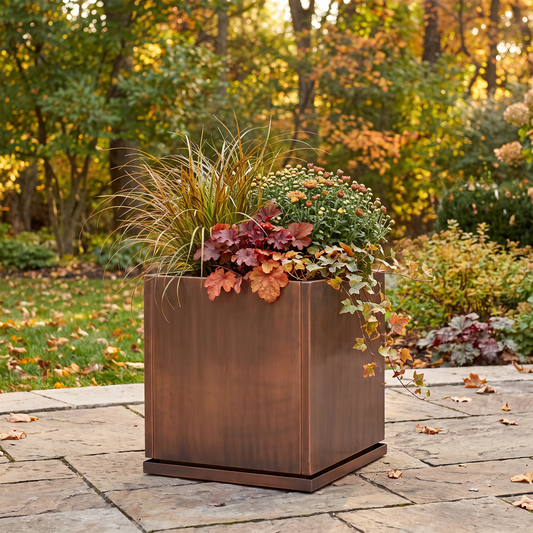
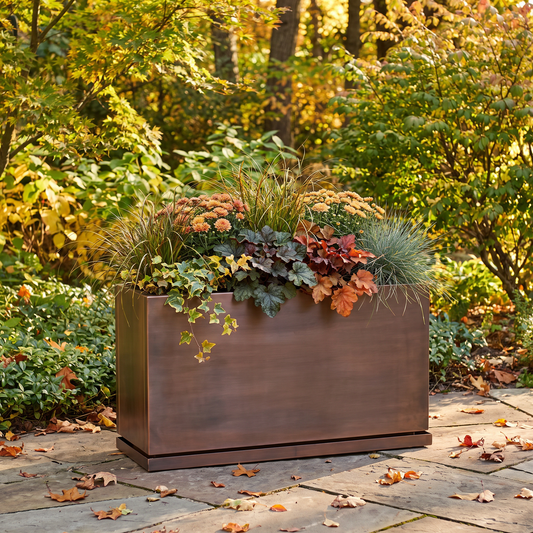
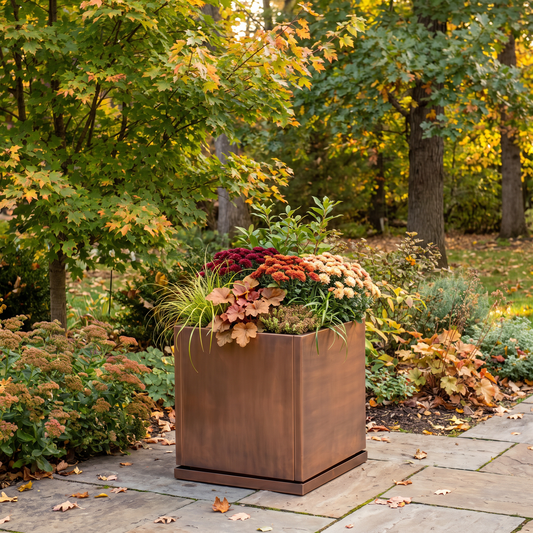
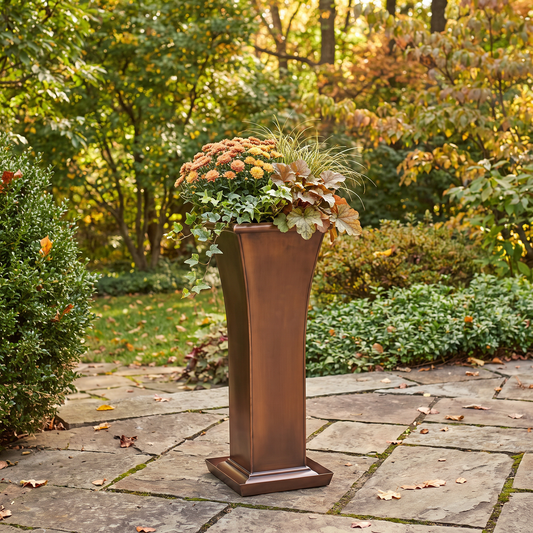
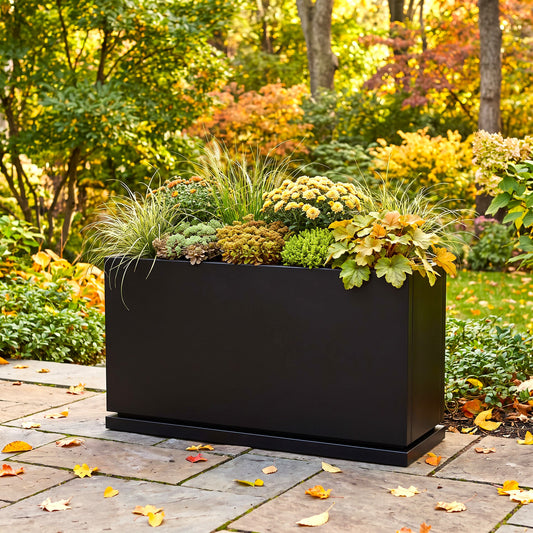
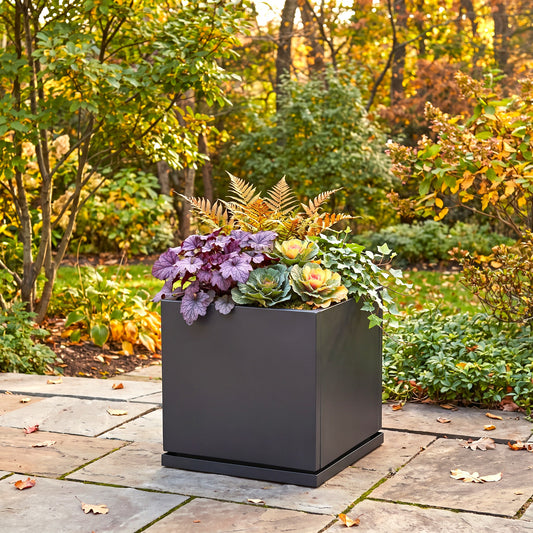
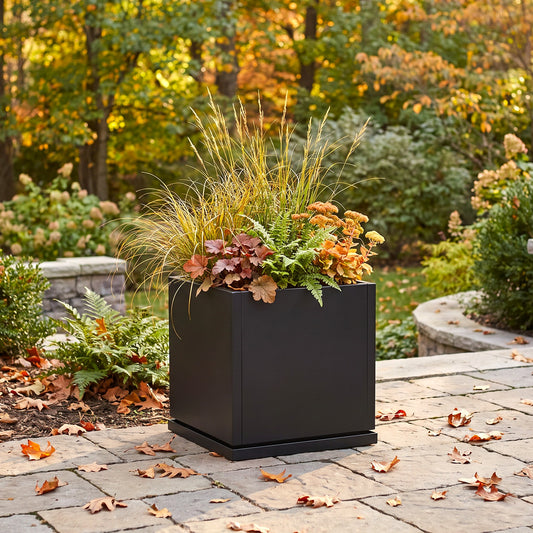
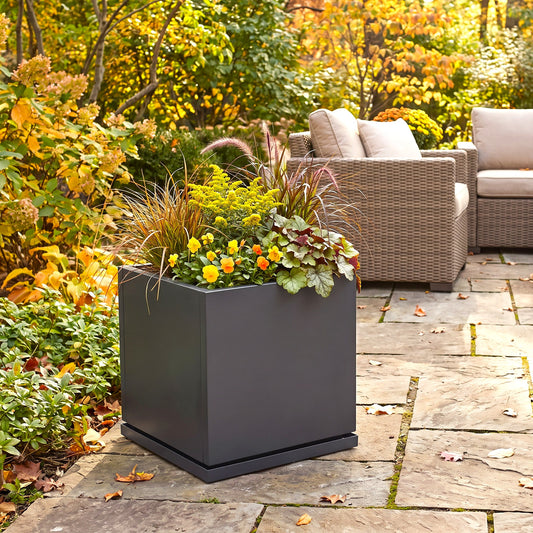
Fall containers can look far better than the standard mum-in-a-pot, and they last much longer. Ornamental kale and cabbage are the backbone, holding their color deep into cold weather and actually improving after a light frost. Coral bells, ornamental peppers, and dusty miller give you texture, and pansies and violas will bloom on through hard frosts once they harden off. Asters and garden mums bring the seasonal color if you want it, though they are the shortest-lived thing in the box.
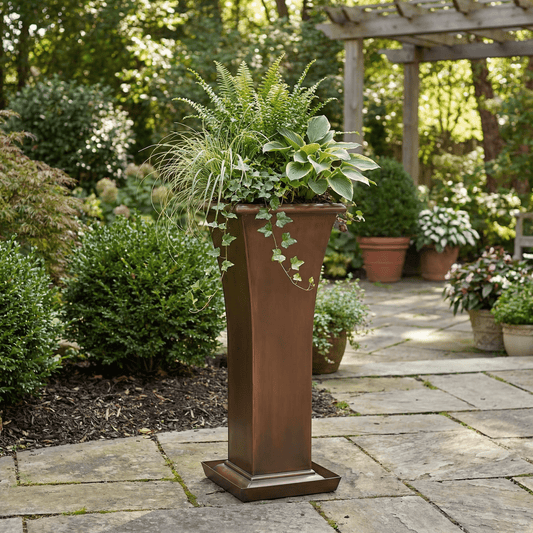
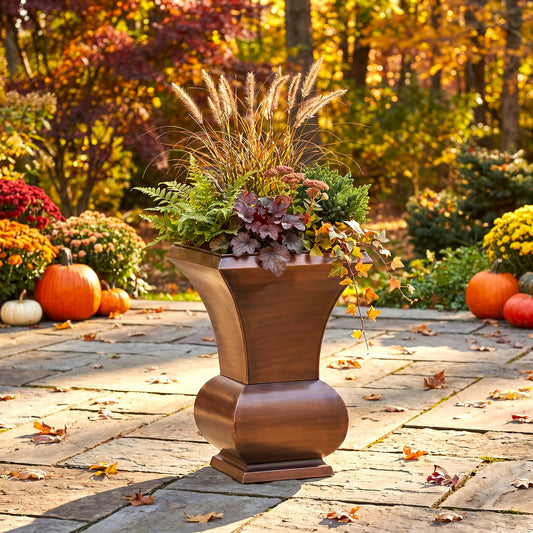
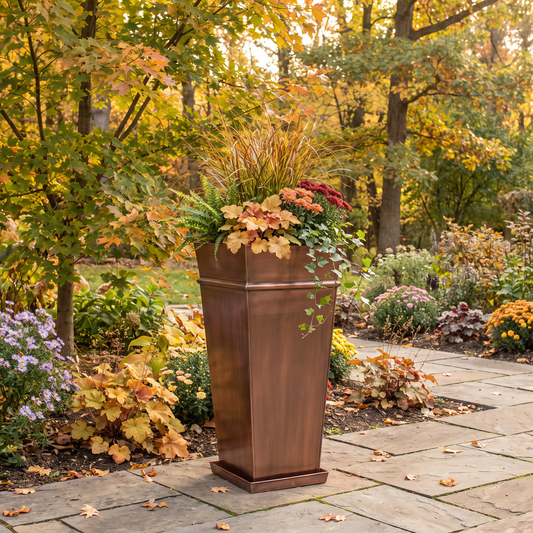
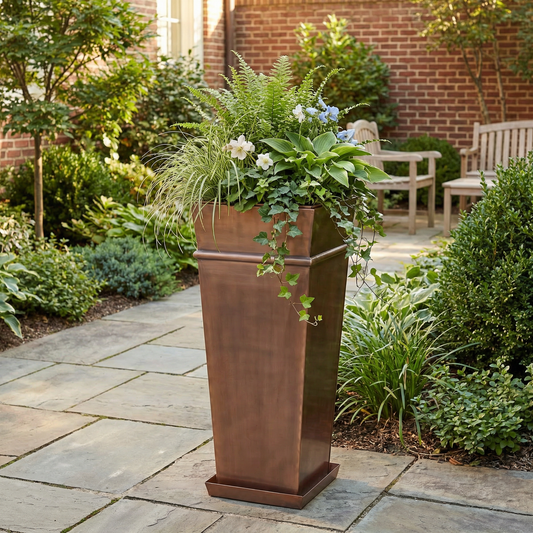
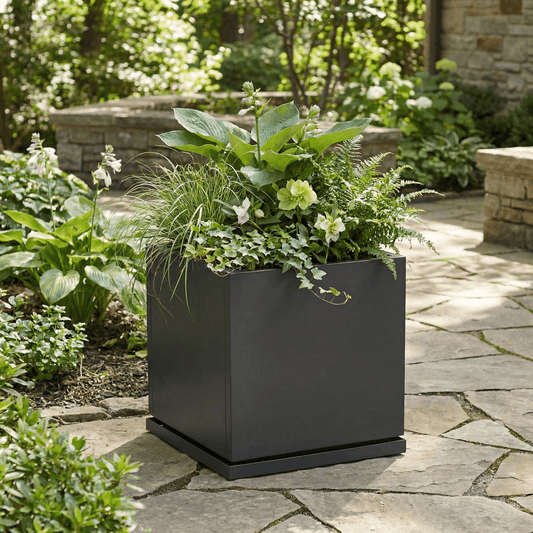
Then dress it. A few small pumpkins or gourds tucked between the plants, some dried hydrangea heads, bittersweet, or a handful of birch branches for height will take a fall window box from pretty to memorable. For a shaded fall window, lean on foliage: heuchera, ferns, and a trailing ivy will look good until the snow flies.
A few quick questions we get
As a working rule, plan on one plant per 4 to 6 inches of length for a mixed arrangement. A 24 inch box comfortably holds four to six plants when you want it looking full.
While you might want to bring in your wooden or plastic boxes, our iron frames and boxes are built to stay outside year round. Empty the planter of spent annual roots and soil at the end of the season, or replant it with evergreen boughs and branches for a winter arrangement that needs no water at all.
Not with a removable planter box. Lift the insert, refresh the plants, set them back out, and the mounted frame never moves.
Happy gardening!