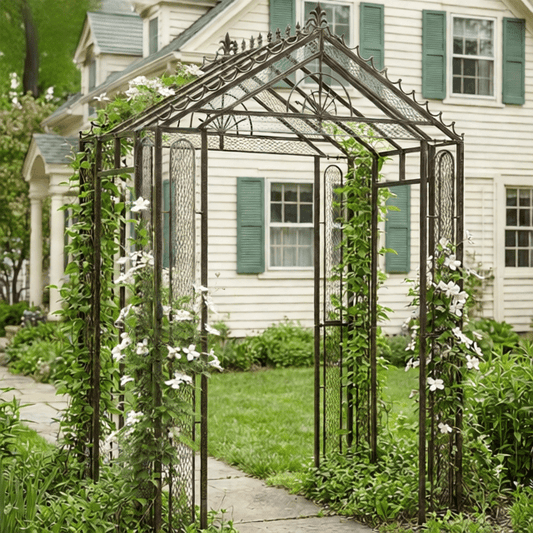
Place your metal arbor where it creates a “garden moment”—an entrance, a pathway, a focal point, or a bench nook—then let the plants finish the story.
Jack’s Placement Rule: Put the Arbor Where You’ll Actually Use It
A great arbor isn’t just garden décor—it’s a decision about how you move through your space. The best placements do two things at once: they look beautiful and they guide the garden (and the gardener) toward a purpose.
-
Frame transitions: gates, paths, entrances, and “before/after” moments.
-
Plan for growth: mature vines widen—and they catch wind.
-
Think year-round: the arbor should look sculptural even before foliage fills in.
Author: Jack Peed, contributing garden writer at H Potter.
Your garden is personal. It’s where you escape daily routines and trade noise for something calmer. As your garden grows, so does your need to support it—especially when plants want to climb toward the light instead of sprawl along the soil. A metal garden arbor gives that vertical growth a strong, permanent home.
Quick win: Install the arbor first, then choose the plant. It’s easier to place a vine correctly when the structure is already standing where you want it.
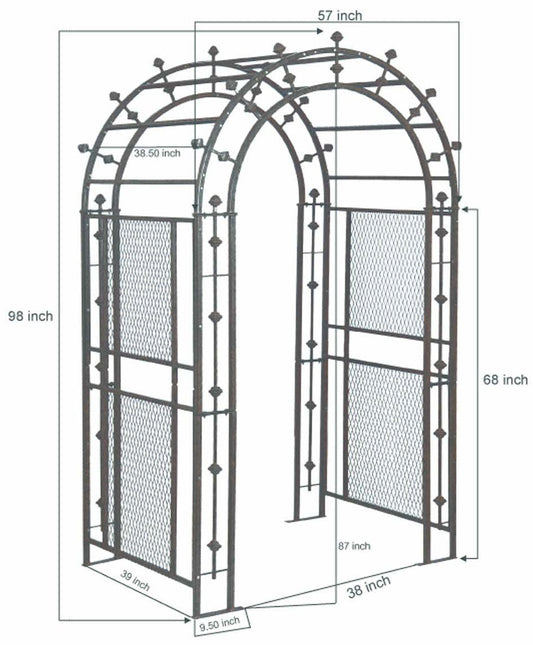
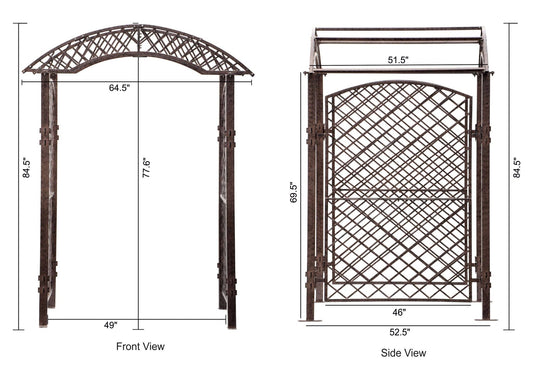
If you’re still deciding size and style, start with the Arbors Buying Guide—it’ll help you choose an arbor that fits your space (and your long-term planting plans).
1) Use a Garden Arbor Arch as an Entrance
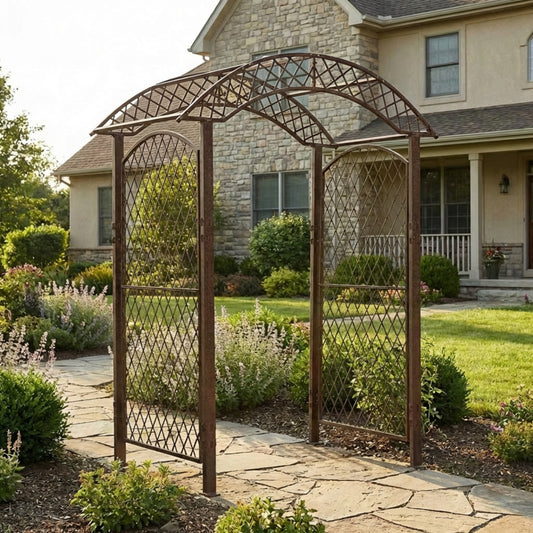
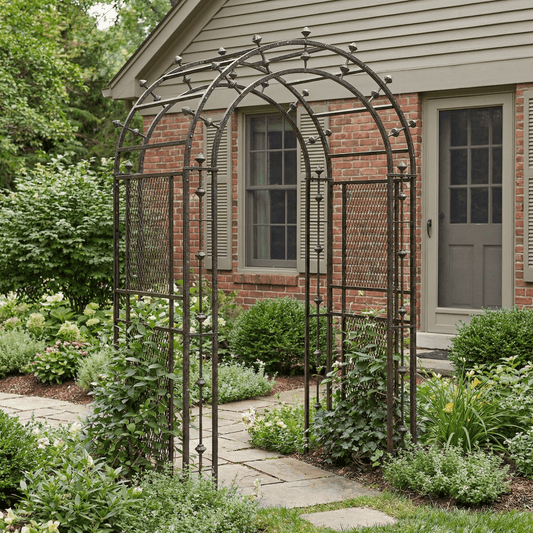
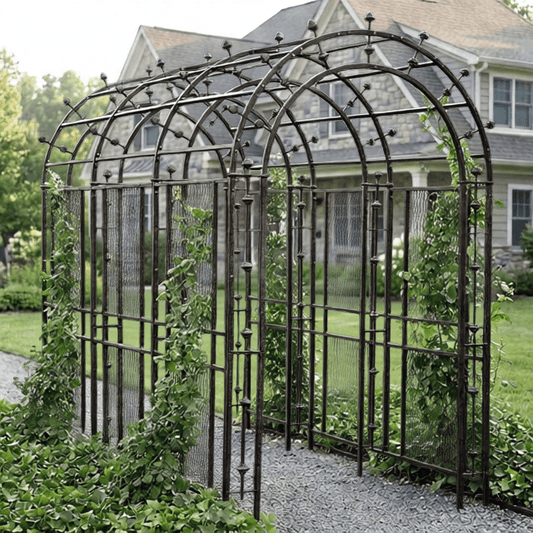
One of the most classic placements is the entrance to a yard, garden, or side path. A large iron trellis arbor creates a threshold: you don’t just walk into the garden—you arrive.
Early in the season, your arbor may be the star before vines climb. That’s why the structure itself matters. For many months of the year, the arbor’s lines and finish are the aesthetic. And once plants mature, the arbor becomes the framework that holds the whole scene together.
Placement tip: Think about mature width. Some vines want room to spread; for vigorous growers, one arbor may be enough—or you may want multiple arbors in sequence to create a living tunnel effect.
2) Use Your Arbor Trellis as Practical Support
Arbors aren’t only about looks. They can be a practical solution for plants like blackberry or grape vines—anything that benefits from lift, airflow, and a clear growing direction. Train vines up and over the arch and you’ll get better sun exposure (and a cleaner harvest).
A heavy-duty metal arbor supports weight season after season, which matters once canes thicken and fruit loads increase.
Garden builder move: Mulch at the base of the arbor to create a soft pathway, improve drainage, and help keep weeds down.
3) Let the Arbor Become the Focal Point
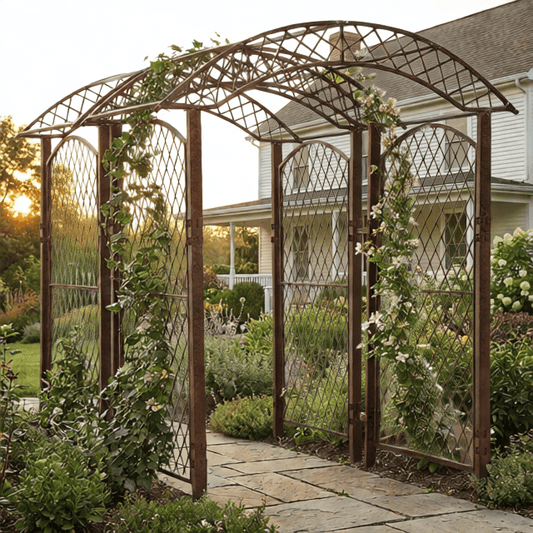
Maybe your yard needs a centerpiece—something the rest of the garden can “orbit.” An arbor does that naturally. A clematis climbing up a metal arbor trellis can become the feature you design around, guiding what you plant, where you place containers, and how you shape the view.
For a more finished look, add a ground cover at the foot of the arbor to blend the base into the planting bed. Then layer in pots, statuary, or natural stone for texture.
Design cue: Place the arbor where the eye naturally lands—at the end of a path, centered on a view line from a patio, or framed by lower plantings.
4) Add a Garden Arbor with a Bench
One of my favorite placements is over a bench. A bench gives you a reason to pause. An arbor makes that pause feel intentional—like a small garden room. You can enjoy fragrance, shade, and the quiet satisfaction of a space you’ve made on purpose.
Even without plants, a well-built arbor adds grace and structure. Add soft lighting and you can enjoy the space well into the evening.
Evening tip: If you’re adding lights, keep wiring tidy and choose outdoor-rated options. A few warm points of light can make the arbor feel like a destination after sunset.
Frequently Asked Questions
Where is the best place to put a garden arbor?
The best spot is where the arbor frames a transition—an entry, a gate, the start of a path, or the entrance into a garden room. If you’ll walk through it often, it will feel like part of daily life instead of “just decoration.”
Should I place my arbor before planting vines?
Yes. Install the arbor first, then plant. You’ll get cleaner placement, easier training, and you won’t disturb established roots later.
Do I need to anchor a metal arbor?
In most cases, yes—especially in wind-prone areas or when you’ll grow mature vines. Proper anchoring keeps the arbor plumb, stable, and aligned for years. Use the
Maintenance & Setup Guide for best practices.
Can I line up multiple arbors?
Absolutely. Multiple arbors can create a dramatic walkway or “tunnel” effect, especially for vigorous climbers. Plan spacing based on mature plant width and how much coverage you want.
What plants work well on an arbor?
Climbing roses, clematis, jasmine, honeysuckle, and even grapes can work beautifully—choose based on sun exposure, maintenance, and mature size. Start with
Climbing Vines for Trellises & Arbors.
Continue Your Arbor Plan
If you want the fastest path to a “finished” garden look: place the arbor first, then choose the vine that matches your sun and your patience.