Climbing roses are made for arbors. Choose a heavy-duty structure, train early, and let blooms + fragrance turn your garden entrance into a show-stopper.
Jack’s Rose Rule: Pick the Arbor for Year Five
A young climbing rose looks polite. A mature climbing rose is a different creature—thicker canes, heavier bloom cycles,
and real wind “sail.” The best-looking rose arbors start with a structure that stays straight and substantial as the plant gains weight.
-
Structure first: install and anchor your arbor before the rose takes off.
-
Train early: gentle guiding in year one saves years of frustration later.
-
Think long-term: climbing roses can live for decades—your arbor should, too.
Author: Jack Peed, contributing garden writer at H Potter.
Arbors are a monumental addition to nearly any garden. Their size alone makes a well-crafted arbor feel like a destination—an entrance,
a centerpiece, even a quiet place to sit and breathe. And once you’ve chosen an arbor that fits your space, the next question is the fun one:
what deserves to grow on it?
There are plenty of climbers that work beautifully on an arbor—clematis, ivy, even blackberry and grape vines—but few plants match the grandeur
of an arbor the way climbing roses do. Roses bring bold blooms, real fragrance, and enough presence to “meet” the scale of the structure.
When they mature, the arbor doesn’t just support the plant—the two become one feature.
Quick win: Roses get heavy as they mature. Start with a structure built for weight—then train early for the most beautiful coverage.
Begin here:
Shop Garden Arbors.
A Trellis Arch That Can Truly Support Roses
Climbing roses tend to be heavier than most common garden climbers. That’s why an arbor is such a natural match.
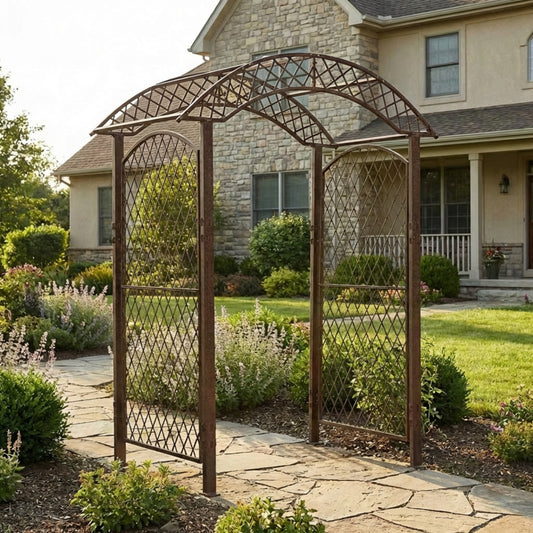
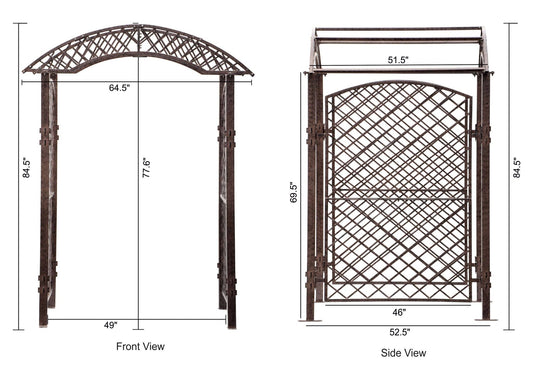
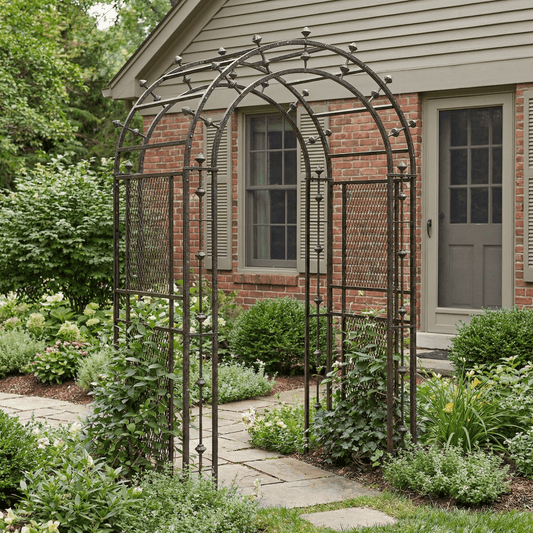
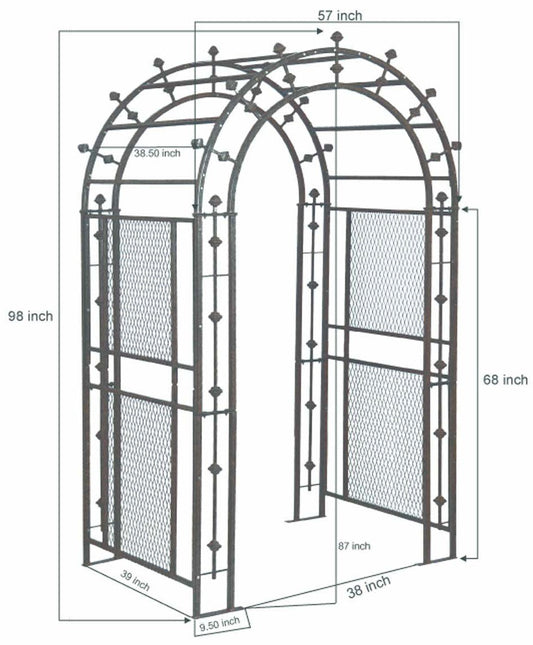
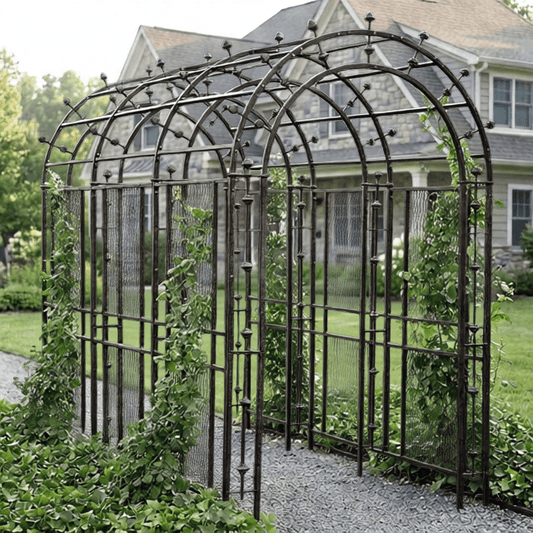
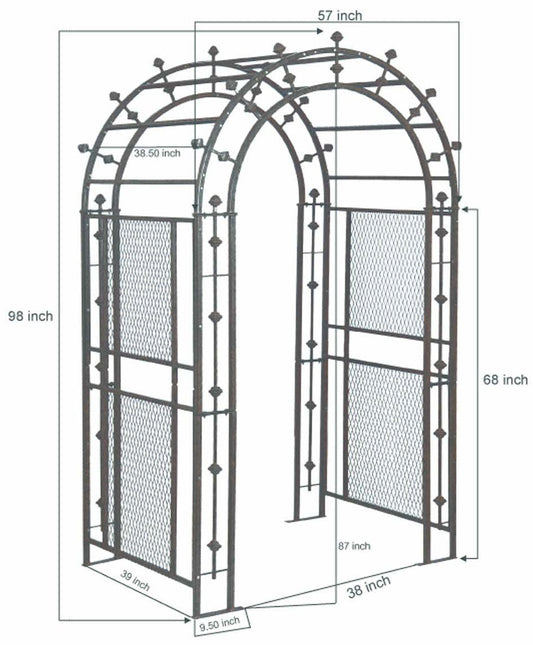
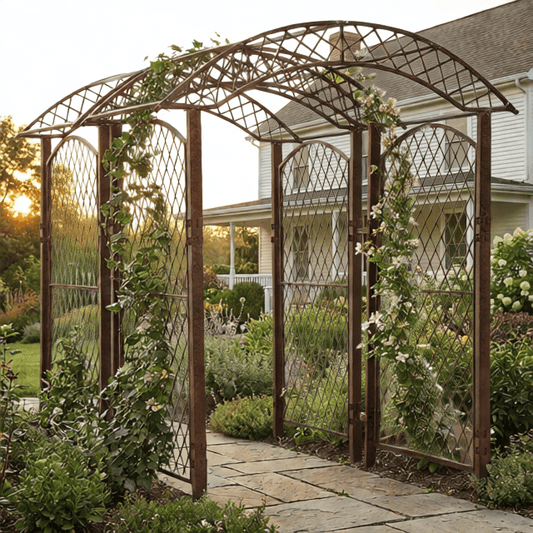
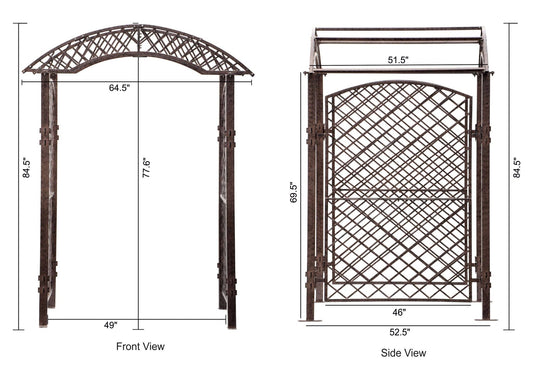
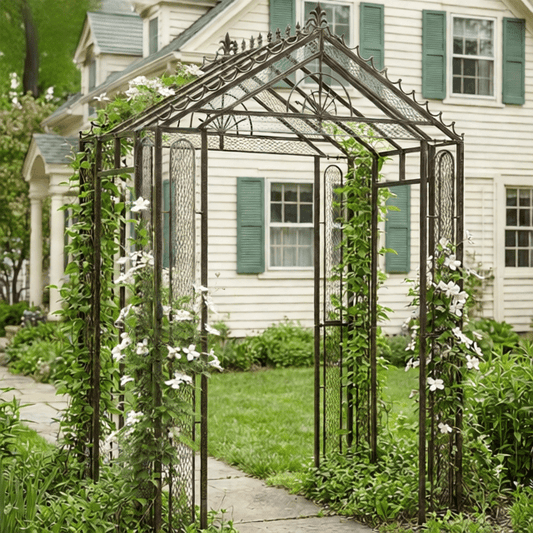
The legs of a substantial arbor and the trellis-style side panels give roses the support they need as canes thicken and blooms multiply.
If you’ve ever watched a rose “outgrow” a light trellis, you already know the problem: once the plant has momentum, a flimsy support starts to flex—
and that’s when training becomes frustrating. A heavy-duty metal arbor trellis arch holds its shape so the rose can do what it’s meant to do.
Takeaway: Choose the arbor for the rose you’ll have in 3–5 years—not the rose you have today.
Climbing Roses Need Space (and Time) to Climb
This is where patience pays off. A climbing rose often takes 3–5 years to reach real maturity. Over that time, larger canes climb the legs
of the arbor while smaller growth can be trained through the trellis panel openings. Eventually, you can create that “canopy” effect across the arch
that people stop and stare at.
Because climbing roses can live for decades, your structure needs to last for decades too. A durable metal arbor means you won’t be trying to remove
a failing frame from inside a fully established rose later on.
Rose Color Pops Against a Charcoal Brown Metal Finish
Roses don’t just climb—they perform. The rich, earthy tones of a metal arbor create a perfect backdrop for rose blooms, whether you choose classic red,
soft blush, bright pink, creamy white, warm apricot, or golden yellow. The foliage blends naturally into the structure, while the blooms provide the
contrast that makes an arbor feel like a show-stopper.
And unlike many climbers that are “pretty from a distance,” roses bring something extra up close: fragrance. Place your arbor where you’ll walk past it,
sit near it, or greet guests through it—and you’ll appreciate that detail every season.
Placement tip: If fragrance is part of the goal, put the arbor on a route you actually use—near a gate, a path, or a sitting area.
Frequently Asked Questions
What’s the best structure for climbing roses: arbor or trellis?
If you want an entrance moment or a walk-through feature, choose an arbor. If you want vertical impact in a smaller footprint, a heavy-duty trellis can work well—just plan for mature weight.
How long does it take a climbing rose to cover an arbor?
Many climbing roses take 3–5 years to reach strong maturity and substantial coverage. Early training and consistent care make a noticeable difference.
Do I need to anchor a metal arbor for roses?
Yes—especially in windy areas or when the rose gains size and weight. Use proper anchoring so the structure stays true and upright for the long haul.
Do roses damage metal arbors?
Roses don’t damage quality metal on their own, but scratches can happen during training or pruning. If you ever nick the finish, touch up early to help prevent rust from starting.