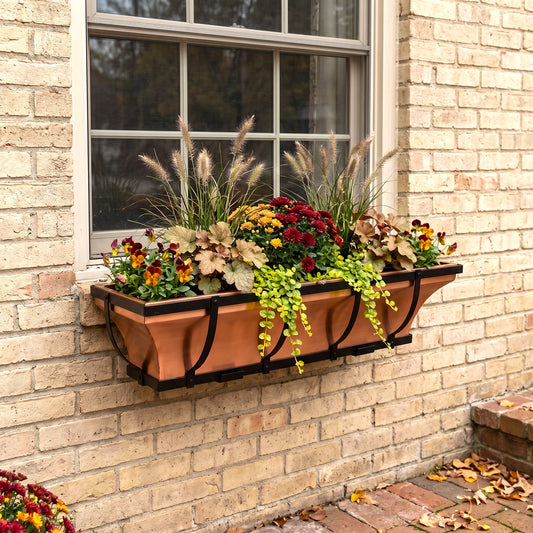
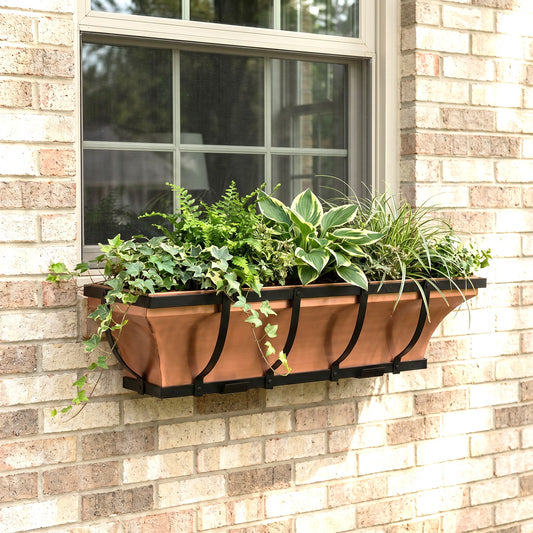
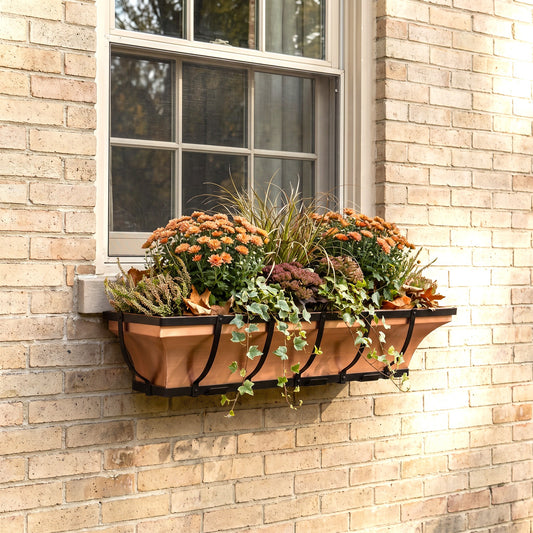
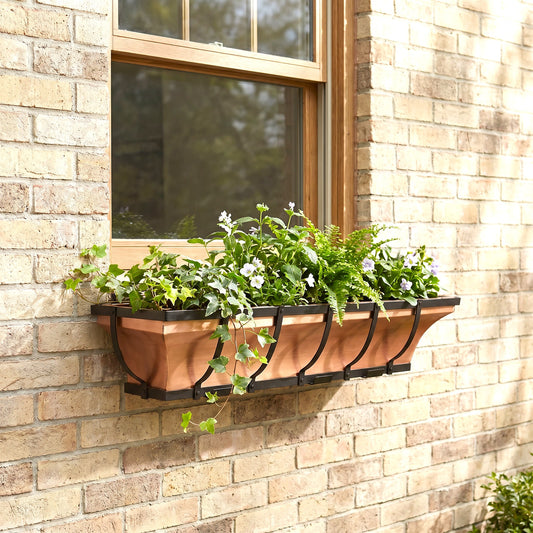
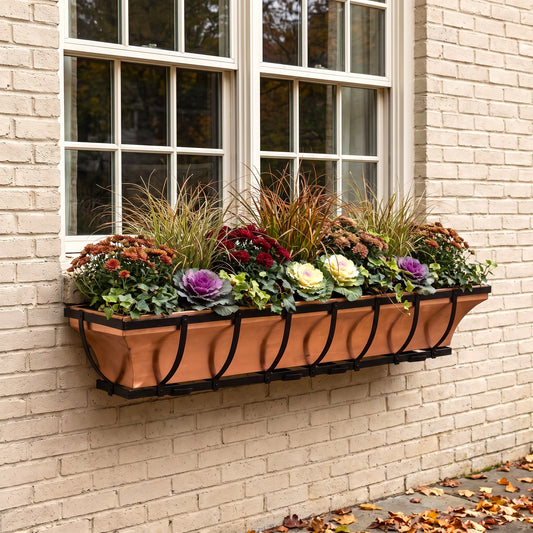
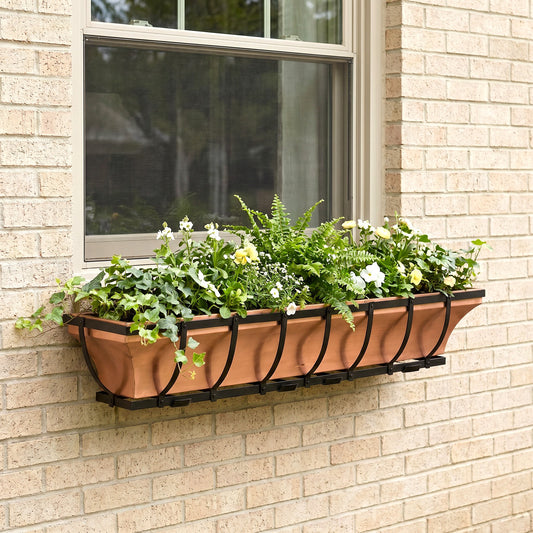
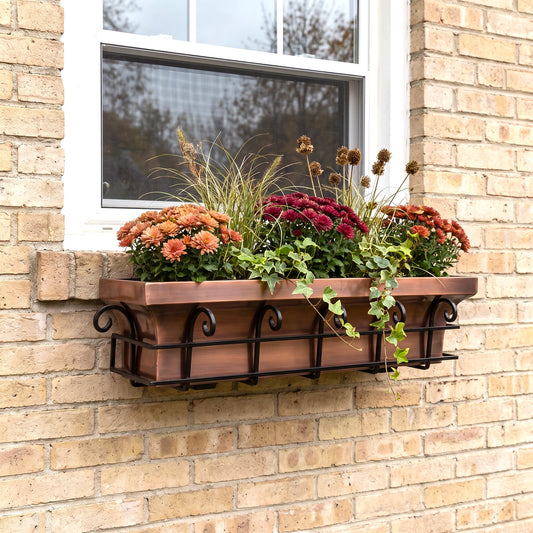
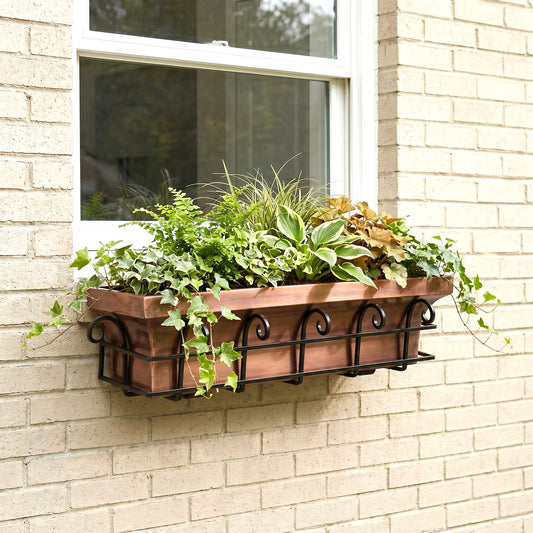
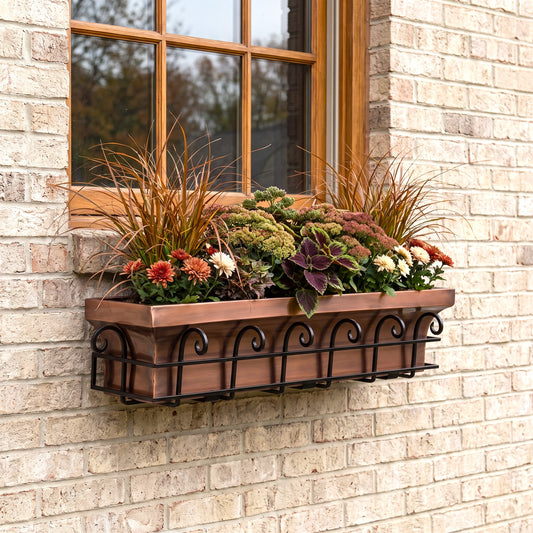
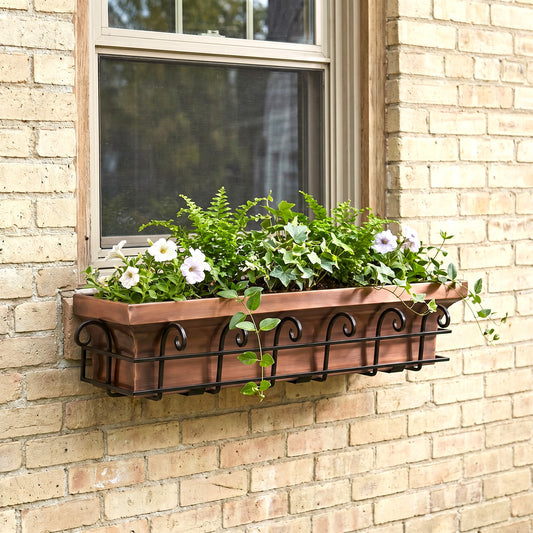
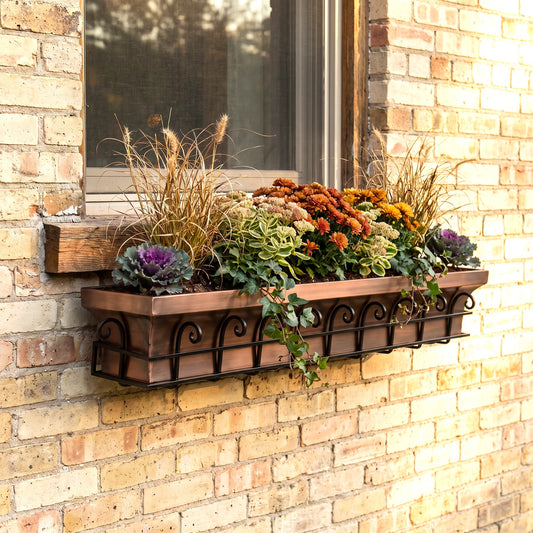
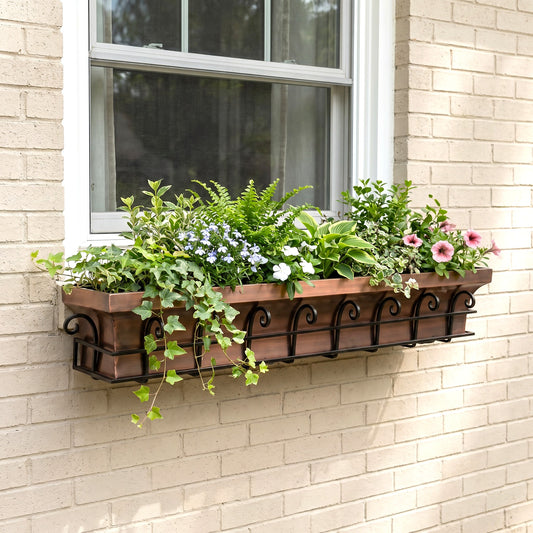
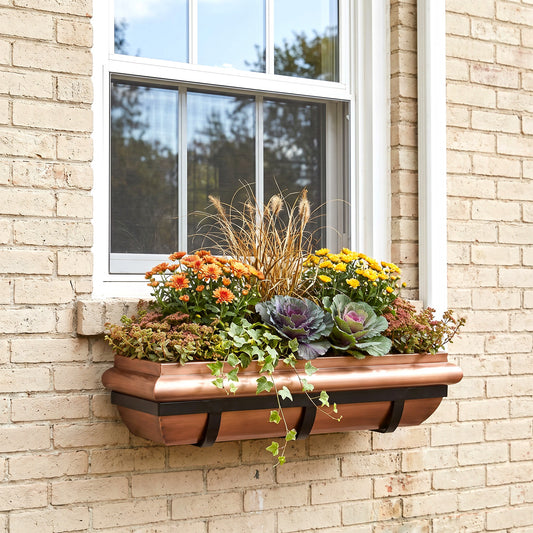
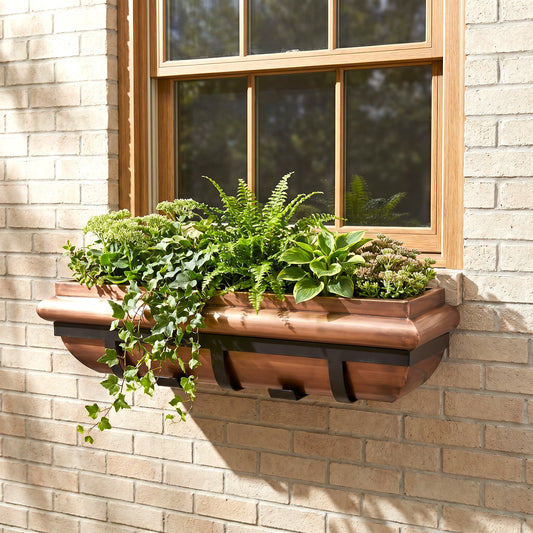
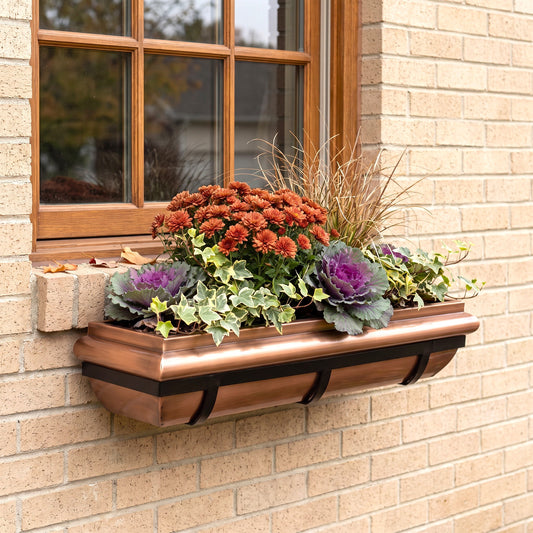
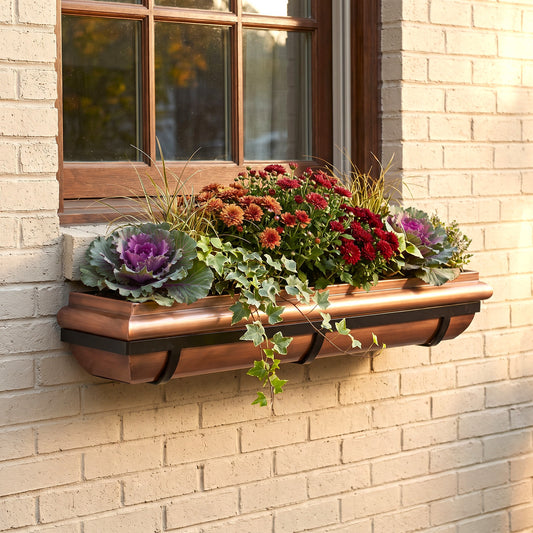
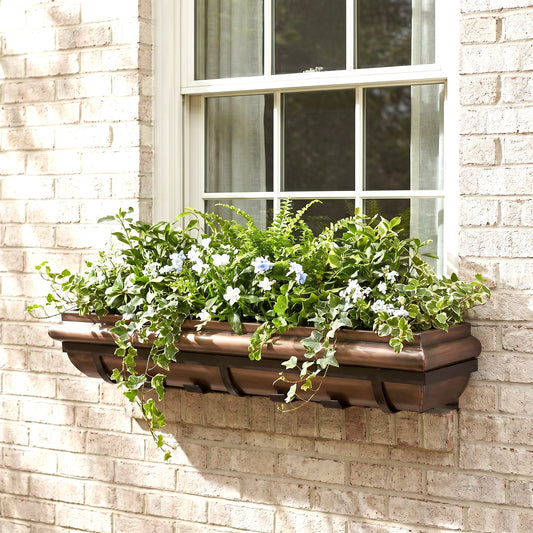
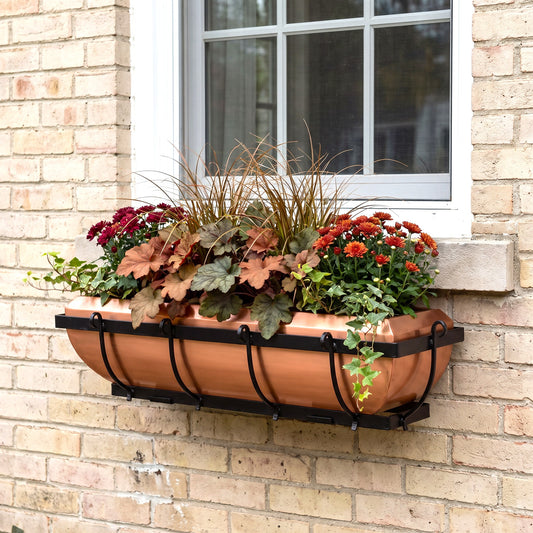
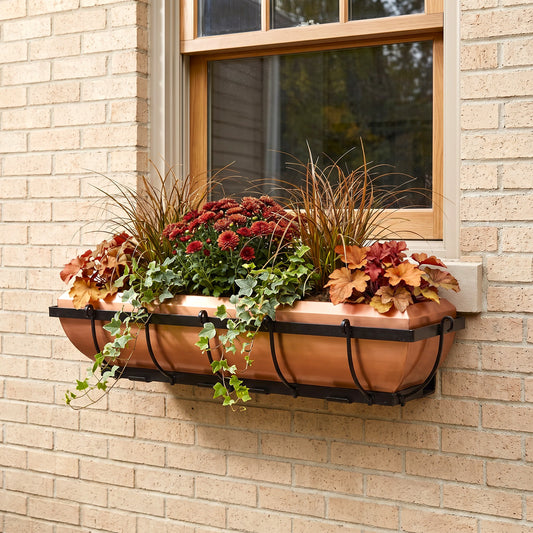
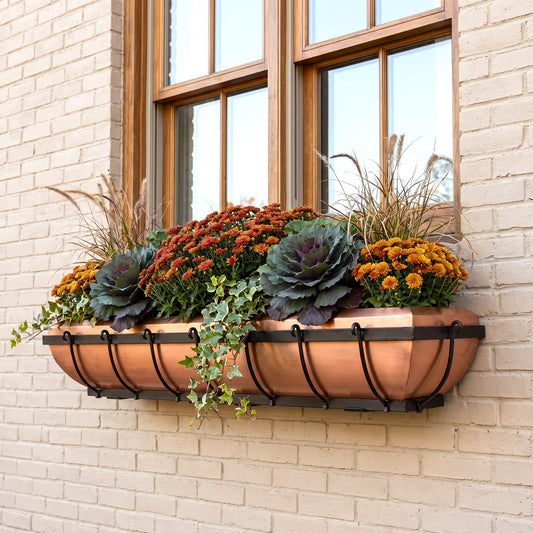
Window box planters are one of the simplest ways to add architectural greenery, seasonal color, and lasting curb appeal to a home.
Whether styled with herbs, trailing florals, or structured plantings, a thoughtfully chosen window box transforms the exterior instantly.
Why Window Boxes Continue to Grow in Popularity
Window box planters make it possible to garden vertically and beautifully—even in compact spaces.
They bring life to windows, railings, patios, and facades while creating a layered, finished look that feels intentional and welcoming.
Design insight: A well-proportioned window box visually anchors a window and adds depth to exterior architecture—especially when paired with durable materials that age gracefully outdoors.
For planting inspiration, explore our guide to
best flowers for window box planters
or see how different plant styles perform in
window box planting combinations.
Choosing Materials That Last: Copper & Stainless Steel
Material selection matters. Premium window boxes should withstand weather, watering cycles, and seasonal changes without warping or deteriorating.
| Material |
Benefits |
Ideal Use |
| Copper window boxes |
Develop a natural patina over time, warm tone, heirloom feel |
Traditional homes, historic properties, gift-worthy installations |
| Stainless steel window boxes |
Clean architectural look, corrosion-resistant, modern |
Contemporary homes, coastal climates, modern design |
Explore our curated collection of
copper and stainless steel window box planters
designed for long-term outdoor use and structural stability.
Premium garden principle: The best window boxes aren’t replaced each season—they become part of the home’s architecture and evolve with the landscape over time.
What Size Window Box Should You Choose?
A balanced window box should be close to the width of the window or slightly wider. Depth and soil volume matter for plant health and moisture stability.
- Match or slightly exceed window width for proportion
- Deeper boxes support healthier roots
- Allow space for trailing plants to soften edges
- Ensure proper mounting and structural support
For sizing and planning help, read:
how to choose the right window box planter.
Planting Ideas for Beautiful Window Boxes
Window boxes can be planted with herbs, annuals, perennials, or seasonal displays.
Mixing structure, height, and trailing movement creates the most visually appealing results.
Popular planting combinations
- Herbs: basil, rosemary, thyme, parsley
- Trailing flowers: petunias, calibrachoa, ivy
- Sun lovers: geraniums, lavender
- Shade options: impatiens, ferns, begonias
For seasonal planting guidance, explore:
tips for planting a window box
and
window box care and maintenance.
Window Boxes as Gifts
A well-crafted window box is a meaningful gift. Unlike short-lived décor, a premium planter becomes part of someone’s home for years.
Copper and stainless window boxes are especially popular for:
- Housewarming gifts
- Wedding gifts
- Mother’s Day
- Garden lovers
- Landscape installations
Gift-worthy design: Durable materials, clean lines, and timeless finishes make window boxes a practical gift that continues to grow and evolve with each season.
Care & Maintenance Tips
Healthy plants rely on consistent watering and good soil. Because window boxes dry faster than garden beds, regular moisture checks are important—especially in warm weather.
- Use high-quality potting soil
- Ensure proper drainage
- Fertilize lightly during active growth
- Trim and refresh seasonally
For more decorating inspiration, see
window planter styling ideas.
Explore H Potter Window Boxes
For more than 25 years, H Potter has designed premium garden planters and structures that balance durability with refined design.
Our window boxes are crafted for long-term outdoor use and pair beautifully with trellises, planters, and garden structures across seasons.
Browse the full collection here:
H Potter window box planters
Why H Potter Window Boxes Feel Like Part of the Architecture
The “finished” look comes from two things: a repeatable design formula and materials that hold their shape outdoors.
When a window box is built for weather and watering, your planting work stays beautiful—and seasonal refreshes are easy.
-
Made for outdoor exposure: select materials that resist corrosion and maintain structure through seasons.
-
Designed for proportion: choose a length close to the window width (or slightly wider) for balance from the street.
-
Easy to refresh: treat plantings like décor—update seasonally to keep your home looking cared for year-round.
Want the complete plan (sizing → planting → care)? Start here:
Complete Window Box Guide.
Frequently Asked Questions
How wide should a window box be?
For a comfortable planting space, choose a box with enough width for soil volume and roots. As a general guideline, narrower boxes dry out faster and feel cramped.
What’s the easiest planting formula for a full-looking window box?
Use the classic thriller–filler–spiller layout: one taller focal plant, several mid-height fillers for fullness, and trailing spillers to soften the edge.
Do window boxes need drainage?
Yes. Drainage is essential for healthy roots. Use well-draining potting soil and make sure excess water can exit so plants don’t sit in standing water.
How often should I water a window box?
In warm weather, check moisture often—window boxes can dry quickly. Full-sun exposures may need frequent watering, especially during peak summer heat.
Should I choose copper or stainless steel?
Copper adds classic warmth and develops patina over time, while stainless steel offers clean lines and strong corrosion resistance. Both are excellent—choose the look that fits your home.