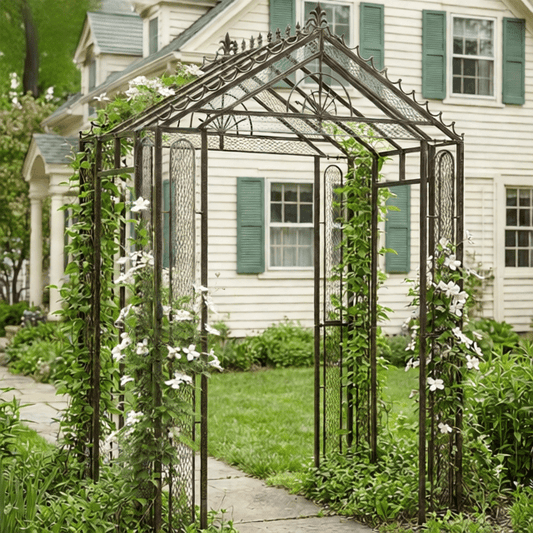
Garden arbors and trellis arches may look similar at first glance, but they play slightly different roles in the landscape. One frames space. The other leans more heavily into plant support.
Jack’s Rule: Start With the Garden Job First
If you’re deciding between an arbor and a trellis arch, ask one question first: What do you need this structure to do?
-
Choose an arbor when you want a stronger architectural presence—an entrance, pathway marker, or garden room transition.
-
Choose a trellis arch when plant support is the priority and you want vines to be the main event.
-
Choose metal when you want that structure to stay strong as plants mature and gain weight.
Author: Jack Peed, contributing garden writer at H Potter.
Garden Arbor vs. Trellis Arch: Understanding the Difference
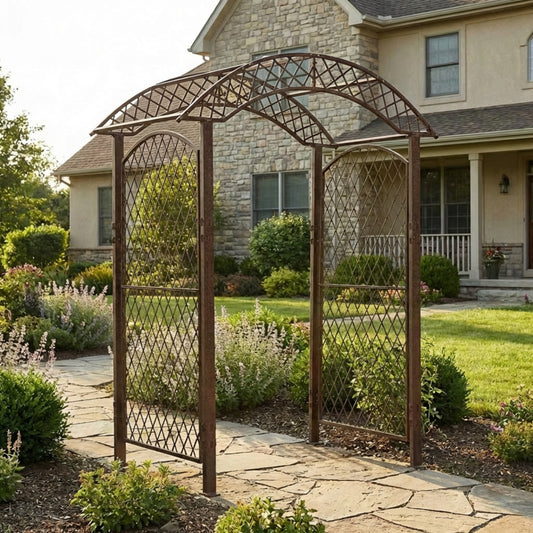
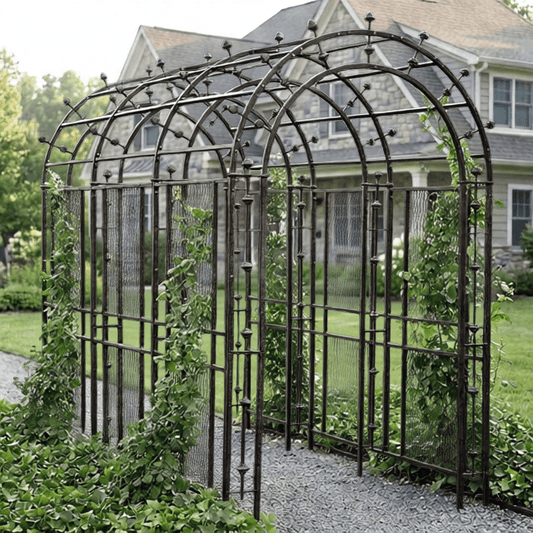
A garden arbor is typically designed as a larger architectural feature. Arbors often frame a pathway, mark a garden entrance, or create a defined transition between garden spaces. Their scale and structure make them a natural focal point in the landscape.
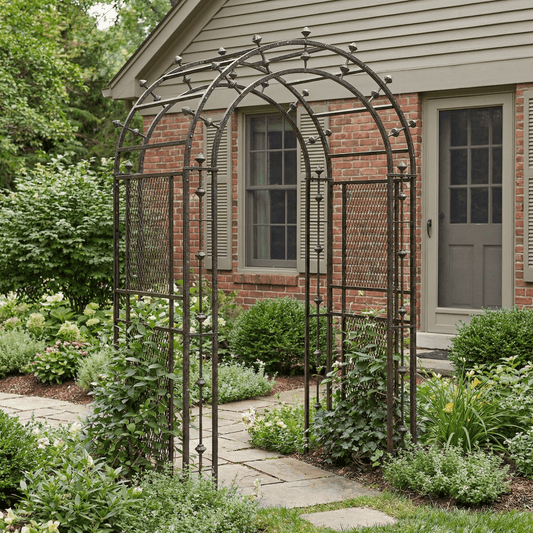
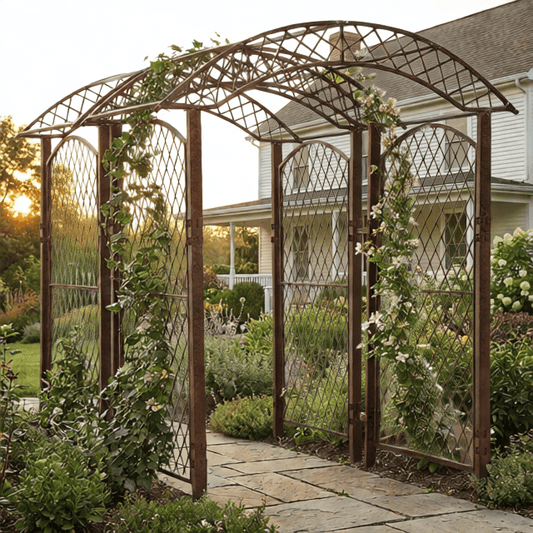
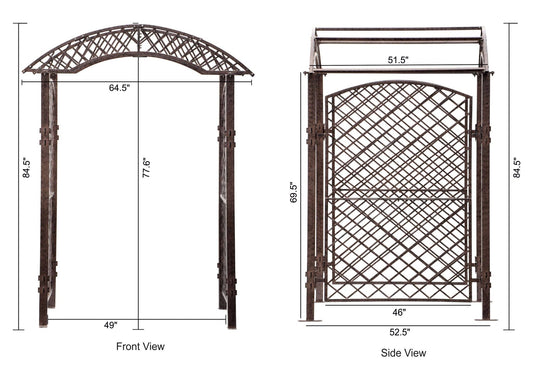
A trellis arch, on the other hand, is often designed specifically to support climbing plants. These structures frequently include lattice panels or grid patterns that allow vines to attach more easily as they grow.
While the two styles overlap in design, their primary roles tend to differ: arbors define space and shape the experience of the garden, while trellis arches put more emphasis on plant support.
Quick way to decide: If you want the structure itself to make a statement, lean toward an arbor. If you want the vine to dominate the visual, a trellis arch may be the better fit.
Design Styles and Garden Aesthetics
Both arbors and trellis arches bring strong vertical interest into the landscape. Because gardens are often filled with horizontal beds, borders, and pathways, vertical structures add balance and depth.
A metal arbor can become a dramatic entrance or walkway feature. Trellis arches often appear along fences, pathways, or within garden beds where climbing plants need support and direction.
For gardeners interested in more architectural garden design, combining both structures can create a layered landscape with multiple points of interest.
Placement and Garden Function
Where you place these structures changes how they function in the garden.
Garden Arbors
Arbors are often positioned over pathways, at entrances, or between outdoor spaces. They help define transitions and create the feeling of moving from one “garden room” to another.
Trellis Arches
Trellis arches work well near beds, fences, or anywhere climbing plants need vertical support. They’re especially effective when the priority is guiding plant growth while still adding visual height.
Placement note: If the structure will support mature vines, remember that it will carry more visual and physical weight over time. Leave clearance and plan for the mature plant, not just the young plant.
Combining Arbors and Trellis Structures
One of the most effective design strategies is to use both within the same landscape.
For example, a larger arbor can create a welcoming entrance into the garden, while nearby trellis arches guide visitors along planted paths filled with roses, clematis, or flowering vines.
This combination creates visual continuity while giving climbing plants a strong framework throughout the space.
Best Climbing Plants for Garden Arches
Many climbing plants thrive when supported by strong metal structures. Popular choices include:
- Clematis
- Climbing roses
- Jasmine
- Wisteria
- Honeysuckle
These plants naturally weave through trellis panels and arches, transforming a simple metal structure into a living centerpiece.
Plant pairing tip: Use lighter seasonal climbers on lighter visual structures, and reserve vigorous vines like wisteria for only the strongest, most substantial supports.
Why Metal Garden Structures Perform Best
Metal garden structures offer major advantages over wood or plastic alternatives. Quality metal arbors and trellis arches provide better durability, stability, and long-term outdoor performance.
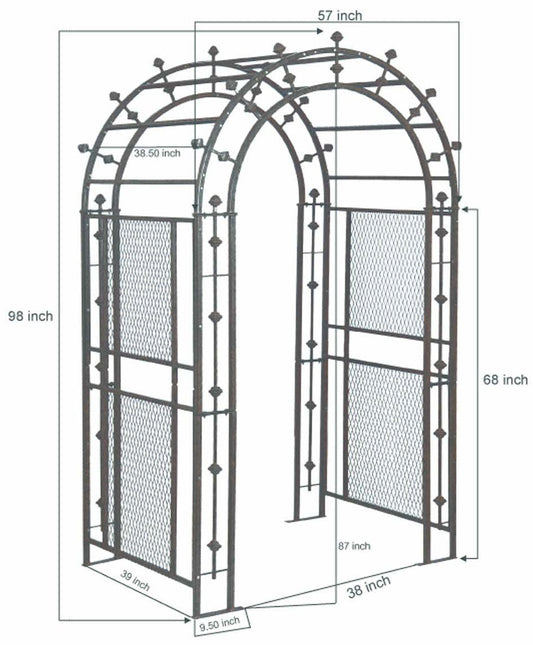
At H Potter, our garden arbors are crafted from heavy-duty iron and finished with our signature charcoal brown powder coating and UV-resistant sealant. That multi-step finish helps protect the structure while maintaining a timeless architectural appearance in the landscape.
Well-built metal garden structures can remain functional and beautiful in the garden for decades.
Frequently Asked Questions
What is the difference between a garden arbor and a trellis arch?
A garden arbor is usually a larger architectural feature used to define space, mark entrances, or frame pathways. A trellis arch is often more focused on supporting climbing plants and guiding vine growth.
Which is better for climbing plants: an arbor or a trellis arch?
Both can support climbing plants, but trellis arches often emphasize plant support more directly. If you want strong plant training plus a more architectural presence, a substantial metal arbor can do both.
Can I use both an arbor and a trellis arch in the same garden?
Yes. Many gardens benefit from both—an arbor can create the main entrance or focal point, while trellis arches provide additional support and vertical rhythm deeper in the landscape.
Why choose metal instead of wood?
Metal structures generally offer better long-term durability, weather resistance, and strength—especially once climbing plants mature and gain weight.
Continue Planning Your Garden Structure
If you’re deciding between a metal arbor and a trellis arch, start with the job you need the structure to do—then choose the style that supports that goal beautifully.
Shop Garden Arbors
Explore heavy-duty iron arbors designed for long-term outdoor performance.