What Is an Obelisk? History, Meaning & Modern Garden Uses
History, Meaning & Modern Garden Uses
Obelisks began as sacred monuments in ancient Egypt—and the same timeless vertical form now appears in gardens as elegant structure for climbing plants. Here’s the clear history, symbolism, and modern relevance.
Quick Definition
An obelisk is a tall, four-sided vertical monument that tapers upward and ends in a pyramid-like tip. Historically symbolic of light, devotion, and permanence, obelisks are now also used as architectural accents in garden design.
A Brief History of Obelisks
The story of the obelisk spans civilizations. Most famously associated with ancient Egypt, obelisks later traveled through the Roman Empire, appeared across Europe in later centuries, and ultimately became enduring landmarks in cities and gardens alike.
Earliest Obelisks in Ancient Egypt
The ancient Egyptians perfected the obelisk as a sacred architectural form, often placing them in pairs at the entrances of temples. Many were carved from a single stone and inscribed with hieroglyphs—both a public declaration of devotion and a durable record of rulers and rituals.
In early forms, the design was cube shaped and then tapered upward to a pointed tip—an iconic silhouette that still influences modern garden obelisks today.
Cultural Significance
In Egypt, obelisks carried religious meaning and visual authority. Their upward taper and shining cap were associated with light and devotion— a vertical form meant to be seen, remembered, and revered.
Obelisk Architecture: Why the Form Endures
Obelisks are defined by elegant simplicity: a rectangular base, a tall tapering shaft, and a small pyramid-like top. Their faces were often inscribed—turning the monument into both architecture and message.
Key Architectural Elements
- Four-sided taper: a refined silhouette that looks balanced from every viewpoint.
- Pyramidion (tip): traditionally designed to catch light and draw the eye upward.
- Inscribed faces: used for dedications, achievements, and sacred references.
Obelisks Arrive in Italy During the Roman Era
As Roman influence expanded, fascination with Egyptian monuments followed. Obelisks were transported to Italy and erected in prominent public spaces. Over time, the obelisk evolved from a sacred symbol to a civic one—representing status, legacy, and imperial power.
Moving the Monoliths
Moving an obelisk was a spectacle of engineering. Their relocation helped spread the form into the broader architectural vocabulary of Europe—one reason obelisks reappear in later design eras as markers, monuments, and cultural statements.
Rediscovery and Global Spread
By the 18th and 19th centuries, renewed exploration and scholarship brought fresh attention to ancient architecture. Obelisks were documented across regions and styles, and the form re-emerged in Europe and beyond—often as commemorative monuments or design elements inspired by classical precedent.
From Monuments to Design Motifs
As tastes shifted, the obelisk became a symbol not only of ancient civilization, but also of refinement and permanence. This is part of why the obelisk feels at home in gardens: it’s a form that reads as deliberate, elevated, and enduring.
Obelisks in America
In the Americas, the obelisk became a recognizable shape for memorials and civic monuments—reflecting classical influence and the symbolism of permanence. The most iconic example is the Washington Monument, which carries the obelisk silhouette into a modern cultural context.
Modern Garden Uses: Structure, Beauty & Climbing Plants
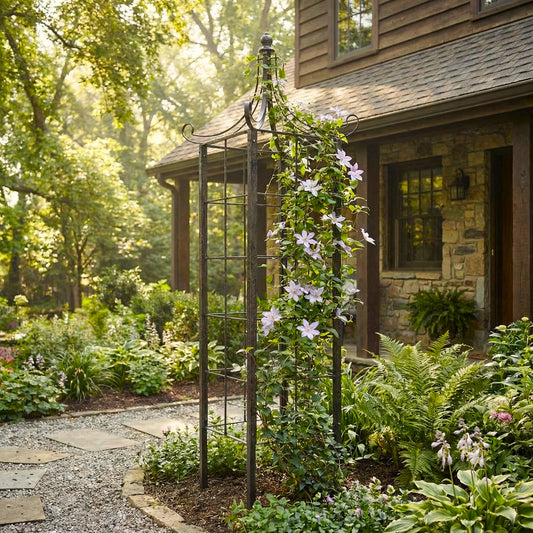
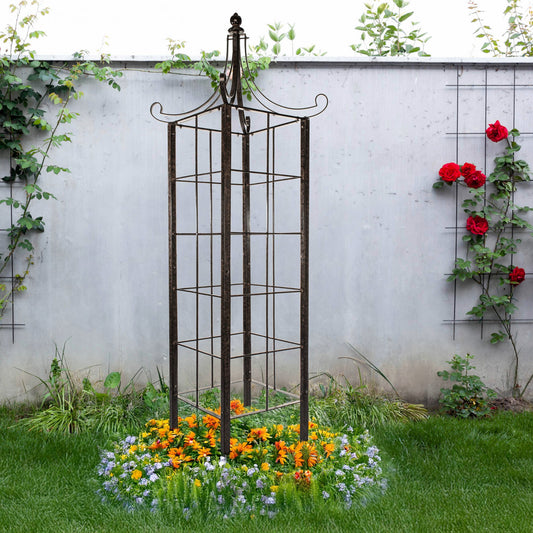
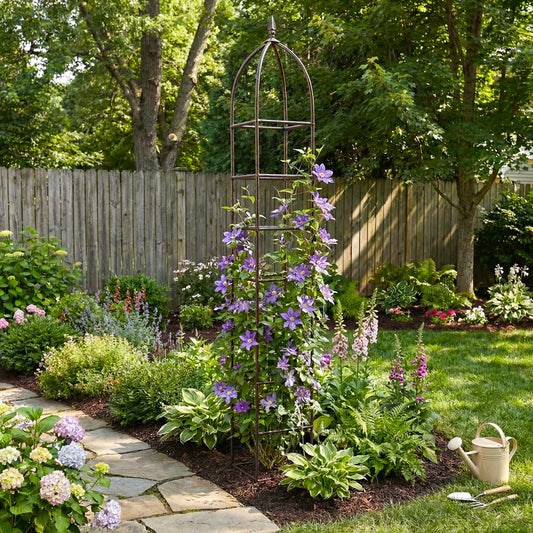
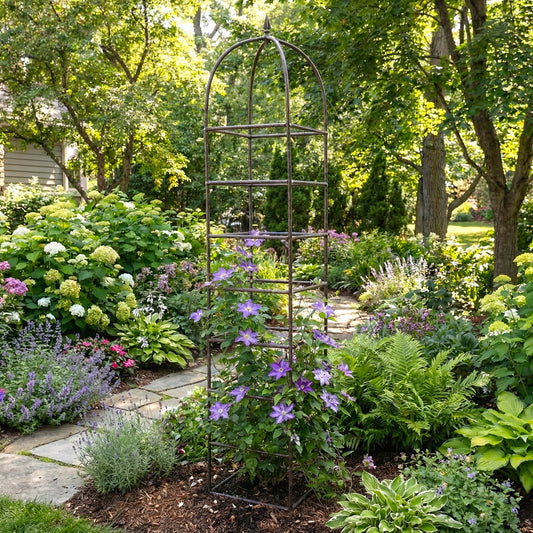
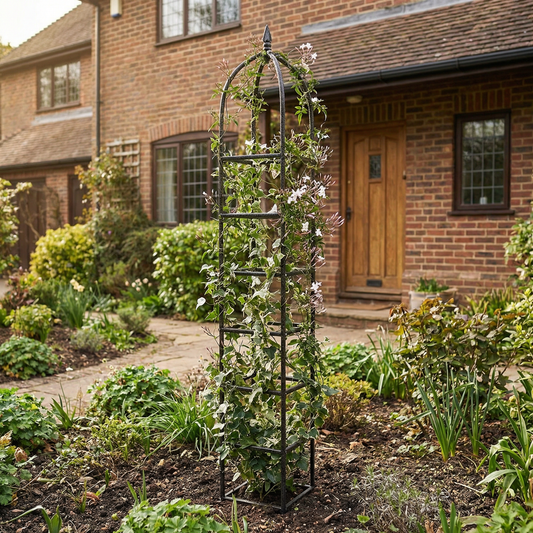
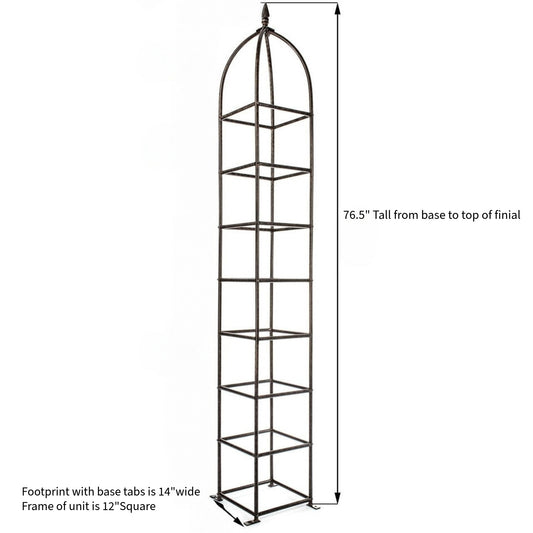
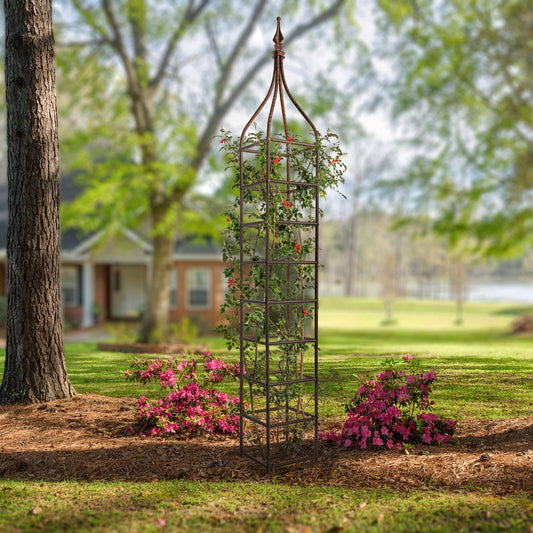
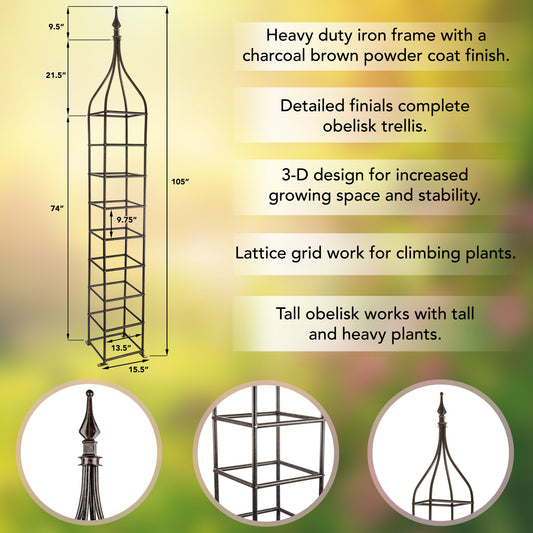
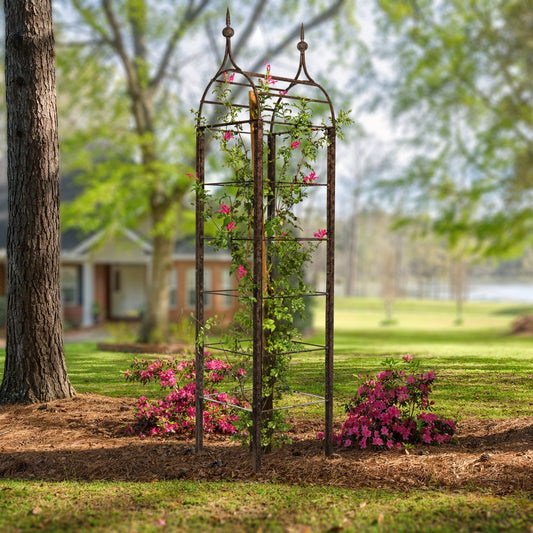
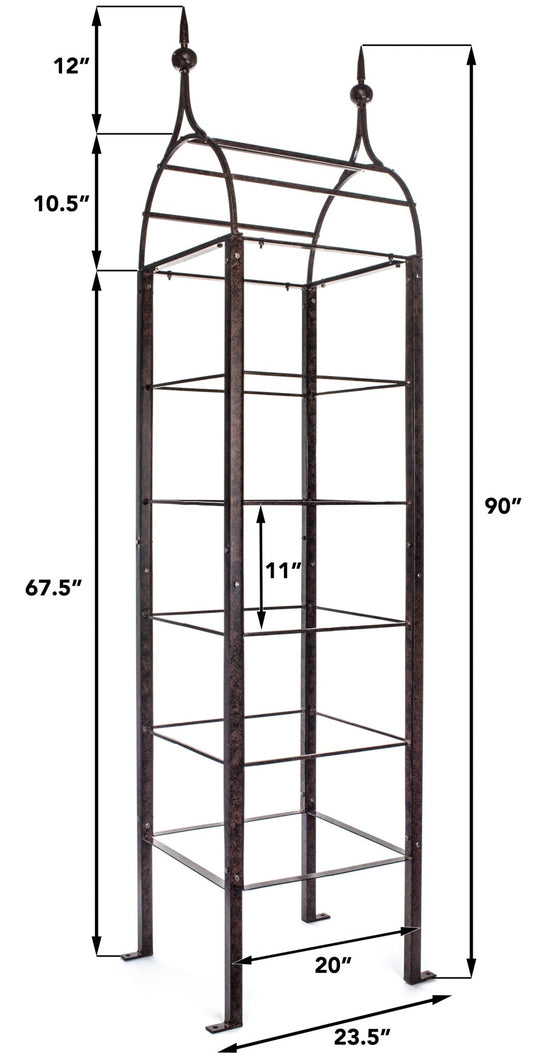
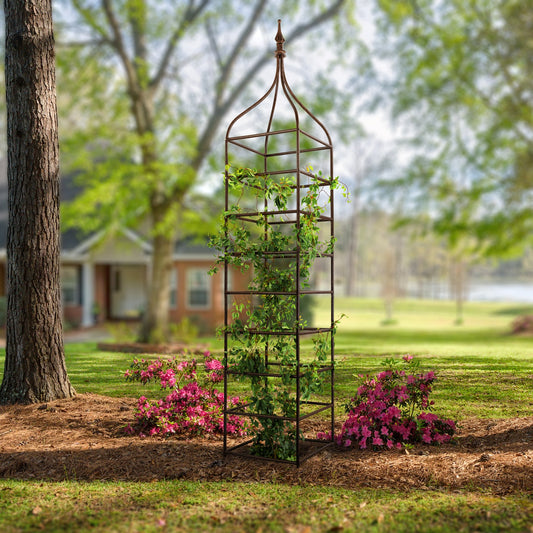
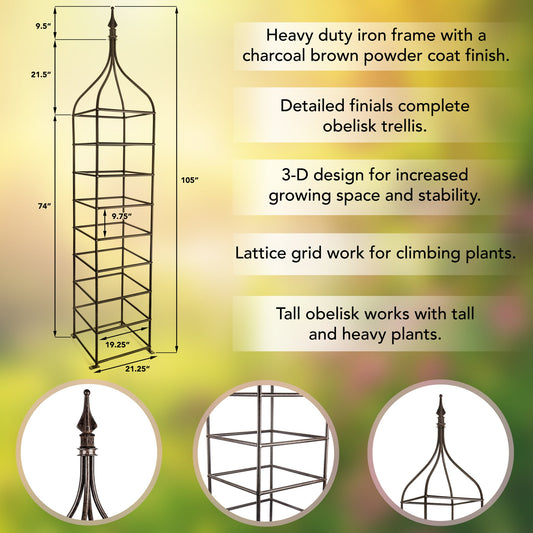
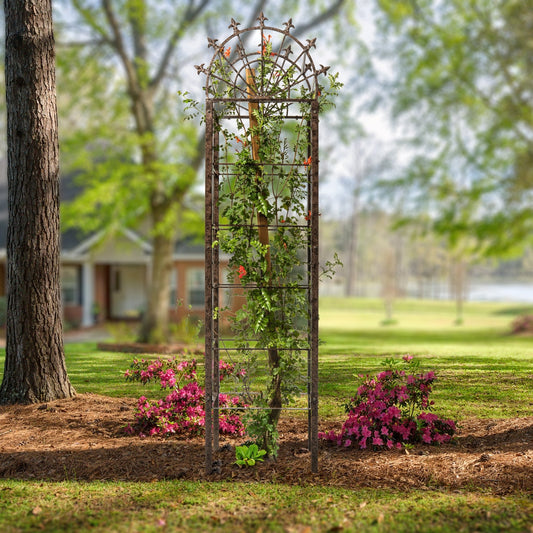
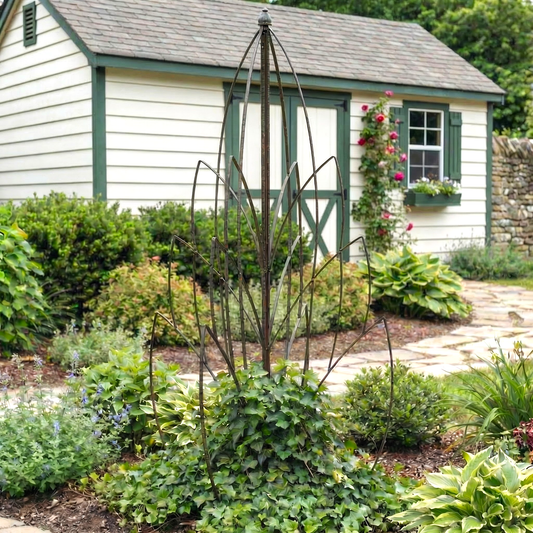
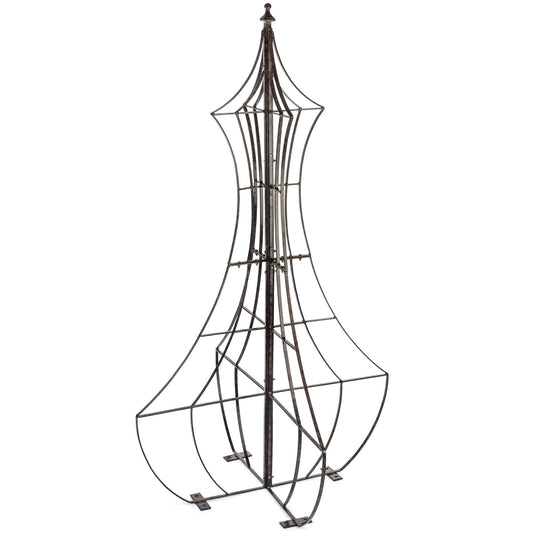
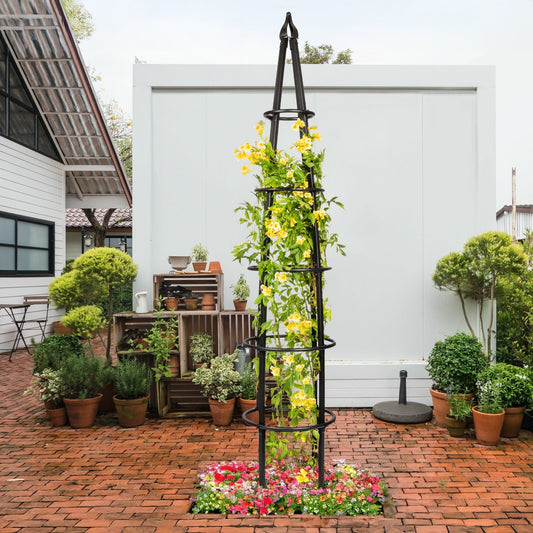
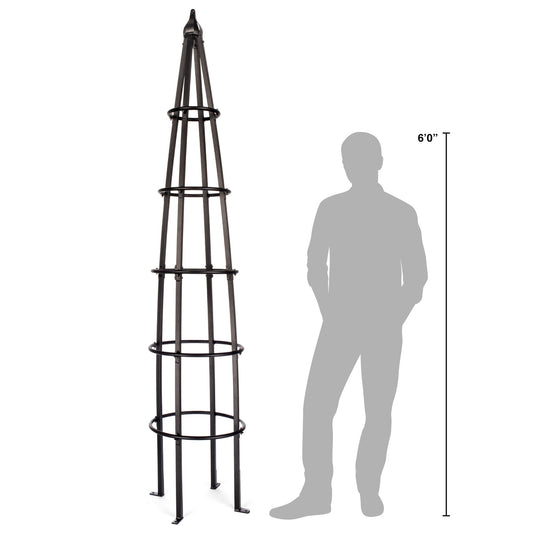
Modern gardens borrow the obelisk’s architectural form for a different purpose: creating height, rhythm, and refined vertical structure in living landscapes. A garden obelisk can serve as a focal point in beds, a symmetrical accent at entrances, or a supportive framework for climbing plants.
In modern landscapes, obelisks bring sculptural height to garden beds, create symmetry at entrances, and provide elegant structure for climbing plants.
Why Gardeners Love the Obelisk Shape
- Visual height: adds dimension and draws the eye upward—especially valuable in flat beds.
- Garden order: keeps vigorous growth contained and intentional.
- Year-round presence: remains sculptural even when vines are dormant.
| Where it’s used | What it adds | Best pairing | Design note |
|---|---|---|---|
| Garden beds | Height + focal point | Roses, clematis, flowering vines | Center of a bed or end of a path creates a visual “destination” |
| Entryways | Symmetry + elegance | Paired obelisks with soft plantings | Repeat the form on both sides for a refined look |
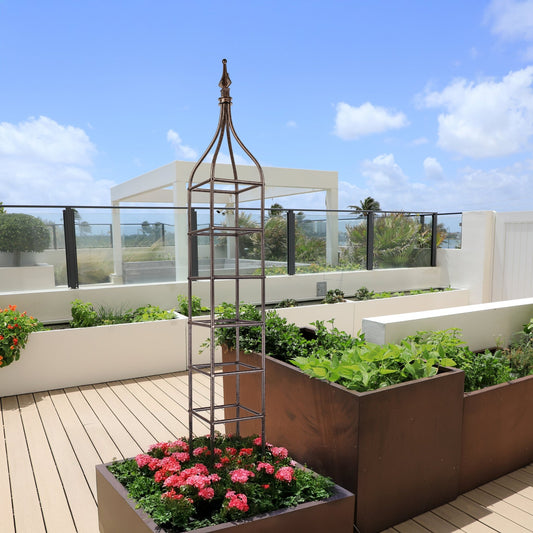
| Patios / containers | Vertical structure in small spaces | Jasmine, sweet peas, compact climbers | Choose a stable planter that visually “grounds” the height |
| Vegetable gardens | Vertical growing space | Beans, cucumbers, edible vines | Keep access around the structure for harvesting |
Today the obelisk form is often used as the entrance to gardens—framing walkways and gates while supporting the “horticultural victories” that make a landscape feel established and intentional.
Explore Garden Obelisks the H Potter Way
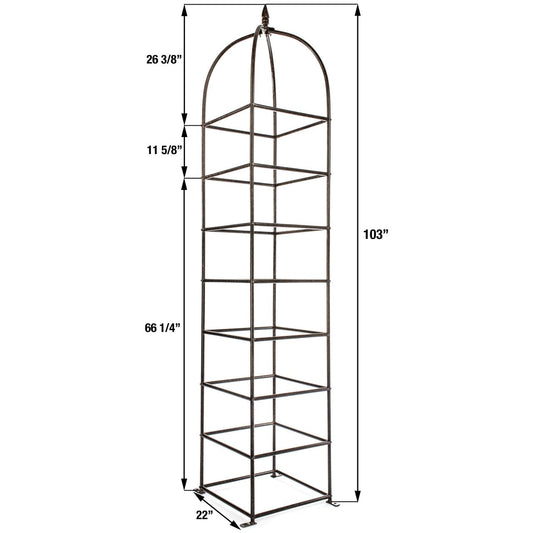
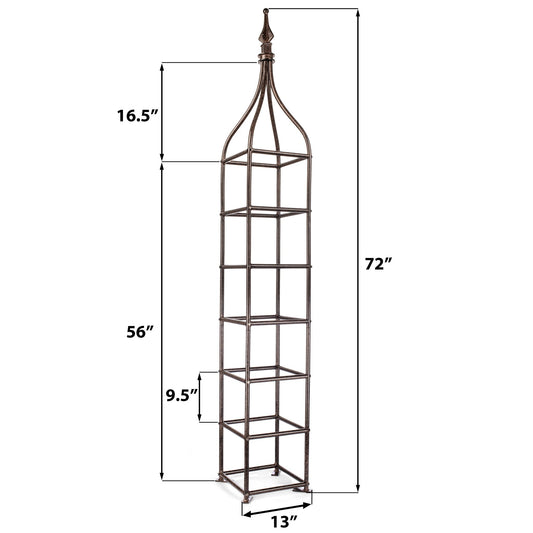
If you’re choosing an obelisk for a garden space, our buying guide covers sizing, placement, and practical use—then you can browse the full collection.
Obelisk Buying & Usage Guide Shop Garden ObelisksPreservation Efforts: Keeping Ancient Obelisks Standing
Preserving ancient obelisks takes ongoing care—from conservation work to careful restoration. These monuments are more than stone; they’re cultural artifacts and historical records. Their survival is one reason the obelisk remains one of the most influential forms in architecture and design.
FAQs
What is an obelisk in simple terms?
An obelisk is a tall, four-sided structure that tapers upward and ends in a pointed, pyramid-like tip.
What did obelisks represent in ancient Egypt?
Obelisks often symbolized light, devotion, and permanence—frequently connected to religious dedication and civic presence.
Why were obelisks moved to Rome?
Many were transported as symbols of power and prestige and installed in prominent public spaces, helping spread the form across Europe.
What is a garden obelisk used for?
A garden obelisk is used as a vertical accent and plant support—especially for climbing roses, clematis, jasmine, and vining vegetables.
Where should I place an obelisk in my garden?
Common placements include the center of a bed, the end of a path, paired at an entry, or anchored in a large container on patios.
Where can I learn what size obelisk to choose?
See our Obelisk Buying & Usage Guide, then browse the Garden Obelisk Collection.