The fastest way to make a garden look designed is to add structure. Trellises, obelisks, arbors, and pergolas create height, support climbers, and turn plants into living architecture.
Jack’s Rule: Start With Structure, Then Choose the Plant
Most “garden problems” are really structure problems—plants flopping, climbing vines lacking support, beds that feel flat, or spaces that don’t have a focal point. Start with a piece built for the job, then pick the vine (or bloom) that fits the look you want.
-
For vertical accents: use a trellis or obelisk where you want height in a smaller footprint.
-
For a destination moment: use an arbor to create an entrance, a pathway, or a garden “room.”
-
For outdoor living: use a pergola to define shade and gathering space.
Author: Jack Peed, contributing garden writer at H Potter.
Growing Structures for the Backyard
The garden and backyard are home to a number of different objects and tools that make maintenance easier—and enjoyment a whole lot better. These items often fall into a few big categories: containers, décor, and structures. In this article, we’ll focus on the pieces that give the garden its “bones”—the vertical framework your plants can grow into.
Quick clarity: When we say “garden structures,” we mean items that add height and depth, support real plant weight, and create focal points—especially for climbing plants.
What Counts as a Garden Structure?
“Garden structure” is a broad phrase, but in practical terms it’s the element your garden can build around—something that holds space, creates rhythm, and supports growth upward instead of outward.
In this guide, we’re focusing on four core structure types: trellises, obelisks, arbors, and pergolas. There’s overlap between them (each tends to get larger and more architectural), but each one has a sweet spot where it shines.
Trellises
It’s no secret that trellises are a staple here at H Potter—and one of our family’s favorite tools in the garden. A trellis is typically a latticework panel that gives climbing plants a medium to grow up. You’ll see trellises made from wood or metal, and each has strengths and weaknesses. If you’re looking for something that holds up season after season, a heavy-duty metal trellis is worth it.
Simplicity & Versatility of the Trellis
Trellises are slim enough to fit almost anywhere and capable of supporting surprising weight when built well. Place them in beds, make them freestanding accents, mount them on walls, or group them to create a living fence. The number of ways you can use a trellis is only confined by your creativity.
Garden Obelisks
Garden obelisks are built to echo their monolithic predecessors. Historically, obelisks celebrated kings—today, garden obelisks celebrate the work of the gardener. Like trellises, they often use latticework that climbers can grip and wrap. Unlike trellises, they add depth: they’re three-dimensional, which changes how plants look and how weight is distributed.
Framing the Obelisk
The most obvious difference between an obelisk and a trellis is dimension: a trellis is usually 2-D, while an obelisk is 3-D. That depth makes obelisks a natural centerpiece for beds—especially when you want a vertical accent that looks good even before plants fill in. Their square construction and pointed finial also bring a timeless, architectural look to the garden.
Arbors
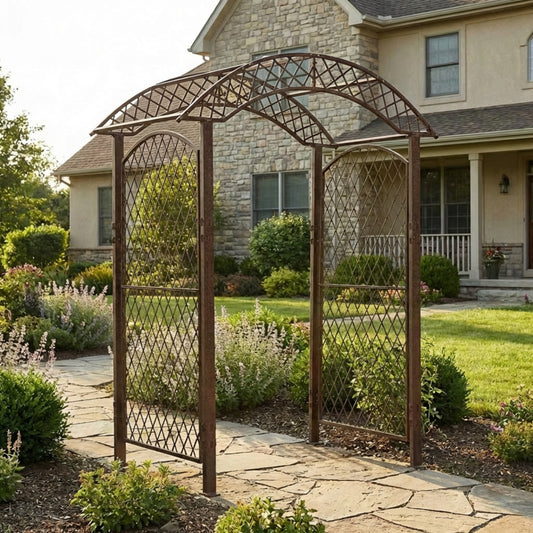
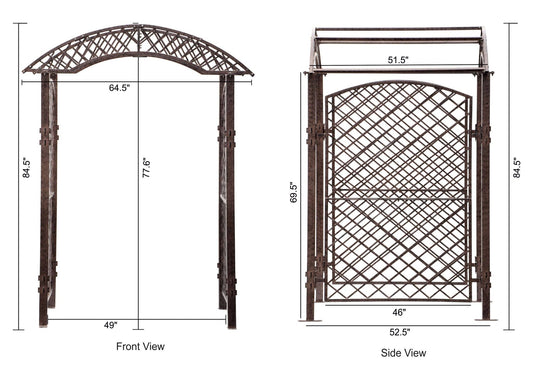
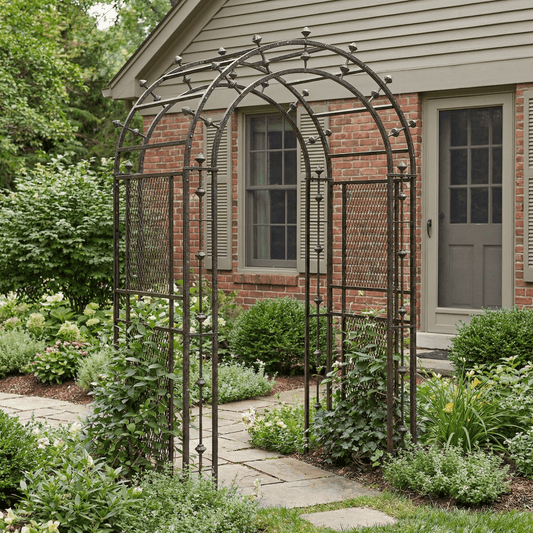
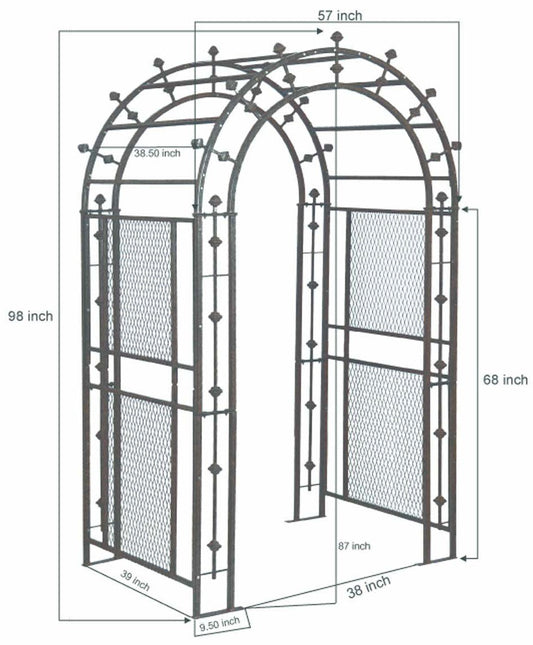
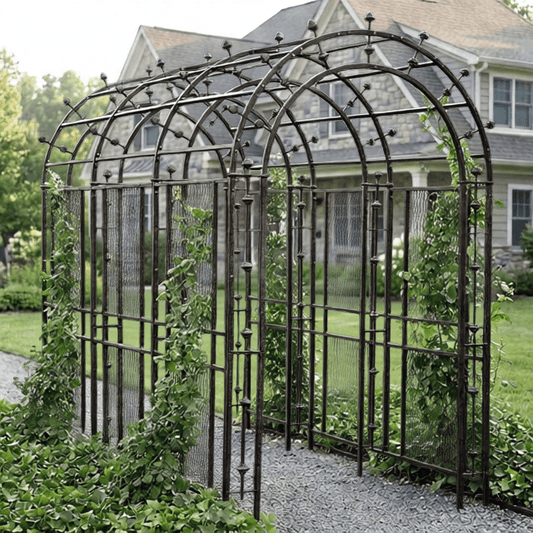
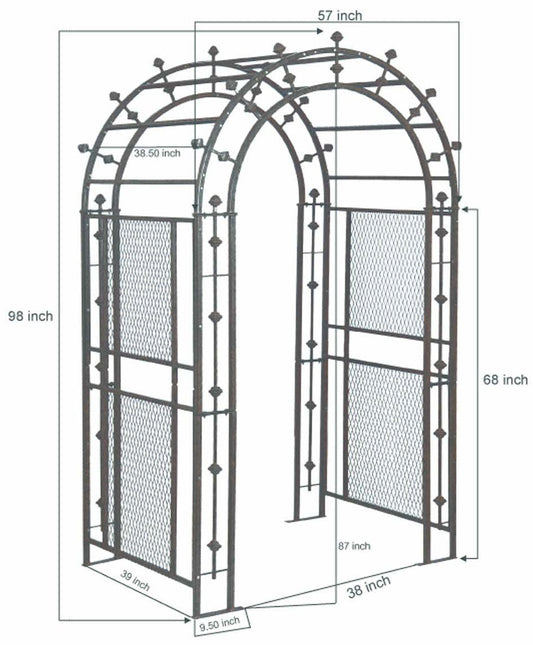
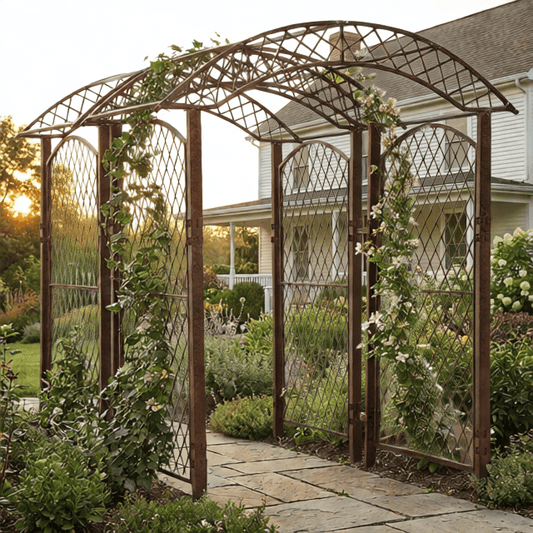
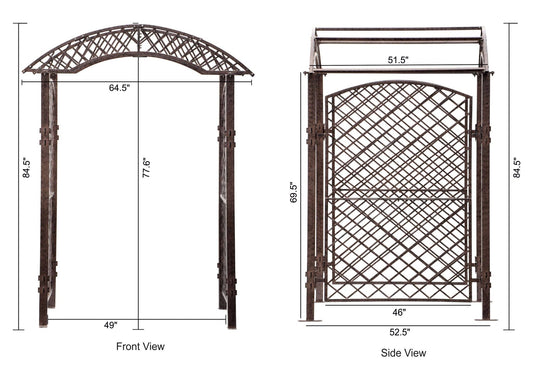
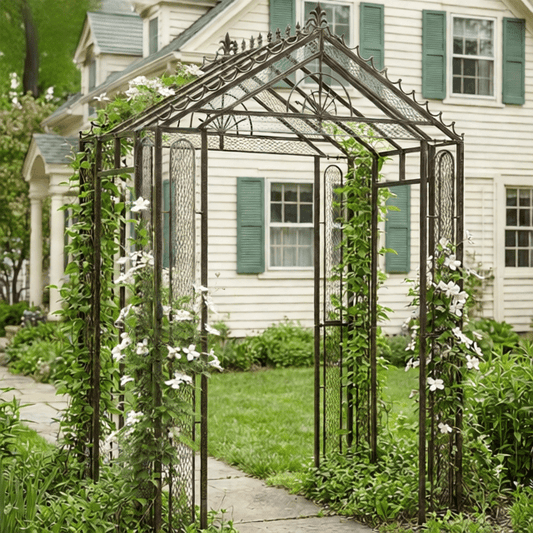
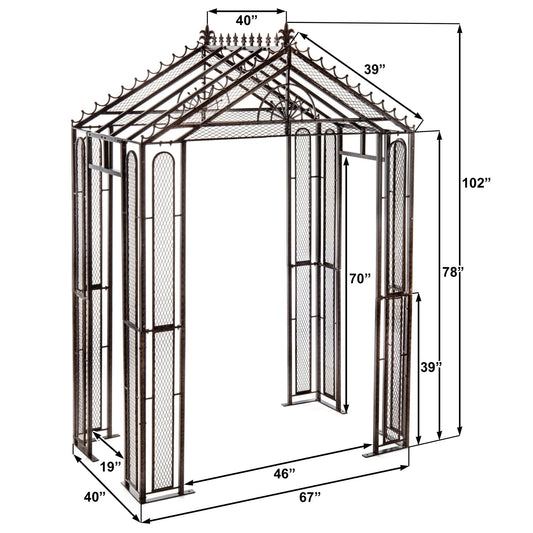
Arbors share a few concepts with trellises and obelisks, but they do something different: they create a destination. These larger structures often have four legs, side screens (or open framework), and roof bars or arches. They support climbing plants, yes—but they also frame space: an entrance, a pathway, a moment you walk through.
The Arbor in the Garden
Arbors can be used in so many ways the list starts to feel endless. Use them as gateways to the garden, as focal points in a botanical display, as a cover for a bench, or as a “room maker” that defines where people walk, sit, and gather. An arbor is the ideal mix of awe-inspiring size and practical use—part structure, part garden art, part living architecture.
Pergolas
Pergolas are the biggest outlier in this grouping of backyard structures. They’re often used to define an outdoor room—a shaded, open-air space for entertaining, dining, or gathering—while still being outdoors. Pergolas can be built from a variety of materials and typically provide more overhead coverage than an arbor.
Ways to Use a Pergola
Pergolas rely on multiple posts to support roof beams designed to create shade and definition. They’re often open-air, but you can add drapes or coverings for extra protection from wind or light rain. If you want greenery to “frame” the space, consider climbing plants and supportive structures nearby—so your outdoor room feels softened and alive.
Wrapping Up
These outdoor structures can help provide whatever it is you want to add to your garden—height, privacy, shade, focal points, and that designed feeling. This guide isn’t comprehensive (gardens are too personal for that), so don’t be afraid to think outside the box while you plan. Know the strengths of each structure, choose something built to last, and then let the garden do what it does best: grow.
Frequently Asked Questions
What’s the difference between a trellis and an obelisk?
A trellis is typically a flat (2-D) panel you place in a bed or mount to a wall. An obelisk is a 3-D tower that adds depth and looks like garden art even before plants fill in.
Which garden structure is best for climbing plants?
Trellises and obelisks are perfect for vertical accents and training vines in beds. If you want a true threshold—an entrance or walk-through garden moment—an arbor is the classic choice. For plant pairings, see
Climbing Vines for Trellises & Arbors.
How do I choose the right height for a trellis or obelisk?
Choose height based on your goal. Taller structures create privacy and strong vertical “presence.” Shorter structures work well for beds and large planters. The safest rule is: pick the structure first, then choose the plant—because mature vines get heavier every year.
Are metal garden structures better than wood?
In many climates, metal is the more durable long-term option. Wood can weather, rot, or warp over time—especially where irrigation and plant mass keep surfaces damp. A well-made metal structure is designed to resist the elements and support weight season after season.
Where should I place an arbor in the garden?
Arbors work best where they frame a transition—at a gate, at the start of a path, or as the entrance into a garden room. For stability and care, see the
Arbor Maintenance & Setup Guide.
Keep Planning Your Vertical Garden
Use these next if you’re choosing plants, placement, or your first “big” structure moment:
Arbors Buying Guide
How to choose width, height, and style for entrances, paths, and garden rooms.