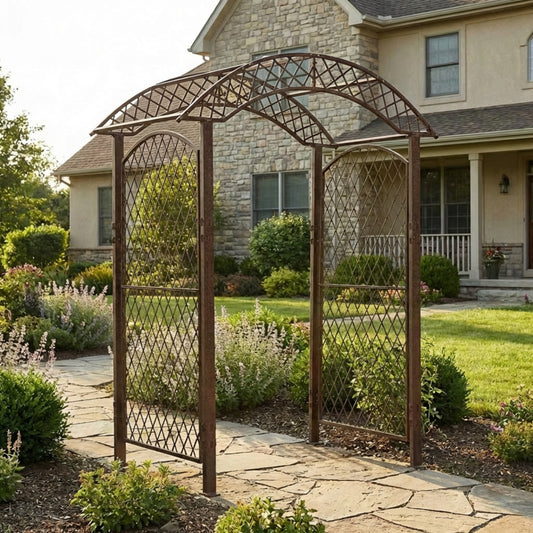
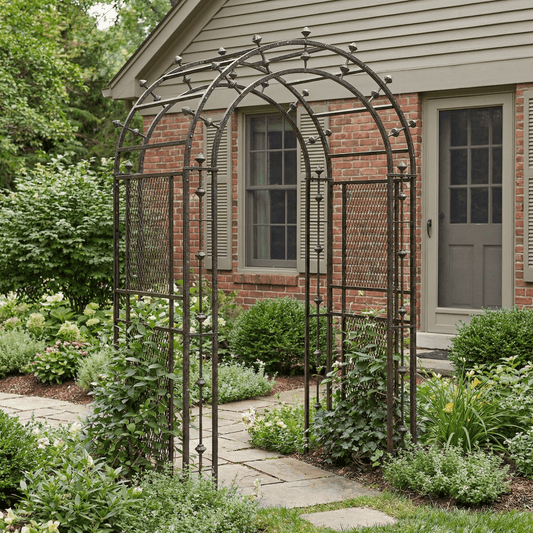
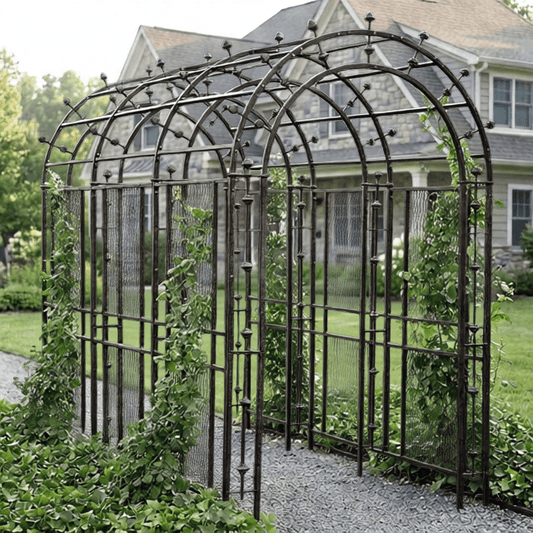
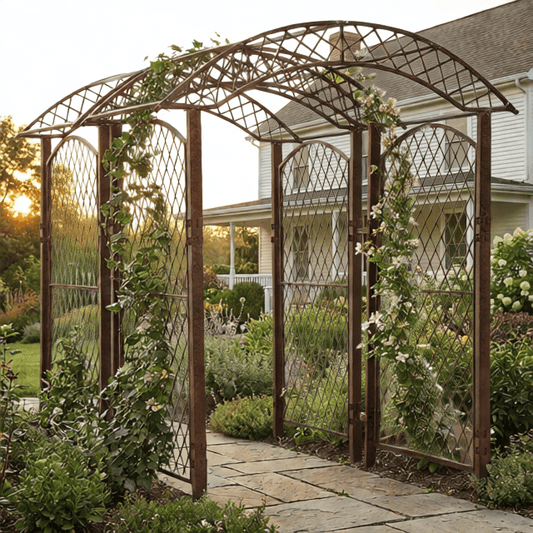
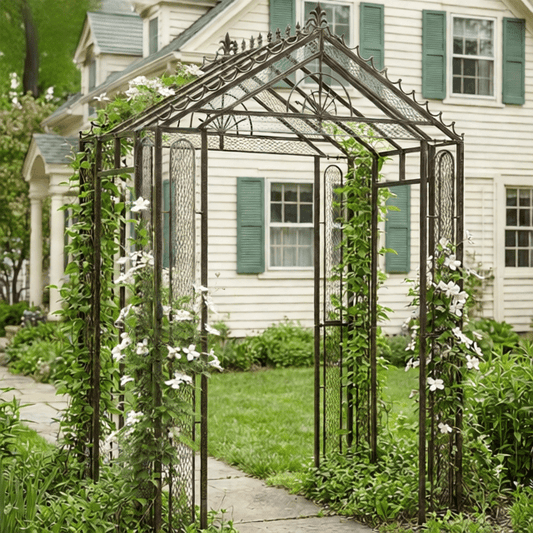
A great garden arbor does two jobs at once: it becomes a focal point today—and a lasting support system for climbing plants for years to come.
Jack’s Take: Choose the Arbor You’ll Still Love in February
For a good part of the year, your arbor won’t be covered in bloom. That’s why I always start with the structure: strong lines, a finish that holds up outdoors, and a design you’d be proud to see standing on its own.
-
Material matters: climbing plants get heavier every season—pick a structure built for real weight.
-
Placement matters: entrances and pathways give arbors their “moment.”
-
Longevity matters: a durable finish saves you from constant fussing and touch-ups.
Author: Jack Peed, contributing garden writer at H Potter.
Everything You Need to Know About Garden Arbors
Garden arbors are a timeless addition to an outdoor space—part garden architecture, part plant support, and part “this is where the garden begins.” Whether you want a charming entrance, a place for roses to climb, or a strong vertical feature that makes the landscape feel finished, an arbor can change the whole mood of a yard.
Quick win: If you’re growing on an arbor, plan the pairing from day one: choose your vine first, then choose a structure built for the plant’s mature weight. Start here:
Climbing Vines for Trellises & Arbors.
What is the best material for an arbor?
Durability and aesthetics are the two big drivers. Wood can be beautiful, but it can also rot, warp, and require regular sealing. Metal—especially a heavy-duty, outdoor-rated build—tends to be the long-term option because it holds its shape and handles the seasons without drama.
If you’re growing climbing plants, the structure matters even more. Mature vines aren’t light, and wind turns foliage into a sail. This is where a substantial metal garden arbor really earns its place in the garden.
What is the purpose of an arbor in a garden?
An arbor is both functional and decorative. It can support climbers like roses and clematis, frame a walkway, define a transition between “rooms,” or create a focal point that draws you into the landscape. Even without vines, an arbor adds height and structure—two things that instantly make a garden feel intentional.
Design tip: If you want that “garden journey” feeling, place an arbor where it frames a view—at the start of a path, at the end of a walkway, or as a threshold into a new space. More ideas here:
Garden Arbor Ideas & Inspiration.
Do you need an arbor?
Need is a strong word in gardening—most of us are building beauty, not just checking boxes. But if your landscape feels flat, an arbor is one of the fastest ways to add vertical architecture. It gives climbing plants the sun and air they want, and it gives the garden a signature moment that looks good from every angle.
Where should I put my arbor in my garden?
Placement is everything. The best spots are places where the arbor naturally feels like a “threshold” or a destination:
-
Garden entrances: create a welcoming focal point for guests.
-
Pathways: guide visitors through your garden and add charm.
-
Standalone feature: use it as a centerpiece surrounded by planting beds.
Stability matters: If you’re in a windy area—or you plan to drape flowers or fabric for events—install and anchor correctly. Use:
Arbor Maintenance & Setup Guide.
What is the difference between an arch and an arbor?
People use the terms interchangeably, but here’s the practical difference: a garden arch is often thought of as a freestanding entry shape, while an arbor commonly includes sides designed for climbing plants and a more “room-like” feel. Either way, the best versions do the same thing—create a beautiful garden moment with real structure behind it.
If you’re deciding between styles that look similar, this comparison helps: Metal Garden Arbor vs. Metal Garden Trellis Arch.
What is the best material and finish for climbing vines?
Climbing plants thrive on structures that provide grip and long-term durability. A powder-coated metal finish is a strong choice because it’s built for outdoor exposure and it won’t weaken the way cheaper materials can over time.
Two customer favorites to explore:
Transform Your Garden Today
Adding an arbor is a simple change that carries a lot of visual weight: it creates an entrance, supports growth, and gives the landscape a focal point you’ll enjoy in every season—covered in bloom or standing proud on its own.
Explore H Potter Garden Arbors
Frequently Asked Questions
What’s the best place to put a garden arbor?
The most impactful placements are entrances, pathways, and transitions between garden “rooms.” Use an arbor to frame a view or create a destination point in the landscape.
Is a metal arbor better than wood for climbing plants?
For many gardeners, yes. Mature vines can get heavy, and metal arbors tend to hold their shape outdoors with less maintenance than wood, which can warp or rot over time.
Do I need to anchor a garden arbor?
Yes—anchoring is important for stability, especially in windy areas or when adding vines, lights, florals, or draping. Follow the installation guidance in the Arbor Maintenance & Setup Guide.
What are the best plants for a garden arbor?
Climbing roses and clematis are classic choices. Jasmine and honeysuckle add fragrance, and vigorous vines like wisteria can be stunning when paired with a truly substantial structure and regular pruning.
How do I choose between a trellis arch and an arbor?
Choose an arbor when you want a true threshold or destination (entry, walkway moment). Choose a trellis arch when the priority is plant training and vertical coverage. This comparison helps: Metal Garden Arbor vs. Metal Garden Trellis Arch.
Continue Your Arbor Planning
If you’re building an arbor “moment,” these guides pair well with this post: