Top Climbing Vines for Trellises and Arbors (and How to Train Them)
The fastest way to make a garden feel more finished is to garden vertically. A climbing vine adds height, softness, and life to walls, beds, pathways, and entry points — but success depends on pairing the right plant with the right structure.
When the match is right, a garden trellis, metal arbor, or obelisk becomes more than support. It becomes part of the design — a permanent frame for blooms, fragrance, privacy, and seasonal beauty.
This guide covers the climbing vines that work especially well on trellises and arbors, how to choose the best structure for each, and how to train your plants early so the garden looks fuller and more intentional over time.
Jack’s Practical Rule: Match Sun First, Then Structure, Then Training
Most climbing-vine disappointments are not really plant problems. They are pairing problems. When you choose a vine that matches your light conditions, give it a structure built for mature weight, and train it early, the whole garden begins to look more deliberate and complete.
Helpful companions: read our Trellis Buying Guide, explore Garden Arbor Guide, and browse the full H Potter Garden Trellis collection.
Why Climbing Vines Belong in a Well-Designed Garden
Vertical gardening changes the feeling of a landscape faster than almost anything else. A climbing vine softens hard lines, adds dimension to a wall or fence, and helps a garden feel more layered and established. It also gives smaller spaces more visual impact without asking for more ground square footage.
A well-placed vine can create privacy, frame an entry, highlight a pathway, or turn a plain backdrop into living architecture. That is why trellises, arbors, and obelisks remain such useful design elements: they support the plant, but they also shape the space around it.
Top Climbing Vines for Trellises and Arbors
There are many beautiful climbers, but some are especially well suited to garden trellises and arbors. The best choice depends on whether you want fragrance, flowers, fast seasonal coverage, or long-term structural drama.
Climbing Roses
Climbing roses are one of the most classic pairings for trellises and arbors. They bring romance, color, and a strong sense of permanence to the garden. Roses need support that is both graceful and substantial, especially once they mature. Train canes outward and as horizontally as possible early on — this encourages more blooming points along the canes.
Clematis
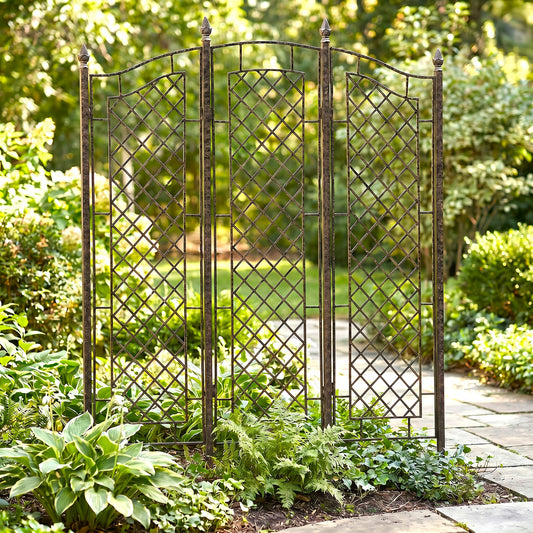
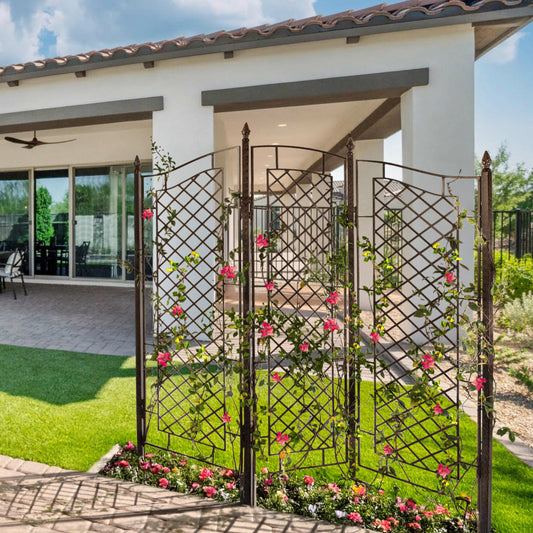
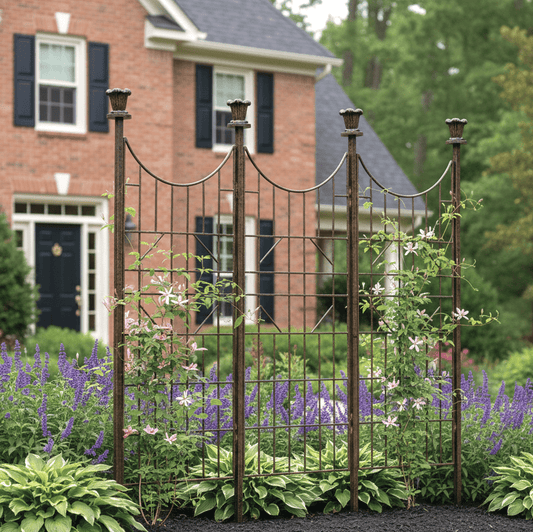
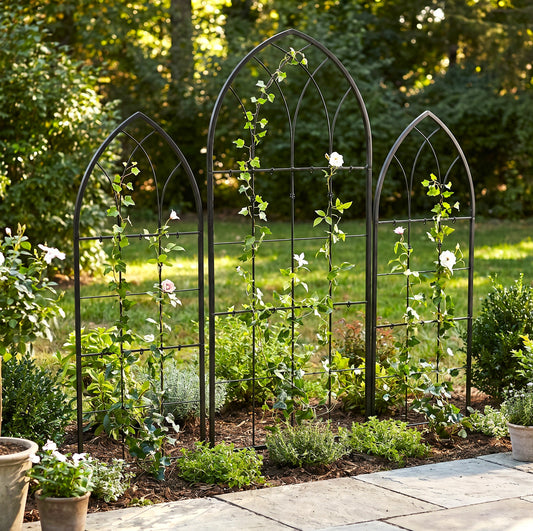
Clematis is a favorite for trellises because it gives you dramatic seasonal color without taking up much space at ground level. It is especially useful near patios, pathways, and narrower beds where vertical interest matters. A metal trellis gives clematis the clean support it needs without overwhelming the planting.
Jasmine and Honeysuckle
If fragrance is part of your plan, jasmine and honeysuckle are excellent choices near patios, porches, and entryways. A wall trellis or arbor lets you position scent where people actually experience it most.
Sweet Pea and Morning Glory
For quick seasonal color, annual vines such as sweet pea and morning glory are hard to beat. They are also ideal for newer gardeners because they offer fast results and make it easier to experiment with placement and styling.
Wisteria
Wisteria is breathtaking, but it is not a light-duty vine. It requires a very substantial support and a willingness to prune consistently. If you want major flowering drama and are prepared for the long-term commitment, it can be spectacular on a sturdy arbor or heavy structure.
How to Train a Vine on a Trellis or Arbor
The first season is shaping season. Early guidance helps plants cover a structure more evenly and keeps the design from becoming tangled or top-heavy later on.
Install the structure before planting whenever possible. Start with a healthy plant, guide growth while stems are flexible, and use soft ties that will not damage thickening stems. Encourage branching where appropriate so the vine fills out instead of racing upward in only one direction.
Consistent watering during establishment matters. A vine grows upward best when the root system is secure and not stressed.
Trellis vs. Arbor: Which Structure Do You Need?
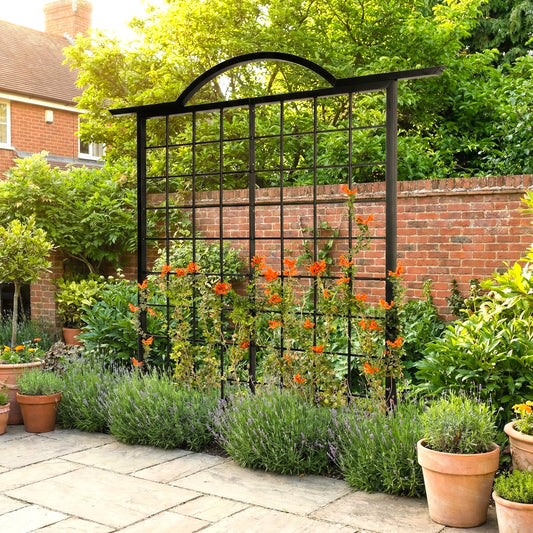
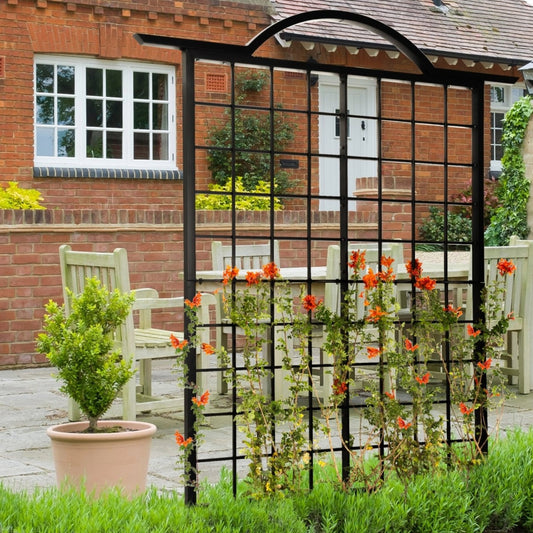
A trellis is the right choice when you want vertical gardening in a smaller footprint — against a wall, within a bed, for privacy, or as a strong vertical accent. An arbor creates more of an architectural destination: an entrance, threshold, or path that changes how people move through the garden.
If you are deciding between the two, think about the role the structure will play. A trellis helps a plant become part of the garden wall or bed. An arbor creates a moment in the landscape.
For a closer comparison, read Metal Garden Arbor vs. Trellis Arch.
Beauty, Structure, and Better Pairing
The right climbing vine can completely change the feeling of a garden, but only when it is paired with a structure built to support its growth. That is why material, anchoring, and overall design matter so much. A heavy-duty trellis or arbor gives the plant room to mature beautifully and gives the garden a sense of intention from the very beginning.
If you are planning a vertical garden, think about light, mature weight, and how you want the structure to function in the space. When those pieces are aligned, vines do far more than climb — they become part of the architecture of the garden.
Related Trellis & Garden Resources
- H Potter Trellis Buying Guide — sizing, style, and placement help
- Garden Arbor Guide — when a trellis becomes an entry or destination
- Shop Garden Trellises — freestanding and wall options built for mature vines
- Shop Metal Garden Arbors — create pathways, entrances, and climbing moments
FAQs: Climbing Vines for Trellises and Arbors
Climbing roses, clematis, jasmine, honeysuckle, sweet pea, and morning glory are all popular options. The best choice depends on your light conditions and how much mature weight the structure can support.
Most vines benefit from early training. Soft garden ties help guide stems while they are flexible, then the plant can continue establishing itself as it grows.
Yes. Mature vines can become surprisingly heavy, especially after rain or when loaded with flowers and foliage. That is why structure matters from the beginning.
An arbor is better when you want a true entrance or walkway feature. A trellis is ideal for vertical accents, privacy, or climbing support in a smaller footprint.
Yes. Early training makes a major difference in how evenly and attractively a vine covers its structure over time.