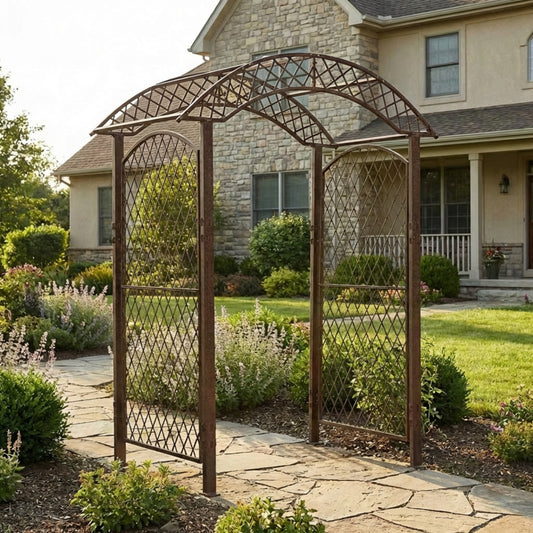
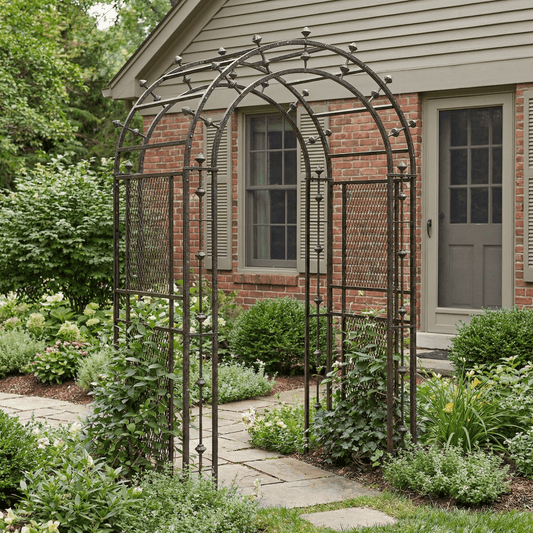
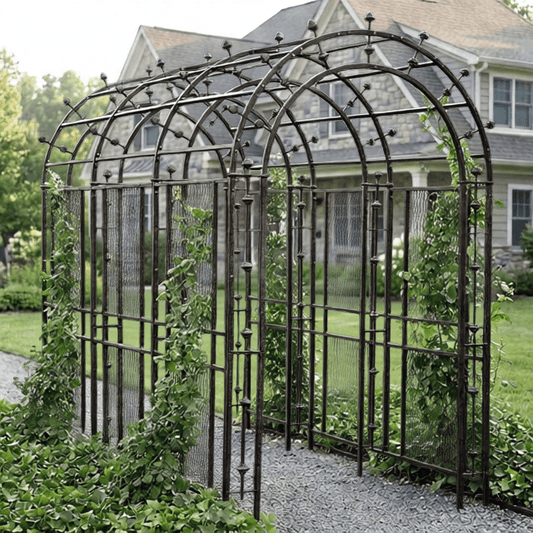
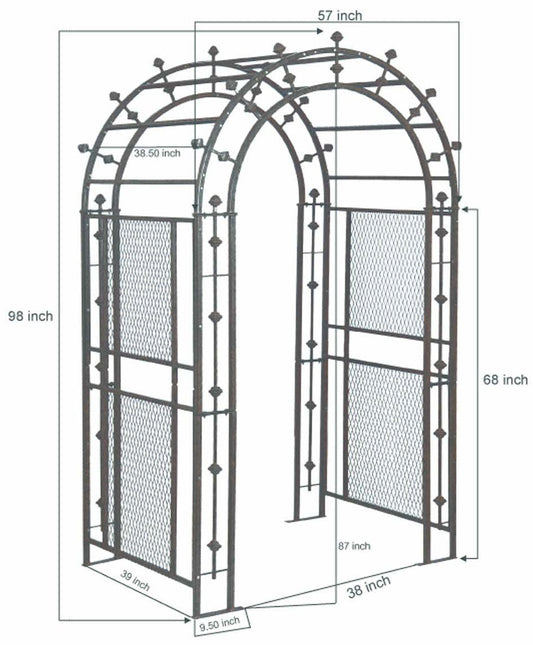
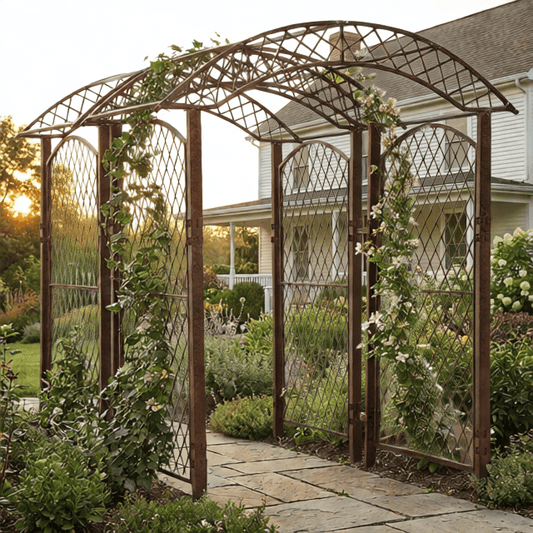
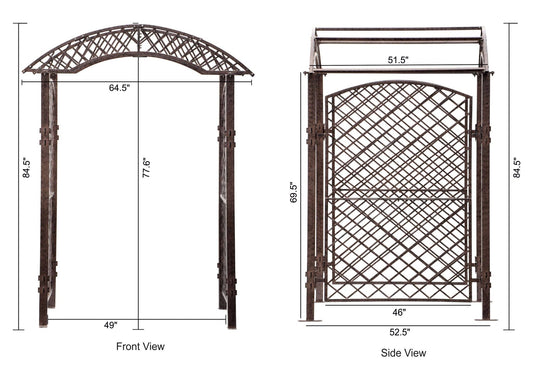
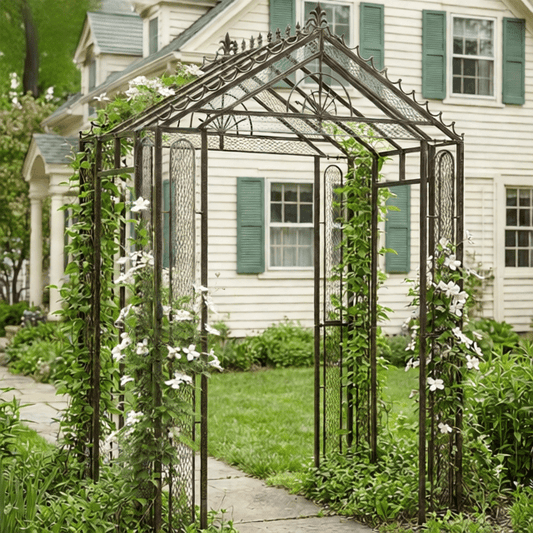
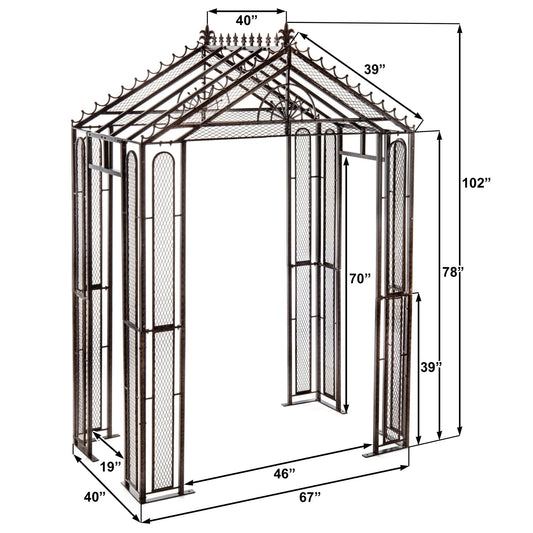
Arbors add height, structure, and a sense of destination.
Use these seven placement ideas to make your arbor feel like it truly belongs in the landscape.
Jack’s Rule: Place an Arbor Where It Creates a “Moment”
A good arbor doesn’t just sit in the garden—it frames something:
an entrance, a pathway, a bench, or a transition into a garden room. Even before vines fill in,
the structure should look beautiful and feel intentional.
Think like a designer: place it where the eye naturally lands.
Plan for growth: climbing plants widen the silhouette over time.
Anchor it well: stability matters once wind catches foliage.
Author:Jack Peed, contributing garden writer at H Potter.
Arbors are one of the most imposing additions that can be added to the garden. Their size, durability, and presence make them a dynamic piece of outdoor décor.
The only tricky part is deciding where to place one—especially if you want it to stand out while still blending into the style of the garden.
The ideas below are meant to spark inspiration and help you build the garden around your arbor in a way that feels natural, balanced, and beautiful.
1) Arbor Gateway
One of the most popular ways to use an arbor is to let it serve as a gateway into the garden. This blends the arbor into the basic “structure” of the space,
creating an entrance that feels welcoming and intentional.
Design tip: A gateway arbor feels best when it frames a transition—through a fence line, into a garden room, or onto a path.
2) The Focal Point
Use the grandeur of an arbor as the focal point in the garden. Placing it near the center naturally draws attention—and then the rest of the landscape can build toward it.
Consider taller plantings behind the arbor and lower plantings leading up to it so the arbor feels like the “anchor” of the view.
Jack’s note: If you want one strong centerpiece, let the arbor lead—and keep the surrounding plant palette calm and coordinated.
3) Cover on the Patio
Another classic use is placing an arbor on the patio to create a sense of cover—either for the whole space (if it’s small) or for a seating nook you’d like to define.
It’s an easy way to make a patio feel like an outdoor room.
Quick win: Add soft lighting for evenings and choose climbers that won’t overwhelm the opening as they mature.
4) Garden Pathway
Arbors can be used along a pathway to provide height and structure—serving as both a gateway and a visual cue that guides visitors through the garden.
For a truly enchanting look, combine this with climbing plants trained evenly on both sides.
Pairing idea: Want a walk-through “tunnel” look over time? Start with one arbor, then add more as your garden grows.
5) For Climbing Plants
Arbors are the perfect medium for larger climbing plants that are simply too heavy for other forms of support.
You can train vigorous climbers up the sides and over the arch—creating height, shade, and a true garden moment.
Important: Mature vines get surprisingly heavy. Choose a structure built for real plant weight—not a lightweight seasonal frame.
6) Cover for a Bench
Use your arbor as the perfect cover for a garden bench. A bench gives the gardener a place to sit and relax among the scents and ambiance of the space,
and an arbor adds shade and a strong sense of “place.”
Best part: An arbor and bench still look elegant even before plants fill in—so you enjoy it from day one.
7) Along a Hedge
Hedges often serve as the living fence around a yard or garden—but creating a true entryway through a hedge isn’t always easy.
An arbor adds height and depth, turning a simple opening into a natural gate moment that makes the whole garden feel more designed.
Landscape trick: Match the hedge line to the arbor’s curve for a clean, intentional “threshold” effect.
Where should I put a garden arbor for the biggest impact?
Place it where it frames a transition: a gate, the start of a path, the entrance to a garden room, or a bench destination. Arbors feel most “designed” when they create a moment, not when they’re tucked away.
What climbing plants work well on an arbor?
Climbing roses and clematis are classic choices. Jasmine and honeysuckle add fragrance near patios and walkways. For more options and training tips, see our climbing vines guide.
How do I keep an arbor stable in wind?
Anchor the legs properly and install on level ground. As vines mature, wind catches foliage and increases movement. Use the Maintenance & Setup Guide for anchoring best practices.
What’s the difference between an arbor and a trellis arch?
They’re often used interchangeably, but arbors usually create a larger “walk-through” or destination effect. Trellis arches may focus more on plant training and decorative lattice. If you’re comparing the two, this guide helps: Metal Garden Arbor vs Metal Trellis Arch.
Continue Your Arbor Plan
Use these resources to choose the right structure, place it well, and train vines for long-term success:
Jack Peed is a marketing team member and contributing garden writer at H Potter Marketplace Inc. Over the past several years, Jack has written the majority of H Potter’s blog content, focusing on climbing vines, trellises, arbors, seasonal garden styling, and practical garden structure selection. His work blends hands-on experience with clear, accessible guidance for homeowners and garden enthusiasts looking to build gardens that are both beautiful and functional.
Join Our VIP Email List
Learn about exclusive offers AS SOON AS POSSIBLE!
Choosing a selection results in a full page refresh.